



News:
Brokerage
Posted: November 12, 2013
Letter of Intent - Retail Center Investment
Institutional investors are beginning to favor retail assets more and more. Improving sector fundamentals and hungry for healthy yields, pension funds, private equity firms, life companies and foreign buyers are reassured by the market and are gearing up to place more capital into large shopping centers (many, if not most of which are grocery anchored) and malls, especially those close on the fringe of major metropolitan areas.
The Association of Foreign Investors in Real Estate reports that retail is now the number three spot among foreign investors' preferred asset classes, from the number 4 spot last year. It currently ranks behind multifamily and industrial properties, but surprisingly enough, above office buildings and hotels.
According to Real Capital Analytics' (RCA) Commercial Property Price Indices (CPPI), retail assets lost 30% of their value from the peak of the market in April 2007 through the end of 2012. They have regained only 1% of their value last year, leaving huge upside in the market and the inherent concept that the market will move back to those numbers while interest rates remain low.
Most notably, NCREIF, which measures the total rate of return for investment properties acquired by private equity and institutional investment groups released the Property Index calculation, which shows that retail investment provided an average return of 11.6%, more than the 11.2% return from the multi-family market. These calculations were derived from a very large sample set, totaling 1,113 properties with a value of over $70 billion.
On a more micro scale, REIT stocks have been evaluated to outperform most analyst estimates, many of whom presume that as long as interest rates are not on the rise, and stay fairly stable compared to today, the valuations will continue to up-tick and provide even better returns in 2014.
Lee Silpe is the senior analyst at Berko & Associates, New York, N.Y.
Tags:
Brokerage
MORE FROM Brokerage
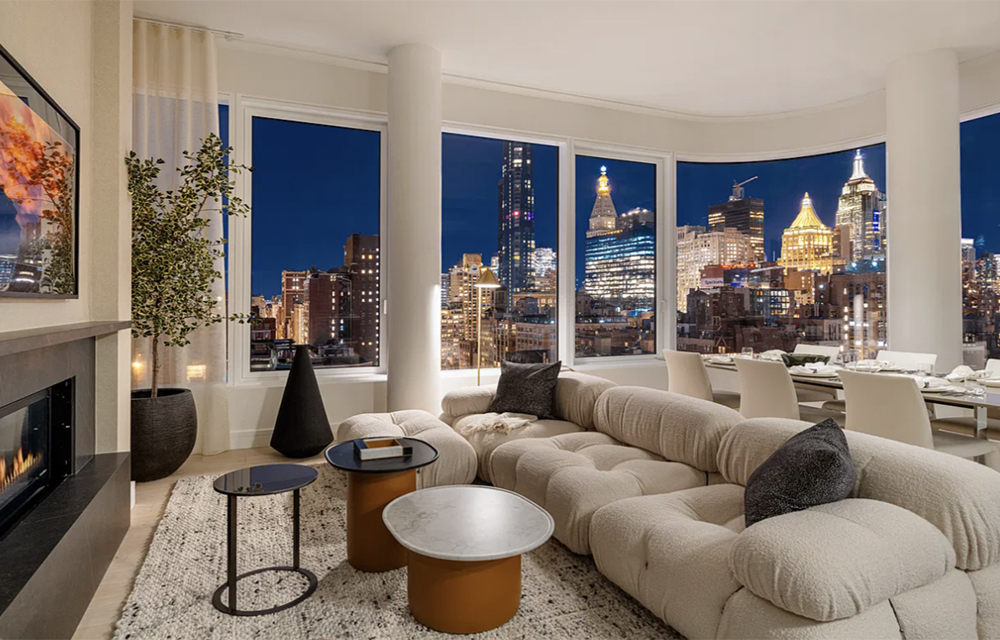
200E20TH sells out in Gramercy, penthouse A closes out sales at the CetraRuddy-designed condominium residences
Manhattan, NY 200E20TH, the CetraRuddy-designed architectural masterwork that brought a curved, contemporary sensibility to Gramercy’s Beaux-Arts streetscape, has



 (2).gif)

Columns and Thought Leadership

New York’s streets are full again, and the retail numbers prove it - by Noam Aziz
Walk down any New York block this year and you can feel it. The sidewalks are crowded, the storefronts are lit, and the energy that defines this city is back at full volume.

Hunt commercial real estate question and answer: Fortune 500 wisdom - by David Hunt
Yes, there are lessons to be learned from the largest companies in America when comes to managing your real estate. But the decision to buy or lease real estate may not be one of

The art of investing in real estate - by Thomas Donovan
Real estate investing is as much an art as it is a skill. No one can time the market, or the factors that drive it, perfectly. Location, zoning, size, transportation, and neighborhood density give you a baseline for

Hunt CRE question and answer: Choosing a real estate agent - by David Hunt
First, we will only work with one agent exclusively. The primary reason is that we want that agent to legally represent our client’s interests. In New York State, a real estate agent has a fiduciary
.gif)