



News:
Spotlight Content
Posted: March 25, 2008
Leading energy companies moving to a greener future
Oil currently supplies more than 40% of total U.S. energy demands, and 99% of car fuels. Canadian crude oil has become especially important to the U.S. market; however, there are significant challenges such as inadequate heavy sour crude refining capacity, lack of pipelines to emerging markets, labor shortages, and serious environmental issues. Further afield, Africa, Russia, and the Far East also represent a growing potential source, but not without political issues.
In today's "going green" world, alternative renewable energy sources like wind, solar, geothermal, hydrogen, and biomass play an important role in the future of U.S. energy delivery. Moving new technologies out of the laboratory and into the marketplace has resulted in a large number of new energy projects being developed by smaller, start-up companies that have the technological expertise but lack project execution experience. Because many of these projects are founded on green technologies that have had little or no project history, cost factors related to logistics and time lines are untested. The challenge is to merge innovation with sound business practices, delivering projects that are economically as well as environmentally viable.
This is where firms like ours come into play. As one of the world's leading consultants in energy, Faithful+Gould has helped oil, gas, petrochemical and chemical companies deliver projects and programs on time and under budget for more than 60 years.
The main issue in the beginning for these smaller companies is to assemble a sound business plan to get the support and funding they need, particularly in the ethanol and bio-fuel arenas. We act as their representative for financing and budgeting so that they can concentrate on technological innovation. We assist with a realistic estimate that includes such factors as energy transmission to remote locations, logistical costs, and project risk. Then, particularly for major corporate funders, we must show their shareholders that the projects will turn a profit in the long run.
Beyond the initial estimate, we participate with our clients for the long term because getting the project funded is just the beginning. Making sure organization and processes are in place, as well as constant project monitoring and feedback, ensures that these new energy technologies will sustain our environment for the long haul.
Sustainability must also be considered with whole life costs and affordability in the planning and design phases of a project. Faithful+Gould is LEED (Leadership in Energy and Environmental Design) certified by the United States Green Building Council to provide LEED consulting as an integral part of the green building process.
Maintenance is another big issue that is untested by many of the newer technologies. We can help our clients obtain significant savings in maintenance by implementing contract strategies that build in wear-and-tear, as well as replacement.
In addition to new energy technologies, traditional forms of energy are being ramped-up to deal with the growing need for power. We are seeing huge projects like $4 billion nuclear facilities that require multiple capabilities. In these instances, it is absolutely vital to put contract strategies in place that make the best use of limited resources.
Several of Faithful+Gould's recent initiatives include project controls for programs of both clean fuels projects and NOx Reduction projects. Representative clients include many industry oil and gas majors.
We have the advantage of an international network of offices to provide cost-effective support, regardless of where the project is engineered and subsequently built. Looking to the future, the exploration and extraction of energy are complex issues that will only become more challenging as natural resources are depleted. That is why, as new technologies are developed, firms like Faithful+Gould can help ensure their success.
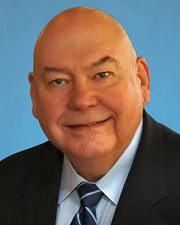
Trevor Green is senior V.P. of Faithful+Gould's Energy Business Stream, Houston, Tex.
Tags:
Spotlight Content
MORE FROM Spotlight Content

The commercial classroom: 1031 tax-deferred exchanges - by Edwad Smith Jr.
The sale of real estate may trigger capital gains taxes on the net profits of that sale. These taxes may be deferred by participating in a 1031 tax exchange, in essence, by purchasing property(s) to replace the



.png)

Quick Hits


Columns and Thought Leadership

2026 Developing Long Island: ERG Commercial Real Estate launches its new Retail Leasing division
North Hempstead, NY ERG Retail Leasing is the dedicated leasing division of ERG Commercial Real Estate, an established full-service commercial real estate brokerage for over 35 years.

From vacancy to vitality: How adaptive reuse is reshaping Long Island’s CRE landscape - by Andrea Tsoukalas Curto
Adaptive reuse has become one of the most important conversations in commercial real estate today. Long Island has a large inventory of aging retail, office and industrial

CRE Guide Featured Company: Merritt Environmental Consulting Corp.
Merritt Environmental Consulting Corp. (MECC) was established in June of 2009 after being part of a larger engineering firm for almost 20 years. The focus of the company is to assist lending institutions, attorneys, real estate investors, and property owners with environmental concerns. Today, MECC has offices in New York, Florida, and Vermont and has grown into a regional consulting firm serving clients along the East Coast.

2026 Developing Queens: Long Island Board of Realtors advances commercial growth and advocacy in Queens
The Long Island Board of Realtors (LIBOR) Commercial Network continues to play a key role in advancing opportunities and strengthening the commercial real estate landscape across Queens. Through targeted programming and global outreach