



News:
Brokerage
Posted: May 12, 2014
Law: New York statutory residency test reinterpreted
New York State and New York City each impose an income tax on resident individuals.1 Residency can be established in either of two ways. If an individual is domiciled in New York, i.e., the taxpayer's permanent and primary home is located within the city and/or state of New York, that individual is a New York resident for income tax purposes.2 An individual who is not domiciled in New York, is taxed as a "statutory resident," if the individual "maintains a permanent place of abode" in New York and spends more than one hundred eighty-three (183) days of the taxable year in New York.3 The New York State Department of Taxation and Finance (the "NYSDTF") had successfully argued that the requirements for "statutory residency" are met when living quarters are permanent, capable of year-round use, and maintained by the taxpayer, even if the taxpayer did not actually dwell in the permanent place of abode, but only provided funds for its maintenance.
On February 18, the New York Court of Appeals published its opinion in Gaied v. New York State Tax Appeals Tribunal, et al.4 The Court of Appeals held that New York's "statutory resident" test requires "some basis to conclude that the dwelling was actually utilized as the taxpayer's residence." The Court noted that the statutory intent was to prevent tax evasion by New York residents so the term "permanent place of abode" must be referring to the place of abode of the taxpayer. The decision in Gaied provides that, to establish statutory residency, it must be shown that the taxpayer possessed a personal residential interest as a permanent place of abode in the property being maintained by the taxpayer.
1. See, NY Tax Law §601 and New York City Administrative Code §11-1701.
2. See, NY Tax Law §605(b)(1)(A).
3. See, NY Tax Law §605(b)(1)(B).
4. — NY3d —, 2014 NY Slip Op 01101 (2014). This opinion is uncorrected and subject to revision before publication in the Official Reports
Barry Feldman is of counsel to Forchelli, Curto, Deegan, Schwartz, Mineo & Terrana, LLP, Uniondale, N.Y.
Tags:
Brokerage
MORE FROM Brokerage
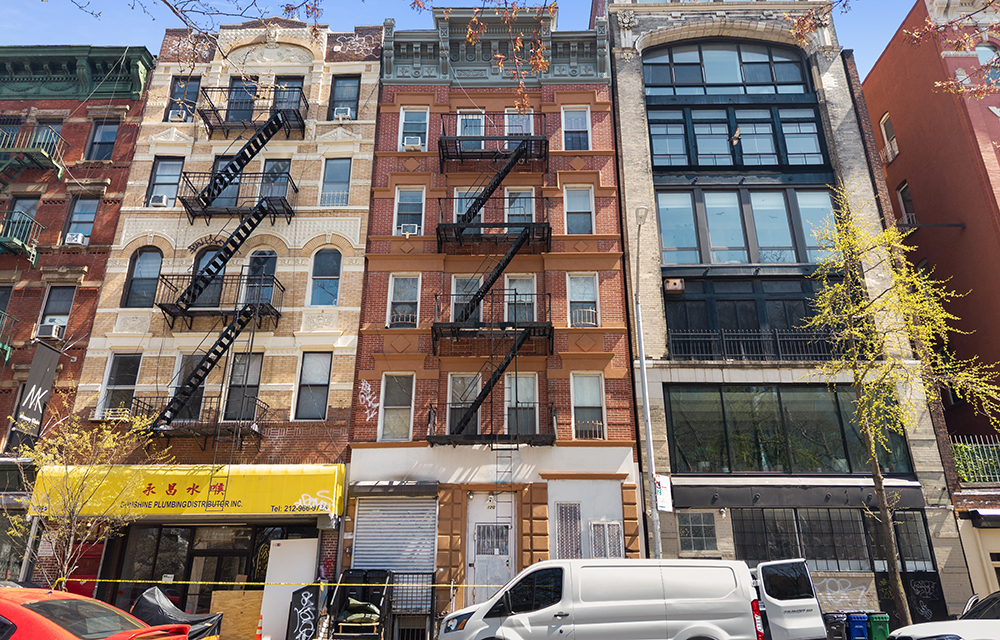
Investment Property Realty Group sells 120 Forsyth St. for $1.35 million
Manhattan, NY Investment Property Realty Group (IPRG) closed the sale of 120 Forsyth St., a mixed-use building located in the Lower East Side section of the city, for $1.35 million.




Quick Hits
 (2).gif)

Columns and Thought Leadership

Hunt commercial real estate question and answer: Fortune 500 wisdom - by David Hunt
Yes, there are lessons to be learned from the largest companies in America when comes to managing your real estate. But the decision to buy or lease real estate may not be one of

Positive forecast for New York’s pro-housing push? - by Philip Butler
New York’s housing crisis remains a hot button topic despite growing consensus that varied and affordable housing is desperately needed statewide. Governor Hochul has recently introduced several initiatives to overcome N.Y.’s anti-housing

New York’s streets are full again, and the retail numbers prove it - by Noam Aziz
Walk down any New York block this year and you can feel it. The sidewalks are crowded, the storefronts are lit, and the energy that defines this city is back at full volume.

A guide to finding the right NYC property management company - by Sanjay Gandhi
Being a small to midsize landlord in NYC is an increasingly demanding endeavor. From navigating complex regulations, increased compliance demands to dealing with tenant issues and remediating violations. It is wise to enlist the assistance of a partner, a professional
.gif)