



News:
Brokerage
Posted: October 7, 2013
Landmarking curtails affordable housing development in Manhattan, REBNY study reveals
Designating large swaths of Manhattan as landmarked districts has stifled the creation of affordable housing in New York City, according to an analysis issued by the Real Estate Board of New York.
The analysis found that since 2008, zero units of affordable housing have been constructed in landmarked districts in Manhattan, with just five units built since 2003. There were 8,070 new affordable housing units built borough-wide from 2003-2012.
"This study makes it clear that the rapid pace of landmarking has impeded the creation of much-needed affordable housing in New York City," said Steven Spinola, president of the Real Estate Board of New York. "Affordable housing is critical to the economic and social vitality of New York, and these findings should give our public officials pause as they consider additional landmarking in Manhattan and throughout the five boroughs."
In addition, of the 53,220 new residential units built in Manhattan during the 10-year period, a mere 1.9% - 998 units - were in landmarked districts.
According to the study, census data shows that residents within landmark districts have significantly higher household incomes and are dramatically less diverse than other areas of Manhattan and New York City.
REBNY singled out density restrictions, landmark compliance costs, and a lengthy public review process as main reasons why housing and particularly affordable housing development is extremely unlikely on landmarked sites.
A July 2013 study by REBNY concluded that landmarking in Manhattan is growing at a rapid rate, with nearly 30% of properties protected by landmark regulations. In some neighborhoods, such as the Upper West Side and SoHo/Greenwich Village, the level of protected properties has reached a staggering 70 percent. Given this and REBNY's most recent study, it is clear that certain areas of Manhattan are closing off opportunities for affordable housing for future generations.
The 5 units of affordable housing that were built since 2003 were part of a City-sponsored project and represent only 0.5% of new residential development in landmarked districts. In addition to new construction, 114 affordable units were created through renovation - all built before 2008 on City-owned properties, with 85% of these units located within West Harlem's Hamilton Heights/Sugar Hill Historic Districts and none south of 87th Street.
Tags:
Brokerage
MORE FROM Brokerage
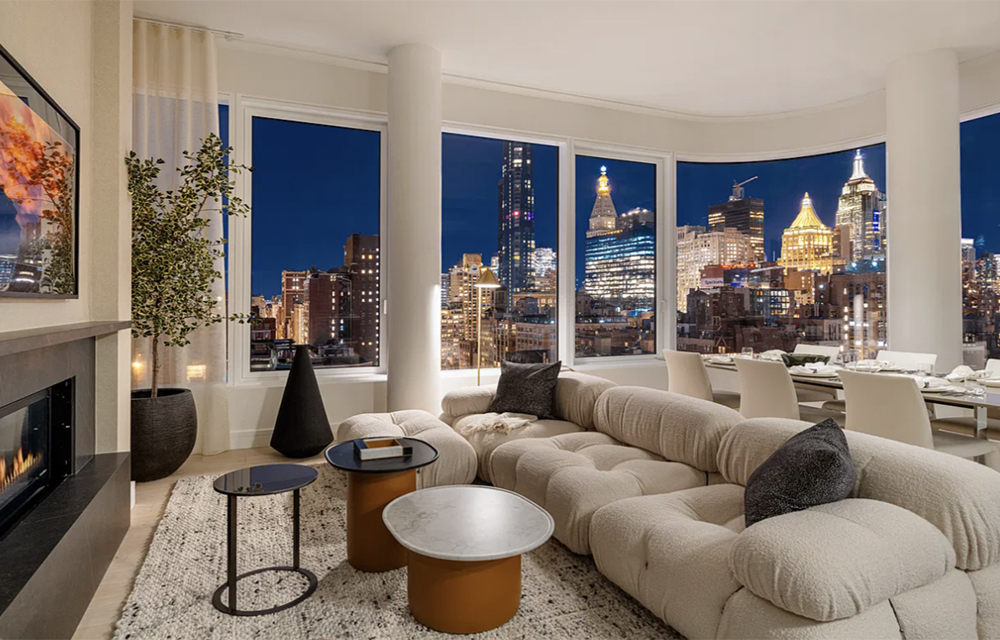
200E20TH sells out in Gramercy, penthouse A closes out sales at the CetraRuddy-designed condominium residences
Manhattan, NY 200E20TH, the CetraRuddy-designed architectural masterwork that brought a curved, contemporary sensibility to Gramercy’s Beaux-Arts streetscape, has




Columns and Thought Leadership

Hunt CRE question and answer: Choosing a real estate agent - by David Hunt
First, we will only work with one agent exclusively. The primary reason is that we want that agent to legally represent our client’s interests. In New York State, a real estate agent has a fiduciary

Hunt commercial real estate question and answer: Fortune 500 wisdom - by David Hunt
Yes, there are lessons to be learned from the largest companies in America when comes to managing your real estate. But the decision to buy or lease real estate may not be one of

The art of investing in real estate - by Thomas Donovan
Real estate investing is as much an art as it is a skill. No one can time the market, or the factors that drive it, perfectly. Location, zoning, size, transportation, and neighborhood density give you a baseline for

New York’s streets are full again, and the retail numbers prove it - by Noam Aziz
Walk down any New York block this year and you can feel it. The sidewalks are crowded, the storefronts are lit, and the energy that defines this city is back at full volume.
.gif)