



News:
Brokerage
Posted: April 22, 2013
Land prices rising - or have we turned a corner?
Besen & Associates represented the buyer and seller in a contract signing for a development site in Chelsea. The price equated to approximately $600 per buildable s/f an unprecedented number in the area. The price was even more remarkable considering that the very same site was receiving bids in the $300 per buildable s/f range two years ago.
Has the development site market really doubled from 2011 to 2013? Not necessarily. This is just one extreme example, although across the board there has been an enormous jump in both the price of land and volume of trades in Manhattan and the boroughs. In 2009, 70 N.Y.C sites sold for less than $500 million. In 2012, over 550 N.Y.C sites sold for $4.5 billion.
Myriad articles have cited the same catalysts for the dramatic increase in land and commercial real estate prices over the past year: historically low interest rates, lack of properties for sale, incredible personal wealth, and investment funds willing to accept lower returns in order to make their acquisition and management fees. However, the most telling factor is the astronomical jump in residential condo sales prices, which now average $2,000 - $3,000 per s/f in many of the city's high end new construction buildings. Extreme examples include One57, 15 CPW, 18 Gramercy, One Beacon Court, and 25 & 80 Columbus Circle, where apartments sell for $4,000 - $8,000 per s/f. Just over a year ago the highest price per s/f traded for a penthouse in 15 CPW, at a shocking $13,000 per s/f.
Currently it seems that 9 out of 10 investors are still looking to buy, not sell. However, over the past few months we've seen examples of smart money looking to liquidate their portfolios. Will land prices continue to rise or have we turned a corner?
Gregory Corbin, director of Besen & Associates, New York, N.Y.
Tags:
Brokerage
MORE FROM Brokerage
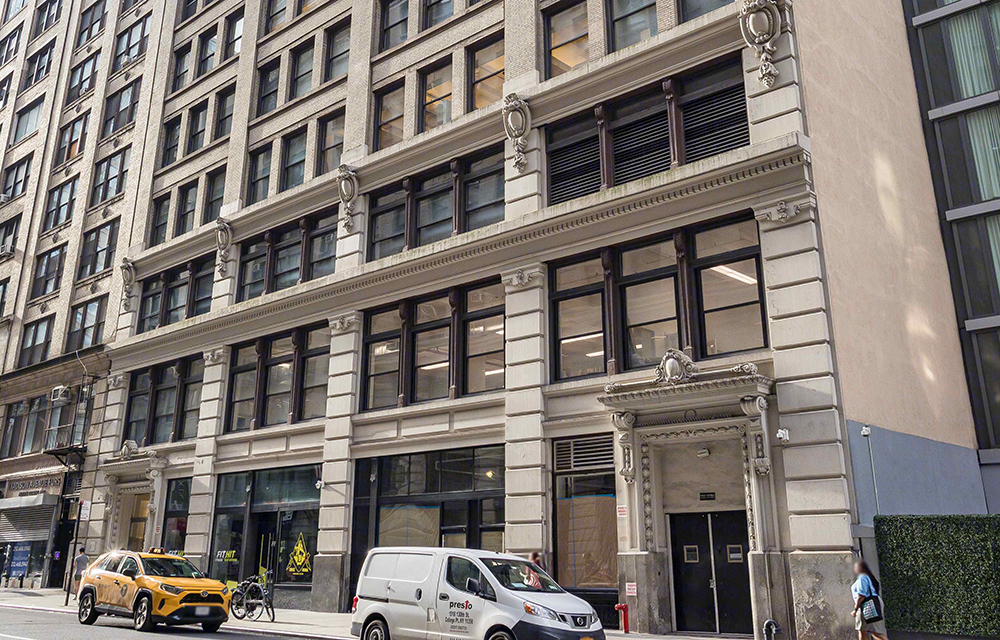
Koeppel Rosen inks 16-year 33,783 s/f lease for coworking firm Nomadworks at 122 West 27th St.
Manhattan, NY According to Koeppel Rosen LLC, leasing and management agent for the Rosen family portfolio, Nomadworks has signed a new 16-year, two-month lease totaling 33,783 s/f at 122 West



Quick Hits

Columns and Thought Leadership

The art of investing in real estate - by Thomas Donovan
Real estate investing is as much an art as it is a skill. No one can time the market, or the factors that drive it, perfectly. Location, zoning, size, transportation, and neighborhood density give you a baseline for

Hunt CRE question and answer: Choosing a real estate agent - by David Hunt
First, we will only work with one agent exclusively. The primary reason is that we want that agent to legally represent our client’s interests. In New York State, a real estate agent has a fiduciary

New York’s streets are full again, and the retail numbers prove it - by Noam Aziz
Walk down any New York block this year and you can feel it. The sidewalks are crowded, the storefronts are lit, and the energy that defines this city is back at full volume.

Hunt commercial real estate question and answer: Fortune 500 wisdom - by David Hunt
Yes, there are lessons to be learned from the largest companies in America when comes to managing your real estate. But the decision to buy or lease real estate may not be one of
.gif)