



News:
Brokerage
Posted: July 17, 2018
King & Spalding name Andersen, Gable and Zaben to Corporate, Finance and Investments Practice Group
New York, NY According to King & Spalding, Erik Andersen, Elizabeth Gable and Jared Zaben have joined the firm as partners in the firm’s Corporate, Finance and Investments practice group. The team has joined the firm’s New York office and advises financial institutions, alternative capital and debt funds, private equity funds, family offices and other money sources in real estate related transactions.
“Expanding King & Spalding’s transactional capabilities in New York and growing traditionally strong practices has been a deliberate strategic priority,” said Robert Hays, Jr., chairman of King & Spalding. “The addition of Erik, Elizabeth, Jared and their team will give us additional depth and talent to further build out our transactional practice in New York and other key markets. We are delighted to welcome them to the firm.”
“Increasing the talent of our real estate finance team which complements our current portfolio of work for financial institutions with a real estate focus is an important development for us,” said Todd Holleman, head of the firm’s Corporate, Finance and Investment practice group. “Their client-centric sensibilities and collaborative work style will fit right in with the rest of the practice. We are looking forward to integrating the team into the firm.”
All three join King & Spalding from Riemer & Braunstein LLP and additional lawyers are expected to join the team shortly.
Andersen represents financial institutions, private equity funds, debt funds and hedge funds in the origination of traditional and non-traditional single and multi-lender real estate-based loans. In addition, his practice includes the acquisition and sale of distressed and non-performing loans and REO properties (on a single asset and pool basis), and the structuring and execution of real estate based equity investments. Andersen counsels clients on the structuring and documenting of ‘loan-on-loan’, construction, bridge, term, and mezzanine loans, structuring and negotiating participation, co-lender and intercreditor agreements and in structuring NPL and REO purchase and sale agreements. His practice also extends to the representation of various lending clients in connection with workout/foreclosure of commercial real estate loans and mezzanine loans. Andersen received his undergraduate degree from Salisbury University and his J.D. from Brooklyn Law School.
Gable counsels domestic and foreign institutions with the origination and modification of complex permanent, construction, leverage and mezzanine financing projects. She also represents the administrative agents in multi-lender syndicated real estate facilities. Gable received her undergraduate degree from Villanova University and her J.D. from Georgetown University Law Center.
Zaben’s practice focuses on commercial real estate lending transactions. He represents financial institutions and other institutional clients in connection with single-lender and agented, multi-lender construction, mezzanine, and permanent financing projects on a local, regional, and national basis. He received his undergraduate degree from Pennsylvania State University and his J.D. from New York Law School.
“Erik and his team are a sophisticated, well-known and respected group in the New York real estate and transactional community,” said Ed Kehoe, managing partner of the New York office. “This group of talented lawyers bolsters our ability to anchor additional complex and sophisticated real estate transactions in New York, and it expands the firm’s financial services practice area, which includes lawyers who collaborate from offices across the firm.”
“The breadth of the team and the scope of the financial services industry of focus was a real draw for us.” said Andersen. “Joining King & Spalding allows us to increase our ability to serve our clients’ real estate financing needs throughout the country and to be a one-stop shop for their private equity, fund formation, tax and regulatory work.”
Both of the firm’s finance and real estate practices are nationally recognized by Chambers USA.
Tags:
Brokerage
MORE FROM Brokerage
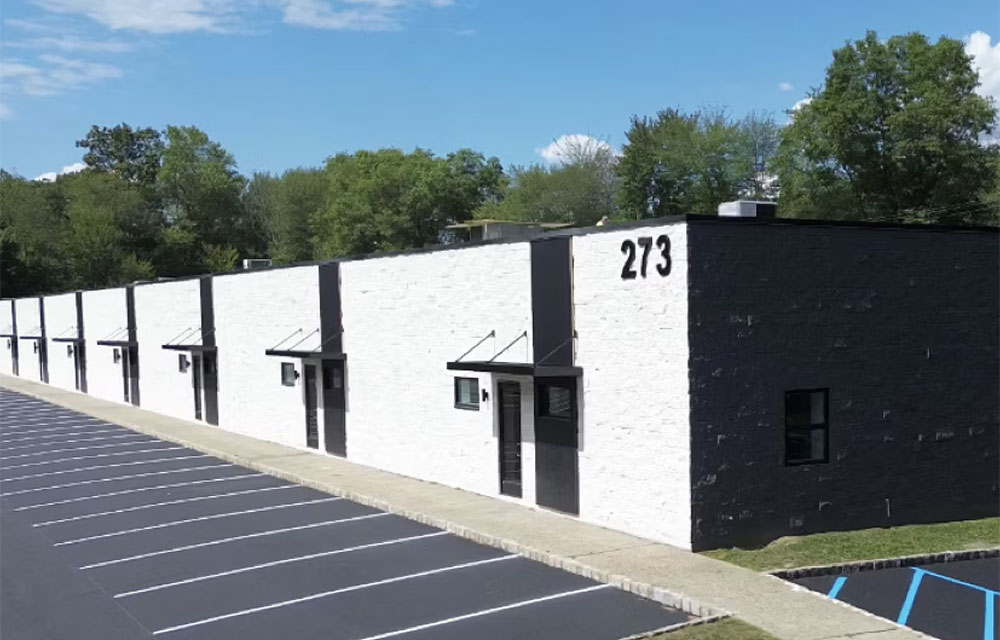
Resource Realty of Northern NJ delivers complete lease-up of 235 Franklin Rd. for Commerce Park Investors
Randolph, NJ Resource Realty of Northern New Jersey (RRNNJ) has completed the lease-up of a 10-unit small-bay industrial property at 273 Franklin Rd., marking the culmination of an investment strategy that began






Columns and Thought Leadership

New York’s streets are full again, and the retail numbers prove it - by Noam Aziz
Walk down any New York block this year and you can feel it. The sidewalks are crowded, the storefronts are lit, and the energy that defines this city is back at full volume.

A guide to finding the right NYC property management company - by Sanjay Gandhi
Being a small to midsize landlord in NYC is an increasingly demanding endeavor. From navigating complex regulations, increased compliance demands to dealing with tenant issues and remediating violations. It is wise to enlist the assistance of a partner, a professional

Hunt commercial real estate question and answer: Fortune 500 wisdom - by David Hunt
Yes, there are lessons to be learned from the largest companies in America when comes to managing your real estate. But the decision to buy or lease real estate may not be one of

Positive forecast for New York’s pro-housing push? - by Philip Butler
New York’s housing crisis remains a hot button topic despite growing consensus that varied and affordable housing is desperately needed statewide. Governor Hochul has recently introduced several initiatives to overcome N.Y.’s anti-housing
.gif)