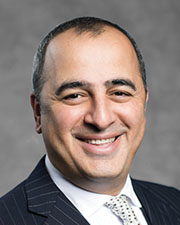




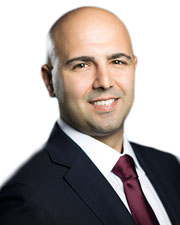
New York, NY Lev Kimyagarov and Rubin Isak, former senior directors at Massey Knakal Realty Services/Cushman & Wakefield and Eastern Consolidated respectively, have formed Development Site Advisors, one of the only NYC firms with a sole focus on the development site sector.
“During our many years of working in the commercial real estate industry, we came to realize that there was a true void in the development site sector,” said managing principal and co-founder Kimyagarov. “Development sites are a very complex asset class, with each site having several potential development scenarios and each scenario affecting value differently. But most brokers don’t evaluate development sites correctly, primarily because of their lack of neighborhood-specific zoning knowledge. That’s why our tagline is ‘We Know Zoning.’”
Development Site Advisors has already sold the Shalimar Diner site, a 14,000 s/f corner lot in Rego Park, Queens.
It has also represented the purchaser of the Neptune Diner in Astoria (Queens), on a 10,000 s/f corner lot; a former gas station in Bay Ridge, Brooklyn on a 9,000 s/f corner lot; a former corner 6,100 s/f gas station on Queens Blvd. in Elmhurst; air rights for the Grace Lutheran Church in Astoria, which will use those funds to build a gym for their students; a 1.88-acre site in Glen Cove, Long Island; and a corner lot in Woodside, Queens, that will contain a charter school.
What’s more, Development Site Advisors is currently working on:
“We are truly a tech and data-driven firm unlike any other, with services such as our proprietary valuations: sitestimate, landstimate and airstimate,” said Isak, the firm’s other co-founder and managing principal. “With those proprietary tools, we look at, first, the neighborhood, then the specific zoning regulations for that area and site, along with every possible development scenario with costs, and ultimately the value a developer can pay for any given site.”
Development Site Advisors not only studies the current zoning, but also the zoning that is appropriate for the block.
“These are powerful tools for property owners, because we help them to understand how developers view their sites, and we make sure they achieve correct pricing, strong terms and straight-forward contracts,” said Isak. “We make easy what is inherently complex.”
The firm doesn’t plan on just staying local.
“We have expansion plans in the works at other urban cities with complex zoning codes, where we know that we can add value,” said Kimyagarov. “Our niche focus, unique business model, process in place and targeted agent training assures that we can plant our flag in virtually any city and make an impact, truly providing value to our clients. We look forward to announcing our next city as we roll it out.”
“In real estate there are two buckets, commercial real estate and residential real estate,” said Isak. “Development falls in the commercial real estate bucket. We will be changing that, by creating an entirely new sector.
“We are not investment sales brokers; we are development site brokers and advisors.”








.gif)