



News:
Brokerage
Posted: May 4, 2021
Kennedy Funding closes $850,000 loan for Seventy-Six development

Albany, NY The Seventy-Six development promises to be a transformative addition to the city’s South End neighborhood, and thanks to a loan from direct private lender Kennedy Funding, this project is one step closer to reality.
According to the Englewood Cliffs, NJ-based lender, it has closed a $850,000 loan to South End Development LLC and 76 South Holding LLC. Proceeds from the loan will be used for working capital for soft costs toward the 1.69-acre site, comprising 25 parcels totaling 73,680 s/f.
According to Kevin Wolfer, CEO and president of Kennedy Funding, the lender worked closely with the borrower to navigate significant challenges. “We pride ourselves on finding a way for our borrowers to get the funding they need,” Wolfer said. “The merits of the deal are what’s most important for us. With the impressive proposals and tremendous excitement generated around The Seventy-Six, this project has the potential to become the next crown jewel for Albany.”
The Seventy-Six is one of the most ambitious development plans ever proposed for the South End neighborhood. Plans for the development call for four buildings over 2.4 acres, each one no more than eight stories tall. The development is planned for an area located between Second Ave., Krank St., Leonard St., and Seymore Ave., steps from Krank Park and the Albany Charter Community School.
Plans for The Seventy-Six tout it as a high-performance development, with room for 240 apartments, including affordable housing; retail space; and commercial space. The triplenet-zero project will generate its own power and recycle stormwater for toilets and other uses.
As a direct private lender, Kennedy Funding’s borrowers are not encumbered by the bureaucracy of loan committees and red tape like they are withtraditional lenders or banks.
Wolfer says the firmtakes a creative approach to each potential deal, looking for reasons to say “yes” to an applicant. “Traditional lenders have such stringent criteria that viable projects can often get left behind because the borrower doesn’t fit a checkbox on their list,” Wolfer said. “This can be especially difficult for a borrower with a lucrative opportunity on the tablebut without the credit score to match. Because of our flexible lending parameters, our borrower can finally secure the funding they need.”
According to Wolfer, the Seventy-Six is widely regarded as a development that could revitalize the neighborhood. The South End has faced significant closures and departures, including the closing of the last drugstore, restaurants, and the DMV that brought visitors and jobs to the neighborhood.
“The Seventy-Six will be one of the most significant proposals the South Side has seen in decades,” Wolfer said. “Housing, jobs, and retail – The Seventy-Six is generating tremendous excitement for the South End neighborhood and for Albany at large,” Wolfer said.
Tags:
Brokerage
MORE FROM Brokerage
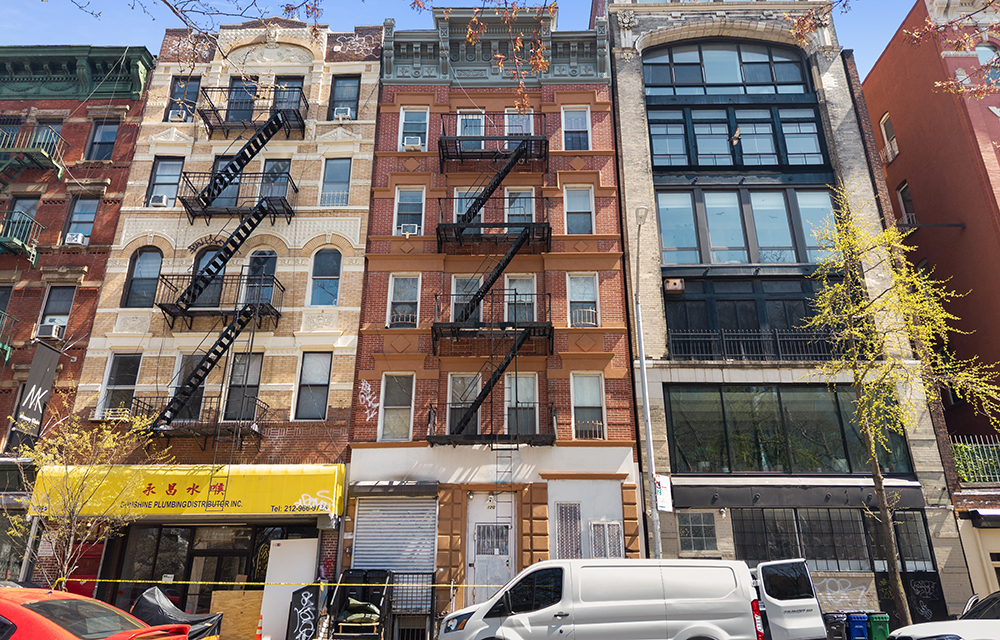
Investment Property Realty Group sells 120 Forsyth St. for $1.35 million
Manhattan, NY Investment Property Realty Group (IPRG) closed the sale of 120 Forsyth St., a mixed-use building located in the Lower East Side section of the city, for $1.35 million.



Quick Hits
 (2).gif)

Columns and Thought Leadership

A guide to finding the right NYC property management company - by Sanjay Gandhi
Being a small to midsize landlord in NYC is an increasingly demanding endeavor. From navigating complex regulations, increased compliance demands to dealing with tenant issues and remediating violations. It is wise to enlist the assistance of a partner, a professional

Hunt commercial real estate question and answer: Fortune 500 wisdom - by David Hunt
Yes, there are lessons to be learned from the largest companies in America when comes to managing your real estate. But the decision to buy or lease real estate may not be one of

Positive forecast for New York’s pro-housing push? - by Philip Butler
New York’s housing crisis remains a hot button topic despite growing consensus that varied and affordable housing is desperately needed statewide. Governor Hochul has recently introduced several initiatives to overcome N.Y.’s anti-housing

New York’s streets are full again, and the retail numbers prove it - by Noam Aziz
Walk down any New York block this year and you can feel it. The sidewalks are crowded, the storefronts are lit, and the energy that defines this city is back at full volume.
.gif)