



News:
Brokerage
Posted: July 21, 2008
Just east of Westchester: The opportunities in India
This is "India's century." "No question mark," said Kamal Nath, India's minister of commerce and industry and author of this treatise on India's "economic miracle" since its emergence from colonial rule in 1947. Nath recently commanded the attention of a packed audience at the N.Y. headquarters of the Asia Society. I find myself spending more time there as I prep myself to say "rAma" (goodbye) to Westchester and "namaste" (hello) to India, a move that I hope to make within the next several months. I have been doing a great deal of reading, studying and networking within N.Y.'s extensive yet close-knit Indian Diaspora here.
"Why India?" I am constantly quizzed, when I respond to, "Where do you plan to move after you sell your house?" (See my June column!) "It's the land of opportunity and there's a world out there that's a hell of a lot bigger than Westchester County," has become my pat response. 160 years ago people were asking westward-bound men and the few women who followed, "Why California?"
As I listened to the minister of commerce assert that India is now in a position to "embark on extended paths of economic prosperity," I found myself getting excited about the prospect of claiming a piece of this opportunity for myself. Nath acknowledged that "China has exceeded India for the last 31 years," a point made by journalist/author Robyn Meredith in her book, "The Elephant and the Dragon: The Rise of India and China and What It Means for All of Us" (W.W. Norton & Co., 2007), described as "the essential guide to understanding how India and China are reshaping the world."
Meredith, who covers India and China for Forbes, compares and contrasts the two countries back and forth between chapters and tells of the eye-opening experience of the then prime minister of India's state visit to China in 2003, "In June of 2003, prime minister Atal Bihari Vajpayee of India arrived at the Beijing airport, only one of China's many, and quickly realized that the Chinese had gone from the past straight to the future.Â
China had left India behind.Threatened by what he saw, the prime minister was determined to ride roughshod over India's notoriously hamstrung government and get India on the fast-track, as well.
Here's a less than five years later progress report back home in India following the prime minister's visit. Meredith was interviewed on the PBS program "Now" which did a profile on Pune, a city the size of Atlanta which "Now" correspondent Paul Beban described as a once sleepy backwater turned boomtown in India's surging information technology sector. Pune is 60 miles southeast of Mumbai.
Beban: "The din of construction fills the air. And as you sit in the endless traffic, hundreds of billboards advertise brand new, high-rise housing. They promise not just comfort and modern conveniences... but a fantasy lifestyle."
Meredith: "The last time we saw such a big transformation was really when the U.S. itself came onto the global stage. This is a big, big deal... India and China inevitably if they continue to connect to the global economy and continue to grow their economies, inevitably are going to rise. We can't stop them even if we wanted to."
Back to the eighth floor Rose Room of the Asia Society, I asked the minister about real estate investment opportunities in India for Americans and other foreigners. He kindly corrected my naiveté with the usual good-natured humor and charm that I find characterizes most of the Indians whom I have met, "We do not allow direct real estate foreign investment. We call them construction projects." And then, more point blankly, he added, "Anyone who has invested in construction projects in India has made a killing."
So you ask me, "Why India?" Hopefully, in the months ahead, my publisher here at New York Real Estate Journal will invite me to be its foreign correspondent and I'll be able to give my readers a first-hand report.
Rob Seitz is an agent with Goldschmidt & Associates, New Rochelle, N.Y.
Tags:
Brokerage
MORE FROM Brokerage
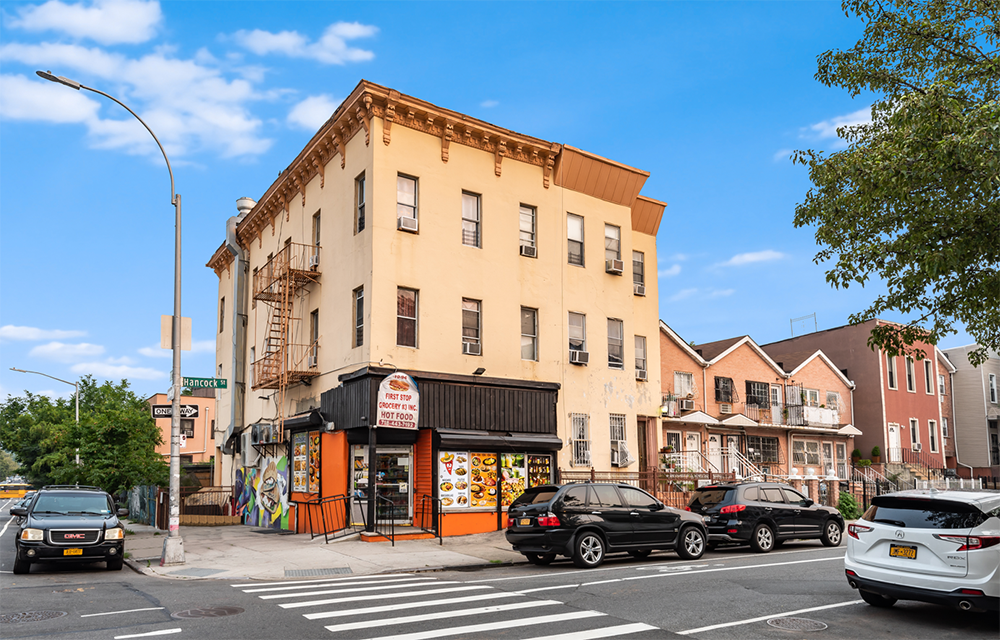
Investment Property Realty Group closes $1.75 million sale of 1094 Hancock Street in Brooklyn
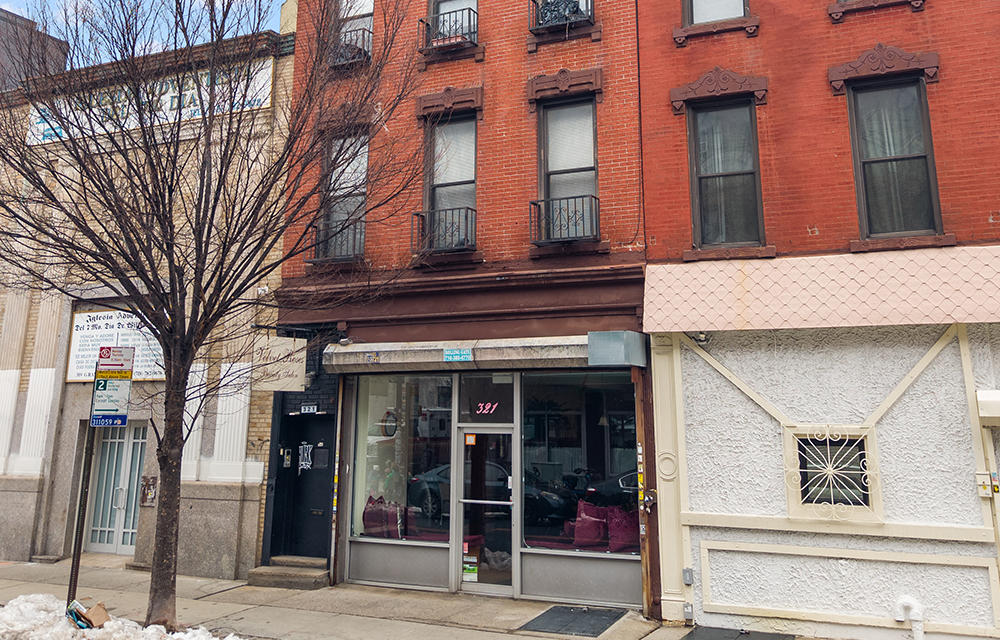
Brooklyn, NY Investment Property Realty Group (IPRG), a New York-based commercial investment firm, has closed the sale of 1094 Hancock St., a mixed-use building in the Bushwick section, for $1.75 million.



Columns and Thought Leadership

Hunt commercial real estate question and answer: Fortune 500 wisdom - by David Hunt
Yes, there are lessons to be learned from the largest companies in America when comes to managing your real estate. But the decision to buy or lease real estate may not be one of

A guide to finding the right NYC property management company - by Sanjay Gandhi
Being a small to midsize landlord in NYC is an increasingly demanding endeavor. From navigating complex regulations, increased compliance demands to dealing with tenant issues and remediating violations. It is wise to enlist the assistance of a partner, a professional

Hunt CRE question and answer: Choosing a real estate agent - by David Hunt
First, we will only work with one agent exclusively. The primary reason is that we want that agent to legally represent our client’s interests. In New York State, a real estate agent has a fiduciary

New York’s streets are full again, and the retail numbers prove it - by Noam Aziz
Walk down any New York block this year and you can feel it. The sidewalks are crowded, the storefronts are lit, and the energy that defines this city is back at full volume.
.gif)