



News:
Brokerage
Posted: November 22, 2022
JLL leases 20,874 s/f to Altana at 25 Kent
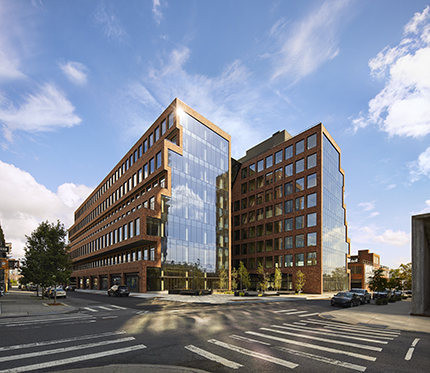 Brooklyn, NY Rubenstein Partners’ 25 Kent, the borough’s newest mixed-use office and light manufacturing building, signed a 20,874 s/f, 10-year lease with Altana, a startup pioneering a shared source of truth on the global supply chain, at 25 Kent Ave. in Williamsburg. Relocating following the company’s recent $100 million Series B investment and significant sales and data network growth, the space at 25 Kent will be utilized as the company’s New York headquarters.
Rubenstein Partners was represented by Whitten Morris and Peter Riguardi of JLL in the transaction. Sam Seiler and Joe Sipala of JLL represented Altana.
“As the primary cultivator of New York’s innovation economy, Williamsburg provides a vibrant and creative community for up-and-coming technology companies looking to plant their corporate flag surrounded by various likeminded and forward-looking businesses,” said Joe Zuber, co-regional director – NY Metro & New England at Rubenstein Partners. “We are thrilled to welcome Altana to 25 Kent as we continue growing a robust community of innovators and creative trailblazers at the building.”
Altana connects and learns from the world’s public and non-public data to provide a dynamic, shared artificial intelligence model of the global supply chain while helping entities to see across borders, manage risk and improve global commerce. Altana is used to accelerate and automate compliant trade, to illuminate and collaborate across multi-tier supplier relationships, and to build resilient, sustainable, safe, compliant, solvent and insured supply chain networks for governments, enterprises and financial institutions.
Developed as a partnership between Rubenstein Partners and Heritage Equity Partners, 25 Kent is ideally located in a neighborhood that is young, vibrant and filled with entrepreneurs, artists and artisans. The building occupies a full block bounded by Wythe and Kent Avenues and North 12th and North 13th Streets, directly across the street from Bushwick Inlet Park, the city’s newest waterfront park, recently opened to the neighborhood.
A product of collaboration between design architect Hollwich Kushner (HWKN) and design development architect Gensler, this newly completed eight-story, 500,000 s/f commercial office building is the first of its type erected in North Williamsburg in more than 40 years. It’s conceived to be a hub of innovation in which the tech, creative, design, production and light manufacturing industries can collaborate and grow together.
Tags:
Brokerage
MORE FROM Brokerage
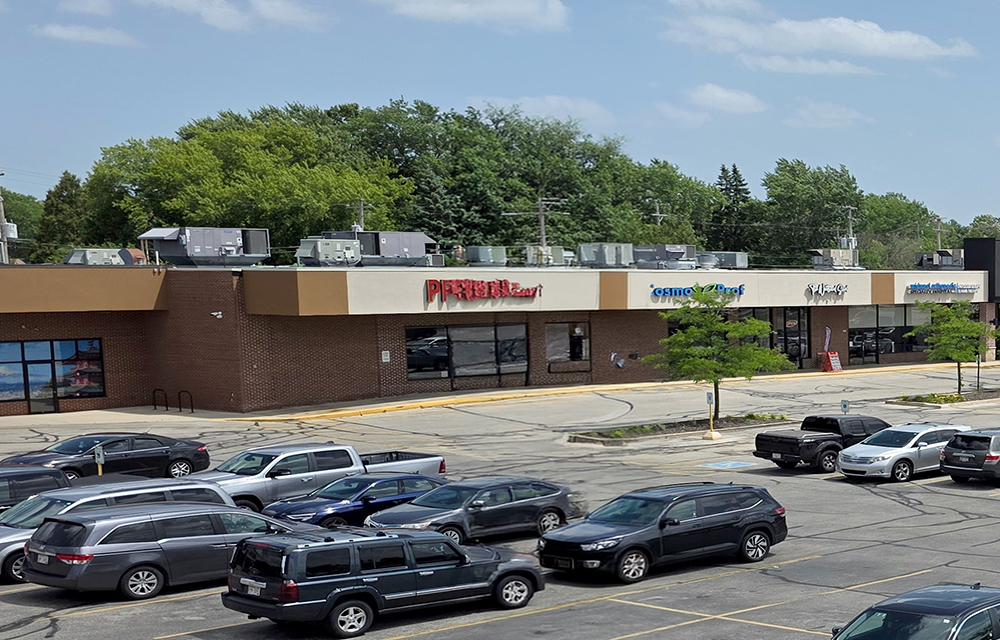
United Properties Corp. expands Wisconsin and Illinois retail presence adding 200,000 s/f
West Allis, WI United Properties Corp. completed two retail acquisitions totaling $27.4 million across Illinois and Wisconsin, adding 205,000 s/f of shopping center space to its portfolio




Quick Hits

Columns and Thought Leadership

New York’s streets are full again, and the retail numbers prove it - by Noam Aziz
Walk down any New York block this year and you can feel it. The sidewalks are crowded, the storefronts are lit, and the energy that defines this city is back at full volume.

Positive forecast for New York’s pro-housing push? - by Philip Butler
New York’s housing crisis remains a hot button topic despite growing consensus that varied and affordable housing is desperately needed statewide. Governor Hochul has recently introduced several initiatives to overcome N.Y.’s anti-housing

Hunt commercial real estate question and answer: Fortune 500 wisdom - by David Hunt
Yes, there are lessons to be learned from the largest companies in America when comes to managing your real estate. But the decision to buy or lease real estate may not be one of

A guide to finding the right NYC property management company - by Sanjay Gandhi
Being a small to midsize landlord in NYC is an increasingly demanding endeavor. From navigating complex regulations, increased compliance demands to dealing with tenant issues and remediating violations. It is wise to enlist the assistance of a partner, a professional
.gif)