



News:
Brokerage
Posted: January 11, 2010
Is there actually a difference in your property's insurance coverage and needs?
I was consulted recently by a client whose building suffered a catastrophic fire resulting in fatalities, as well as serious injuries to others. This article is not about liability.
At the same time another client consulted me while pricing renewal insurance. I discovered that the insurance broker used an incorrect building classification resulting in artificially lower premiums.
In case one, the client had no umbrella policy and had purchased a "net" policy. Simply put, that meant that once the insurer's obligations ended when it paid out its policy limit (here a mere $1 million). The insurer was also entitled to include payments to the defense firm. Hence, at such time as the entire $1 million is disbursed, the company's obligation to defend ends! Thereafter the insured is responsible for their own defense costs as well as any additional settlement money or any amounts subsequently awarded plaintiffs.
Because the broker intentionally misclassified the building, no one could match his lower premiums. The insurance company being of the mistaken belief that they were dealing with some kind of warehouse/commercial space instead of an apartment building with extensive additional potential replacement expenses. An apartment building would have cost more in premiums.
Bear in mind, insurance companies are not in the business of paying claims, but in the business of generating income for their members or shareholders!
For the first owner, the insufficient coverage (as the late Mrs. Astor once said, "A million just isn't what it used to be.") and lack of an umbrella policy puts the property completely at risk for levy and execution should the plaintiffs in the personal injury cases obtain judgments in excess of the million dollar policy. The lack of due diligence by the owner has left the property exposed to be sold to satisfy any judgment. If the property were held in an individual's name, that individual's personal assets are at risk, as well. Under the circumstances, it is quite probable that the attorneys representing the plaintiffs will be looking for more than the policy limits and may well seek to satisfy any judgments by having the building sold or force the owner to borrow money to pay to keep the property.
As for the second client, he is so far lucky, as there are no known claims (but there are statute of limitations not yet reached). However, rest assured, if one should become known, it would not be unusual to see the insurance company disclaim coverage based upon the broker's incorrect classification. Hopefully the broker has his own Errors and Omissions Policy should any claim be denied because of his actions.
Do not wait until your policy expires to ascertain your coverage. Do not seek to save money by underinsuring your buildings or permitting your property to be misclassified.
Make sure that you have sufficient coverage including showing the correct classification of your properties giving all relevant information. Make sure you have an adequate umbrella policy. Make sure that your policies cover you not only for "replacement value" but include "up to code" coverage as well.
While you're at it, make sure to consult a qualified professional and make sure you have undertaken estate planning, have a will and both a health care proxy and living will.
Howard Stern, Esq., a practicing attorney at the Law Offices of Howard Stern, White Plains, N.Y.
Tags:
Brokerage
MORE FROM Brokerage
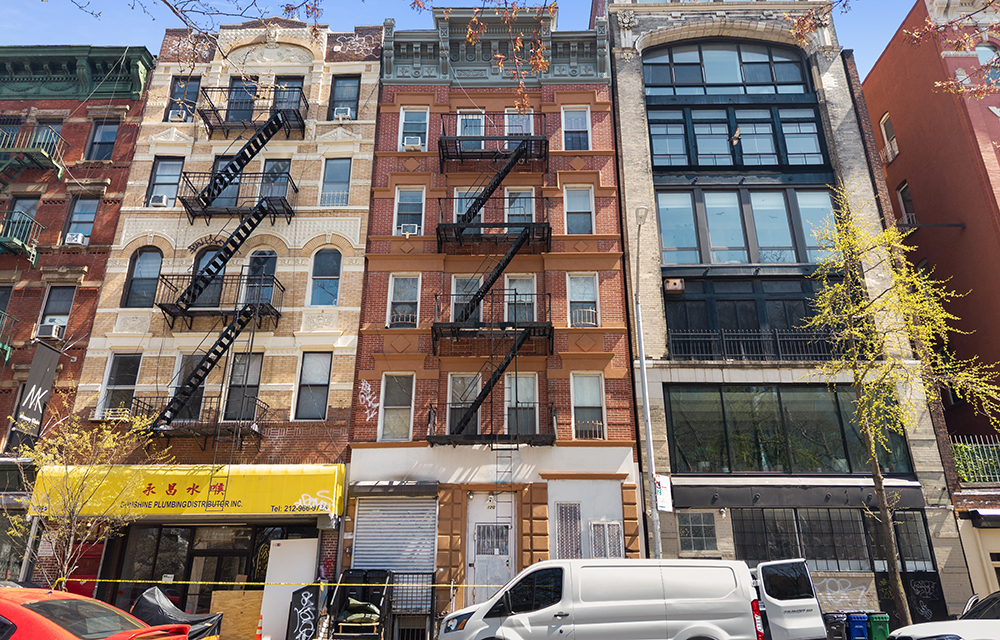
Investment Property Realty Group sells 120 Forsyth St. for $1.35 million
Manhattan, NY Investment Property Realty Group (IPRG) closed the sale of 120 Forsyth St., a mixed-use building located in the Lower East Side section of the city, for $1.35 million.





Quick Hits
 (2).gif)

Columns and Thought Leadership

Positive forecast for New York’s pro-housing push? - by Philip Butler
New York’s housing crisis remains a hot button topic despite growing consensus that varied and affordable housing is desperately needed statewide. Governor Hochul has recently introduced several initiatives to overcome N.Y.’s anti-housing

New York’s streets are full again, and the retail numbers prove it - by Noam Aziz
Walk down any New York block this year and you can feel it. The sidewalks are crowded, the storefronts are lit, and the energy that defines this city is back at full volume.

A guide to finding the right NYC property management company - by Sanjay Gandhi
Being a small to midsize landlord in NYC is an increasingly demanding endeavor. From navigating complex regulations, increased compliance demands to dealing with tenant issues and remediating violations. It is wise to enlist the assistance of a partner, a professional

Hunt commercial real estate question and answer: Fortune 500 wisdom - by David Hunt
Yes, there are lessons to be learned from the largest companies in America when comes to managing your real estate. But the decision to buy or lease real estate may not be one of
.gif)