



News:
Brokerage
Posted: January 11, 2010
Brooklyn commercial real estate activity: Opportunity for those who work harder and smarter than the rest
The larger downtown Brooklyn office buildings (Court St., Montague St., Livingston St. and environs) traditionally have consistent activity due to the nature of the tenant base and the proximity to the legal courts and transit hubs. Attorneys and related support industries, non-profits, social service agencies, municipal agencies and light medical comprise the bulk of tenancies. The funded non-profit agencies have been hit particularly hard and some have defaulted but services such as jobs programs, city agencies, legal representation and medical uses continue to be as recession-proof as any business might be.
Asking rents vary among the buildings but are mostly in the mid to high $20s and low $30s per rentable s/f. Some buildings are asking rents approaching $40, but that is the exception and there are always compelling reasons such as views or an unwillingness to relocate. Taking rents are in the $24 - $30 per rentable s/f range and would almost always include a tenant improvement allowance and/or landlord buildout.
This writer personally participated in leases totaling 20,000 s/f-spread across numerous smaller deals. Hardly a banner year, but 2010 presently looks good from our perspective, with several large leases pending (but getting one to actually close without much re-trading and stalling has proven to be difficult).
DUMBO leasing seems to remain steady with mostly smaller spaces that the landlords are willing to lease for terms of less than five years. This can be appealing to the many creative and entrepreneurial firms that often gravitate there.
Retail activity was scarce, especially from the nationals and larger locals although there were exceptions. Morton's The Steakhouse on Adams St. seemed to hit stride after a late 2008 opening (although reviews are mixed) and Arby's took the former Gage and Tollner space on the Fulton Mall (yet to open for business although we heard they had been shooting for a 2009 opening). One glaring failure was "provisions" provider Boar's Head trying their hand at retail at 117 Court St.with a very upscale "deli" they called "F. Martinella's." The store closed in less than a year after a decidedly tepid reception from the marketplace. Mom and pop activity came and went as always and the city's appetite for more bodegas, 99 cent stores and nail salons always astounds. We get sign calls for these uses no matter what the building or space size.
There was a blockbuster court-ordered building sale at 494 Fulton St. culminating with a public auction at the courthouse. Bidding ended north of $40 million and many recognizable family names competed for the site. It is amazing and impressive to watch the real players bid millions at a clip as though they were wagering wooden matchsticks in a street corner poker game.
Most other investment sales were flat at best as mortgage funds were non-existent and with much of the "smart" money staying mostly on the sidelines waiting for a possible additional decrease in prices.
There is not much more to add to the Atlantic Yards or Coney Island stories that have not been covered voluminously. The opposition to Ratner's project, while seemingly on a sinking ship, remains as fierce as ever and Joe Sitt seems to usually come out looking pretty smart from a financial gain perspective.
For developer of condominium projects or large-scale rental apartment buildings, fuhgedaboutit! In November, approximately 1,500 luxury rentals hit the marketplace in Downtown Brooklyn. Spread across Clarett Group's "Brooklyner," Forest City Ratner's 80 DeKalb and Avalon Bay's 343 Gold St., the developers are being forced into concessions and creativity to lease the units to a target group that looks very different than it did when these projects were conceived several years back.
Further complicating the situation was a similar completion deluge of upscale condominiums that didn't sell and were either turned over to lenders or being considered as rental apartments by the developers.
Going forward? There will always be firms and individuals forced into moves of a physical or financial nature and there are always a well-positioned few who saved their acorns for just such times. New York City real estate has always provided lucrative opportunities for those who work harder and smarter than the rest.
Robert Hebron, IV, is an associate broker at Ingram & Hebron Realty, Brooklyn, N.Y.
Tags:
Brokerage
MORE FROM Brokerage
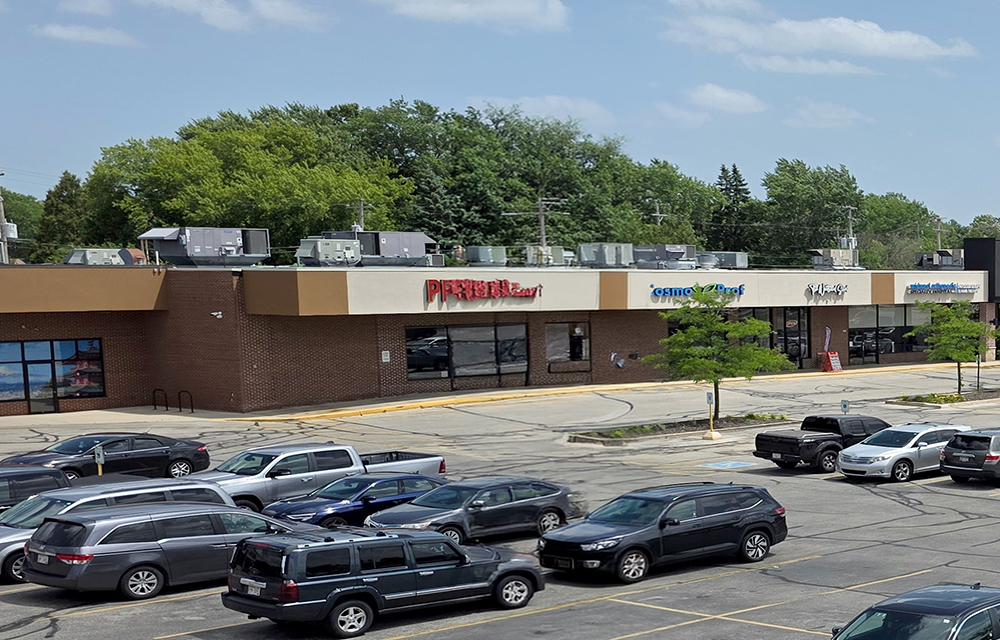
United Properties Corp. expands Wisconsin and Illinois retail presence adding 200,000 s/f
West Allis, WI United Properties Corp. completed two retail acquisitions totaling $27.4 million across Illinois and Wisconsin, adding 205,000 s/f of shopping center space to its portfolio



Quick Hits
 (2).gif)

Columns and Thought Leadership

Hunt commercial real estate question and answer: Fortune 500 wisdom - by David Hunt
Yes, there are lessons to be learned from the largest companies in America when comes to managing your real estate. But the decision to buy or lease real estate may not be one of

A guide to finding the right NYC property management company - by Sanjay Gandhi
Being a small to midsize landlord in NYC is an increasingly demanding endeavor. From navigating complex regulations, increased compliance demands to dealing with tenant issues and remediating violations. It is wise to enlist the assistance of a partner, a professional

Positive forecast for New York’s pro-housing push? - by Philip Butler
New York’s housing crisis remains a hot button topic despite growing consensus that varied and affordable housing is desperately needed statewide. Governor Hochul has recently introduced several initiatives to overcome N.Y.’s anti-housing

New York’s streets are full again, and the retail numbers prove it - by Noam Aziz
Walk down any New York block this year and you can feel it. The sidewalks are crowded, the storefronts are lit, and the energy that defines this city is back at full volume.
.gif)