



News:
Brokerage
Posted: March 26, 2024
Is North Manhattan going north or south? - by Harris Sonnenklar

In 2023, the North Manhattan multifamily real estate market continued to face significant challenges, primarily driven by the lingering effects of HSTPA and higher interest rates. These factors spurred caution among property investors, leading many to adopt a wait-and-see approach. As an investment sales broker specializing in North Manhattan, my daily interactions reflect the impact of these challenges on decision-making as to hold or sell.
We saw a good +100 to (in some cases) +200 BPS cap rate expansion in response to higher rates. Cap rates rose from a reported 5.2-5.5% range in 2022 to 6.3-6.6% in 2023. This surge was largely driven by 11 consecutive interest rate hikes starting in March 2022, effectively doubling rates. The higher cap rates posed a challenge for investors aiming to achieve their desired returns, given the increased cost of borrowing. Consequently, many property owners chose to remain on the sidelines, wary of investing in a market characterized by higher borrowing costs and reduced potential returns.
Despite these challenges, there were bright spots in the market. The dollar volume of multifamily transactions in North Manhattan increased by 35% in 2023, reaching $640 million. This increase suggests that despite the challenges, there is still significant activity and interest in the market. Several longtime owners also exited portfolios, signaling a shift in ownership, and potentially opening new opportunities for investors. A notable decline in pricing for rent-stabilized properties contributed to this increase in transaction volume. This shift suggests a change in market trends, potentially prompting property owners to reassess their strategies considering these developments. A considerable portion of transactions involved properties heavily impacted by rent stabilization, leading to a notable drop in the average price per s/f to $280 compared to the previous year. This decline highlights the impact of diminishing property values in the rent-stabilized segment, potentially influencing owners’ decisions to stay on the sidelines.
From an investment standpoint, there are historical buying opportunities in the North Manhattan market at present. Properties are available at a basis as much as -50% less than peak pricing. Additionally, nearly a trillion dollars in commercial property loans are set to mature this year in NYC alone. This influx of maturing loans could potentially stimulate an increase in transaction volume as property owners consider refinancing or selling their properties.
Harris Sonnenklar is an associate at Besen Partners, Manhattan, N.Y.
Tags:
Brokerage
MORE FROM Brokerage
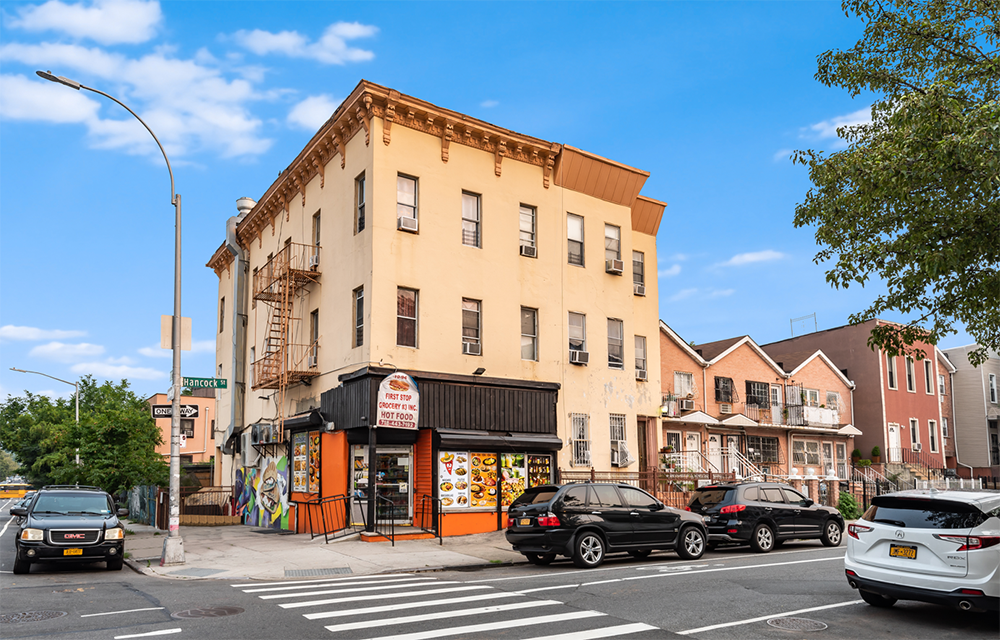
Investment Property Realty Group closes $1.75 million sale of 1094 Hancock Street in Brooklyn
Brooklyn, NY Investment Property Realty Group (IPRG), a New York-based commercial investment firm, has closed the sale of 1094 Hancock St., a mixed-use building in the Bushwick section, for $1.75 million.


Quick Hits
 (2).gif)

Columns and Thought Leadership

New York’s streets are full again, and the retail numbers prove it - by Noam Aziz
Walk down any New York block this year and you can feel it. The sidewalks are crowded, the storefronts are lit, and the energy that defines this city is back at full volume.

A guide to finding the right NYC property management company - by Sanjay Gandhi
Being a small to midsize landlord in NYC is an increasingly demanding endeavor. From navigating complex regulations, increased compliance demands to dealing with tenant issues and remediating violations. It is wise to enlist the assistance of a partner, a professional

Hunt commercial real estate question and answer: Fortune 500 wisdom - by David Hunt
Yes, there are lessons to be learned from the largest companies in America when comes to managing your real estate. But the decision to buy or lease real estate may not be one of

Hunt CRE question and answer: Choosing a real estate agent - by David Hunt
First, we will only work with one agent exclusively. The primary reason is that we want that agent to legally represent our client’s interests. In New York State, a real estate agent has a fiduciary
.gif)