





As part of the New Jersey (NJ) Clean Energy Act, beginning October 1, 2023, buildings over 25,000 s/f are required to benchmark their building’s aggregate energy and water usage data to the NJ Board of Public Utilities (BPU) on an annual basis. Logical Buildings is certified by the NJBPU to fulfill all the requirements of gathering, compiling, verifying, and submitting the necessary information and documentation for your properties that are covered.
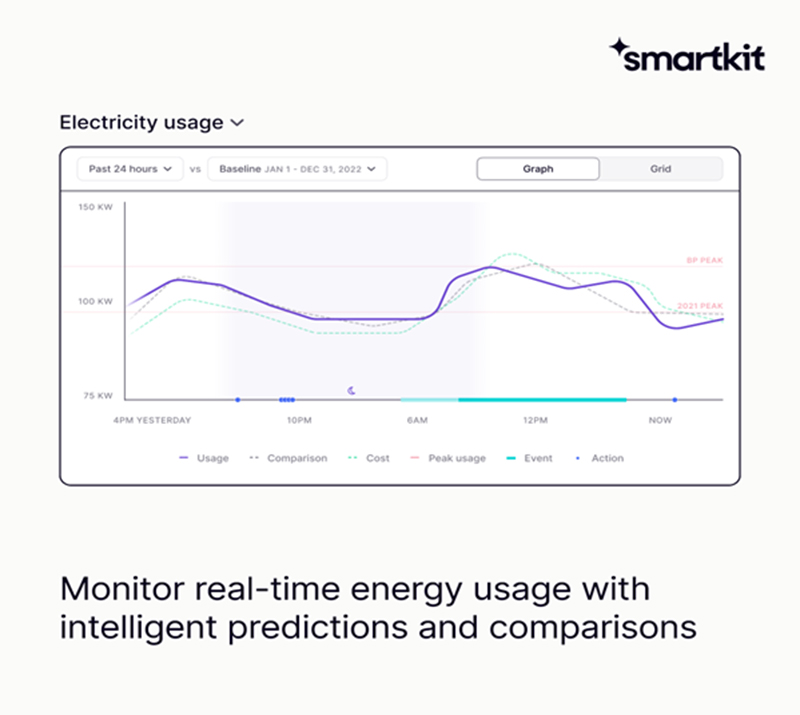
Energy benchmarking is the process of measuring energy use performance and relative efficiency of a building as compared to a prior time period and/or like buildings in a given region. For the first time, whole-building aggregate energy consumption data will be made available to building owners/operators in NJ - via the utility companies - in order to comply with the benchmarking requirements. Benchmarking baseline energy use data for multifamily buildings, commercial properties, and municipalities is the prerequisite step to identify where efficiency can be improved, thus lowering energy costs and carbon emissions. While benchmarking reporting data is critical, the goal of the requirement is to provide building owners with a measurable baseline to verify energy reduction initiatives. Logical Buildings provides building owners with prescriptive tools and strategies to lower energy use. The company’s energy management platform, SmartKit AI, rewards managers to run buildings more efficiently with a data-driven approach, saving money and lowering carbon emissions. Logical Buildings provides best-in-class training for O&M building managers to minimize energy costs.
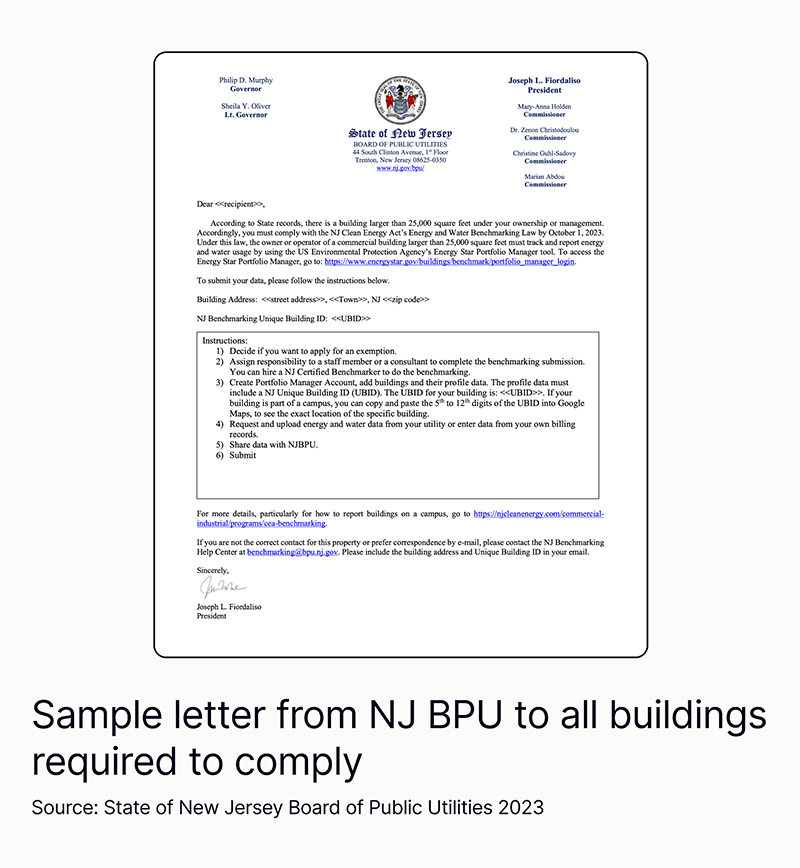 The NJBPU’s new framework also focuses on goals, targets, a performance incentive mechanism, and energy savings carryover; building decarbonization start-up programs; and demand response programs. Through the incentives that will be offered by the utilities under this framework, the board seeks to maximize energy efficiency and energy conservation in buildings while also reducing emissions from the building sector, in line with the state’s new clean energy and electrification goals.
The big news is NJ is moving towards adopting demand response programs that pay owners/developers and residents/tenants for using less energy when the grid needs relief. NJ utilities are completing their smart meter installations to support these programs. Future-proofing your new developments with smart thermostats, grid-interactive appliances, and electric vehicle (EV) charging platforms will transform your properties into grid revenue-producing assets.
The time to act is now, and while the benchmarking process can seem daunting, our team of NJBPU-certified energy benchmarkers can help building owners take the first step toward compliance and cost reduction. Once you can measure your building’s energy load, you can manage it and lower expenses. Our team of certified energy experts can empower your facilities team with the right load-reduction technologies to execute your company’s path toward energy compliance and expense reduction.
If you are interested in learning more about the NJ energy benchmarking law and how Logical Buildings can help your building(s) comply, email us at [email protected] or book a demo with us.
Jeff Hendler is co-founder and CEO, Adam Blank is head of ESG solutions, and Zohra Roy is director of product marketing for Logical Buildings, Livingston, N.J.
IREON INSIGHTS: “IREON members grow and prosper by the company they keep and the relationships they share”


 (2).gif)





.gif)