



News:
Brokerage
Posted: April 5, 2016
Investment Sales: Persistent demand amid price fatigue by Matthew Garcia
 Matthew Garcia, Besen & Associates, Inc.
Stop me if you’ve heard this before: “They want how much? Are they serious?!?”
The answer is “Yes, they are serious,” and while it may be difficult for keen investors to ‘make sense’ of current market metrics, trades are still happening at head-scratching price levels.
To be fair, it’s often difficult to judge a transaction on just the recorded price. Frequently, there are numerous variables that reflect additional value in a deal. Whether it’s seller concessions in the form of delivering units vacant or purchaser’s tax implications such as completing an exchange, deals continue to be transacted in this elevated pricing environment.
But have we reached the point of price fatigue already? To an extent yes, but don’t be surprised if you find yourself in a last minute bidding war as well. I’m presently involved in several transactions in which this is still happening.
I recently went to contract on a multifamily sale in prime North Williamsburg, for which the price equated to a sub 3% cap and over 25 multiple (GRM). Expensive, but for the investor who had recently refinanced several assets it made sense to put the money back to work in a location they are comfortable with over the long term.
In midtown Manhattan, we are aggressively working on a sizable assemblage transaction. The seller agreed to our price and terms after months of not being able to achieve their price, which seemed aggressive. However, while preparing to go to contract we have now encountered two other credible bidders at the seller’s asking price. We’re all learning to expect the unexpected.
Sanity still seems to prevail however, especially when deals feature a development angle necessitating financing. While managing an exclusive development transaction in Brooklyn, the investment community has balked at the seller’s pricing expectations. The risk has simply outweighed the pricing expectation, despite our cautious optimism given the tremendous location.
So while transaction volume is still relatively healthy, certain lofty value expectations are still held in check. Pricing will remain strong due to simple supply and demand economics of New York real estate, though a sense of pricing fatigue is growing. The recent question we are hearing from the marketplace is how many more sub 3% and $1,000 per s/f deals will we continue to look at?
Matthew Garcia is a director at Besen & Associates, New York, N.Y.
Tags:
Brokerage
MORE FROM Brokerage
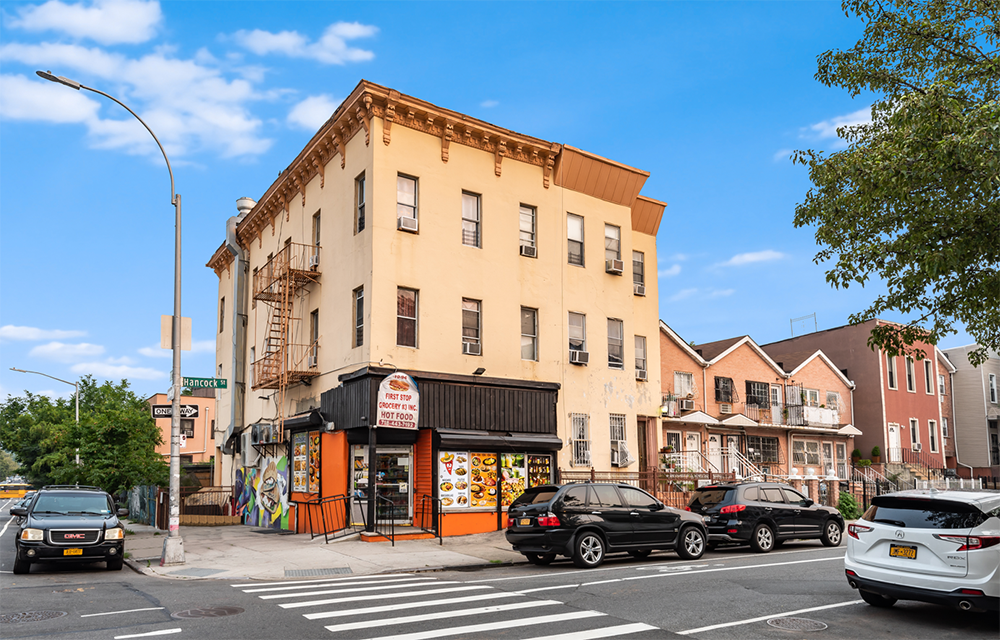
Investment Property Realty Group closes $1.75 million sale of 1094 Hancock Street in Brooklyn
Brooklyn, NY Investment Property Realty Group (IPRG), a New York-based commercial investment firm, has closed the sale of 1094 Hancock St., a mixed-use building in the Bushwick section, for $1.75 million.



Columns and Thought Leadership

Hunt commercial real estate question and answer: Fortune 500 wisdom - by David Hunt
Yes, there are lessons to be learned from the largest companies in America when comes to managing your real estate. But the decision to buy or lease real estate may not be one of

A guide to finding the right NYC property management company - by Sanjay Gandhi
Being a small to midsize landlord in NYC is an increasingly demanding endeavor. From navigating complex regulations, increased compliance demands to dealing with tenant issues and remediating violations. It is wise to enlist the assistance of a partner, a professional

Hunt CRE question and answer: Choosing a real estate agent - by David Hunt
First, we will only work with one agent exclusively. The primary reason is that we want that agent to legally represent our client’s interests. In New York State, a real estate agent has a fiduciary

New York’s streets are full again, and the retail numbers prove it - by Noam Aziz
Walk down any New York block this year and you can feel it. The sidewalks are crowded, the storefronts are lit, and the energy that defines this city is back at full volume.
.gif)