



News:
Brokerage
Posted: April 4, 2017
Investment Sales: New York City investors buying different locations by Garcia
 Matthew Garcia, Besen & Associates
As the supply of properties for sale has tightened further over the past year, we’ve started to observe certain trends emerge in an effort to maintain activity and one of the most notable has been investors shifting their geographic focus.
Typically, geographic concentration has always been on the priority list for investors. For management efficiencies such as sharing supers through coordinating city inspections, it will always allow for better operations. Even when a principal wants to inspect their own properties, they many not want to battle the morning rush of the FDR followed by the gridlock on the BQE. However, when faced with the reality of ‘doing nothing’ because deal flow has become constrained, the reality is something has to give. That choice lately seems to be augmenting a firm’s geographic radius.
We could provide numerous examples of this dynamic shift, but the most evident (without disclosing identities) is when a firm whose name is eponymous with a certain borough or neighborhood is transacting in a totally unexpected zip code.
It might create a little more strain on management capabilities and travel times are not as friendly, but those are simply necessary tradeoffs for staying active and finding value. It stands to reason that a change in location is less risky than investing in a new asset class. That may require multiple new relationships such as leasing brokers or new equity partners more comfortable with those particular property types.
The techniques in terms of renovating and repositioning apartments don’t change. A multifamily investor may not go with higher-end finishes in certain neighborhoods, but those adjustments are easily accounted for.
Ultimately, the shift in geographic focus may only yield a 50 basis point cap difference in entry pricing. However when competition drives aggressive pricing, this can translate to a meaningful difference. After all, as long as the return on investment meets the benchmark thresholds, it may not matter too much if the underlying asset is in Washington Heights, Williamsburg or the Upper West side.
Matthew Garcia is a director at Besen & Associates, New York, N.Y.
Tags:
Brokerage
MORE FROM Brokerage
Investment Property Realty Group closes $1.75 million sale of 1094 Hancock Street in Brooklyn
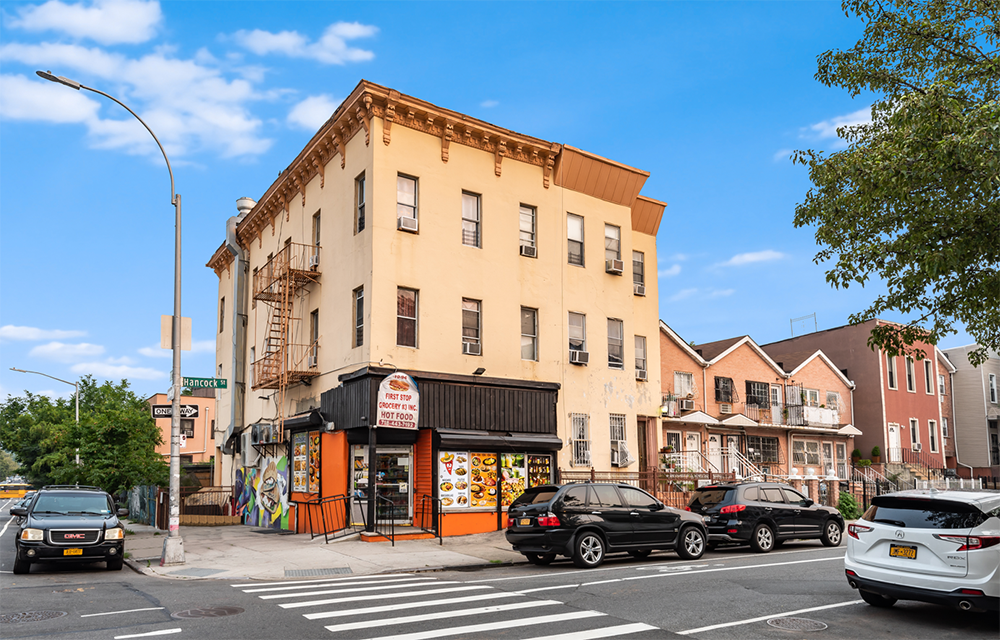
Brooklyn, NY Investment Property Realty Group (IPRG), a New York-based commercial investment firm, has closed the sale of 1094 Hancock St., a mixed-use building in the Bushwick section, for $1.75 million.




Quick Hits
 (2).gif)

Columns and Thought Leadership

Hunt commercial real estate question and answer: Fortune 500 wisdom - by David Hunt
Yes, there are lessons to be learned from the largest companies in America when comes to managing your real estate. But the decision to buy or lease real estate may not be one of

Hunt CRE question and answer: Choosing a real estate agent - by David Hunt
First, we will only work with one agent exclusively. The primary reason is that we want that agent to legally represent our client’s interests. In New York State, a real estate agent has a fiduciary

New York’s streets are full again, and the retail numbers prove it - by Noam Aziz
Walk down any New York block this year and you can feel it. The sidewalks are crowded, the storefronts are lit, and the energy that defines this city is back at full volume.

A guide to finding the right NYC property management company - by Sanjay Gandhi
Being a small to midsize landlord in NYC is an increasingly demanding endeavor. From navigating complex regulations, increased compliance demands to dealing with tenant issues and remediating violations. It is wise to enlist the assistance of a partner, a professional
.gif)