



News:
Brokerage
Posted: November 6, 2018
Section 1031: Who can be owner of your replacement property? - by Pamela Michaels
In the world of Section 1031 exchanges, one of the most frequent inquiries relates to the name in which title to the replacement property may be held without violating the requirements of Section 1031. In the Northeast, most want to acquire properties in an LLC either to protect against potential personal liability and/or to provide ease of management of the asset where multiple investors are involved. This is especially true where the purchase of the replacement property is being financed, as lenders tend to want one borrower.
Under Section 1031, the person or entity that files the tax return for the relinquished property must also file the tax return for the replacement property. However, this requirement does not mean that title to the relinquished and replacement properties must be the same, although the “tax owner” should be the same. The reason why has to do with the law on disregarded entities. Disregarded entities are entities that are not recognized for Federal tax purposes, which means the entity does not file a separate Federal tax return. All reporting is done by the person or entity which owns the disregarded entity and is recognized for Federal tax purposes.
This article summarizes rules relating to entities that may be “disregarded” for purposes of Section 1031 and is designed to assist in cases where a taxpayer would like to take title to the replacement property in a manner that is different from the manner in which they held title to the relinquished property.
General Rules
Virtually any natural or legal person (individual, corporation, partnership, LLC, trust, etc.) may perform a 1031 exchange.
The “tax owner” of the relinquished property (generally as determined by the status of legal title) should also be the “tax owner” of the replacement property, e.g., if John Public is on title to the relinquished property, then John Public should acquire title to the replacement property.
Exception to Rule 2
If the transferor of the relinquished property or the transferee of the replacement property is a “disregarded entity” for federal tax purposes (See Treas. Reg. § 301.7701) or the “owner” of a disregarded entity, then the entity is treated as if it does not exist and the owner and the entity are, in effect, interchangeable as the taxpayer (i.e., the entity may sell and the owner may buy and vice versa). For example, if A owns 100% of the interests in an entity that is a “disregarded entity,” then A may sell the relinquished property and the entity may take title to the replacement property and vice versa.
What entities are not disregarded?
- C Corporations (“regular”): Not disregarded;
- S Corporations: Not disregarded;
- General Partnerships: Not disregarded; and
- Limited Partnerships: Not disregarded.
The IRS has ruled that where an otherwise non-disregarded entity has two members under local law, but one of the members is a disregarded entity that is owned by the other member, the eligible entity is treated as having only one member. Thus, the entity cannot be a partnership for tax purposes; it must be classified either as a disregarded entity or as an association taxable as a corporation. [Rev. Rul. 2004-77, 2004-31 I.R.B. 119]
Limited Liability Companies (LLCs) are not disregarded except in the following cases where the LLC has not made an election to be treated for tax purposes as a corporation:
- 100% of the interests are owned by a single legal or natural person. [PLRs 9751012; 9807013; 19911033];
- 100% of the interests are owned by husband and wife as community property in a community property state. [Rev. Proc. 2002-69, 2002-2 CB831]
The IRS has ruled that a two-member LLC formed under Delaware law was disregarded for 1031 exchange purposes where all economic interests were held by one member and the function of the second member was solely to prevent a bankruptcy filing or other violation of the LLC’s covenants with lenders [PLR 199911033]. The IRS has ruled that the acquisition of all the ownership interests held by two different owners by a single buyer in a single transaction constituted an acquisition of the underlying assets owned by the LLC. [Rev. Rul. 99-6, 1991-1 C.B 432]
In all cases, every taxpayer should consult with their tax and/or legal advisor to ensure that the desired structure is acceptable for 1031 exchange purposes and that ultimately the same “tax owner” is both relinquishing real property held for investment and acquiring a like-kind replacement property.
Pamela Michaels, Esq., is the senior vice president with Asset Preservation, Inc., New York, N.Y.
Tags:
Brokerage
MORE FROM Brokerage
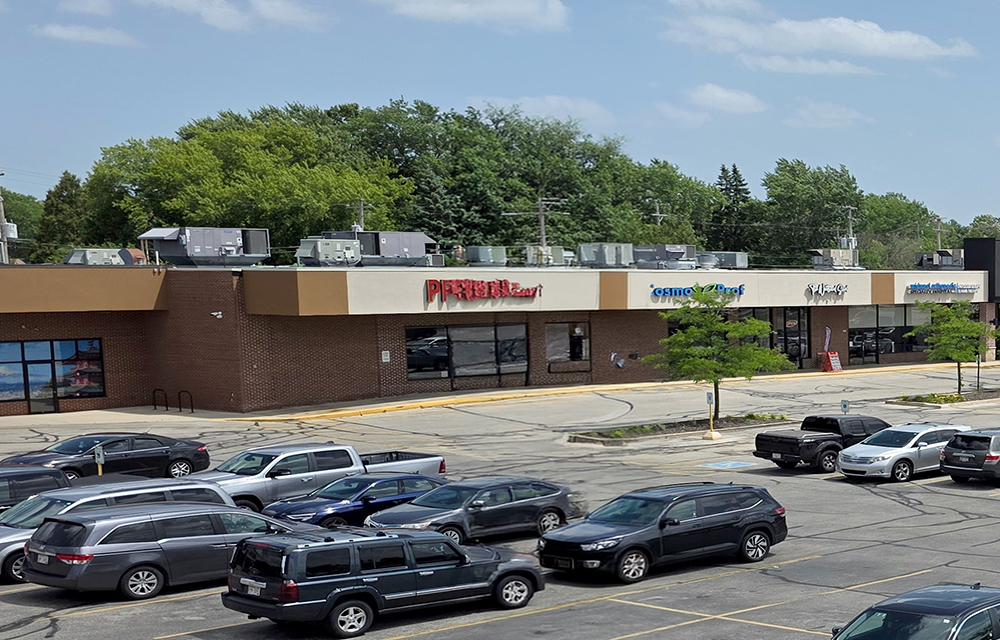
United Properties Corp. expands Wisconsin and Illinois retail presence adding 200,000 s/f
West Allis, WI United Properties Corp. completed two retail acquisitions totaling $27.4 million across Illinois and Wisconsin, adding 205,000 s/f of shopping center space to its portfolio





Quick Hits
 (2).gif)

Columns and Thought Leadership

New York’s streets are full again, and the retail numbers prove it - by Noam Aziz
Walk down any New York block this year and you can feel it. The sidewalks are crowded, the storefronts are lit, and the energy that defines this city is back at full volume.

Hunt commercial real estate question and answer: Fortune 500 wisdom - by David Hunt
Yes, there are lessons to be learned from the largest companies in America when comes to managing your real estate. But the decision to buy or lease real estate may not be one of

A guide to finding the right NYC property management company - by Sanjay Gandhi
Being a small to midsize landlord in NYC is an increasingly demanding endeavor. From navigating complex regulations, increased compliance demands to dealing with tenant issues and remediating violations. It is wise to enlist the assistance of a partner, a professional

Positive forecast for New York’s pro-housing push? - by Philip Butler
New York’s housing crisis remains a hot button topic despite growing consensus that varied and affordable housing is desperately needed statewide. Governor Hochul has recently introduced several initiatives to overcome N.Y.’s anti-housing
.gif)