



News:
Brokerage
Posted: August 25, 2014
Proposed changes to Code Section 752 regulations and guarantees
The Department of the Treasury has issued proposed regulations that would modify the determination of recourse vs. nonrecourse liabilities under §752. The biggest change would deal with a bottom guarantee of mortgage debt.
A bottom guarantee of debt is when the guarantor is guaranteeing the least risky portion of the debt. An example would be if a partner were to make a bottom guarantee of $2 million of the mortgage debt, he would be liable to the lender only to the extent the net proceeds from sale of the mortgaged property were less than $2 million.
The proposed regulations if enacted will make many changes to the liability rules that among other things will eliminate bottom guarantees. The current definition of recourse liabilities are contained in Tres. Reg. §1.752-2(b) which states that a partner bears the economic risk of loss for a partnership liability to the extent that if the partnership constructively liquidated the partner would be obligated to make a payment because the liability comes due and payable and the partner would not be entitled to reimbursement from another partner or person.
A constructive liquidation deems to have the following occur simultaneously:
1. All the partnership's liabilities become payable in full,
2. All of the partnerships assets including cash have a value of zero,
3. The partnership disposes of all its property in a fully taxable transaction,
4. All items of income, gain, loss or deduction are allocated among the partners,
5. The partnership liquidates.
The above test is mostly mechanical. The Proposed Regulations give a multi-part test that must be met in full in order for a payment to be recognized and cause the debt to become recourse debt:
1. The partner is required to maintain a reasonable net worth throughout the term of the payment obligation or be subject to reasonable contractual restrictions of transfers of assets for inadequate consideration.
2. The partner must periodically provide documentation regarding their financial condition.
3. The term of the payment obligation cannot end prior to the end of the partnership liability.
4. The payment obligation cannot require the partnership to hold money or other liquid assets that exceed the reasonable need of such debtor.
5. The partner receives arm's length consideration for assuming the payment obligation.
6. In the case of a guarantee the partner would be liable to the full amount of such partner's payment obligation to the extent that the amount of the partnership's liability is not satisfied.
7. In the case of indemnity or similar arrangement the partner would be liable up to the full amount of the payment obligation. For the guarantee to be recognized, one does not need to guarantee the full debt, but the guarantor would be liable to pay in the first dollars the lender would not receive.
Until such time as these proposed regulations become final, bottom guarantees are still available for a partner to be allocated recourse liability accordingly. Note, that the above has no effect on qualified nonrecourse financing.
Sandy Klein, CPA, is a partner at Shanholt Glassman Klein Kramer & Co., New York, N.Y.
Tags:
Brokerage
MORE FROM Brokerage

Investment Property Realty Group closes $1.75 million sale of 1094 Hancock Street in Brooklyn
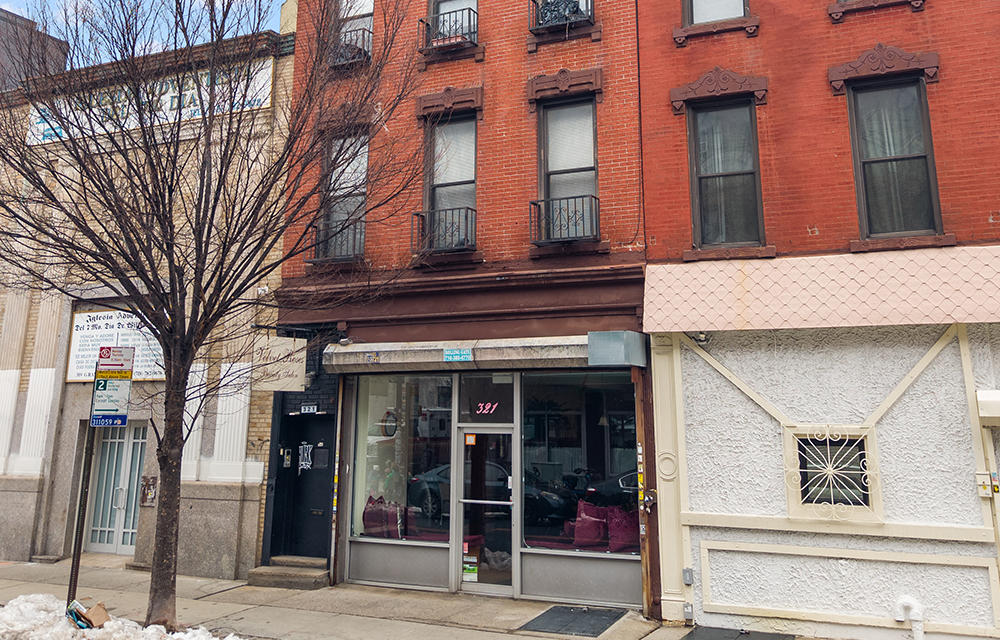
Brooklyn, NY Investment Property Realty Group (IPRG), a New York-based commercial investment firm, has closed the sale of 1094 Hancock St., a mixed-use building in the Bushwick section, for $1.75 million.




Quick Hits

Columns and Thought Leadership

Hunt commercial real estate question and answer: Fortune 500 wisdom - by David Hunt
Yes, there are lessons to be learned from the largest companies in America when comes to managing your real estate. But the decision to buy or lease real estate may not be one of

Hunt CRE question and answer: Choosing a real estate agent - by David Hunt
First, we will only work with one agent exclusively. The primary reason is that we want that agent to legally represent our client’s interests. In New York State, a real estate agent has a fiduciary

New York’s streets are full again, and the retail numbers prove it - by Noam Aziz
Walk down any New York block this year and you can feel it. The sidewalks are crowded, the storefronts are lit, and the energy that defines this city is back at full volume.

A guide to finding the right NYC property management company - by Sanjay Gandhi
Being a small to midsize landlord in NYC is an increasingly demanding endeavor. From navigating complex regulations, increased compliance demands to dealing with tenant issues and remediating violations. It is wise to enlist the assistance of a partner, a professional
.gif)