


 (2).gif)
News:
Spotlight Content
Posted: February 22, 2022
Incorporating natural methods into our buildings - by Bill Gati
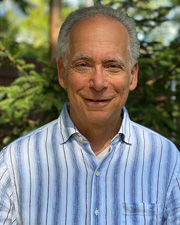
It’s a new year, a new President, a new governor, and a new mayor, and we can expect a lot of changes in the city as it pertains to architecture and building. It seems that the President wants to create a greener country. The governor wants to foster a better New York state environmental program. And the mayor wants to establish new laws that deal with the carbon footprint and greening of the city. All these changes are for the better however we need to stay ahead of the curve to make the best environmental and financial decisions.
Years ago, the city enacted local laws for green roofs and solar collectors on buildings that have been altered to complex or new construction. This has revolutionized the environmental movement in the city and necessitated environmental laws for any construction project. In addition, LEEDS has made it easier for developers to comply with energy mandates by setting rules that dictate different levels of compliance. Most large corporations and government entities have incorporated LEEDS into their framework of approvals and developments. The real estate community will either love it or hate it, but regardless they have to adhere to it.
We design with sophisticated programs such as REVIT and other solar energy programs from an architect’s perspective. Our goal and resolution are to provide insulated skin for our buildings. Efficient heating and cooling systems, solar panels, green roofs use renewable resources, highly efficient electrical systems, efficient lighting, passive heating and cooling and many other features that conserve energy and cut down carbonation.
As the price of oil, gas and electricity increased substantially (and in the last few months, a war in Ukraine and Eastern Europe appears imminent), the focus of oil, gas, and electricity has a tremendous impact on our daily lives and finances and global warming.
There is no question that as the population grows and the city is faced with more overcrowding, pandemic concerns, unemployment, homelessness, and crime: We need to find a way to bring balance back to our residences. I propose that we incorporate natural methods into our buildings, developments, and urban landscape.
In the old days, the garden suburb, the green belt movement, and the city’s greening were some of the most effective programs initiated by the government. Some of the most successful projects of late could say the Highline, Hunters Point in Long Island City and developments along the waterfront in Brooklyn were the most successful at bringing balance to insane habitats and increasing the real estate value of the areas they serve. In particular, Hunters Point, with some significant development along the waterfront extremely desirable and lucrative for developers.
My theory is that if you promote a natural balance, you will see a better quality of life, and all will benefit. All in all, adding 20% to the cost of the project to save 20% per year in energy cost is a great deal in the long run, especially if you factor the desirability in home area sales increase. Many clients work with the idea that they have to spend money: whether it’s on architectural fees, amenities, upgrades, etc., but a few projects in Hunters Point were very successful in doing just that. Your vacancy rate is 0%, and the waiting list is five years. In addition, many of their units are affordable and stabilized. The whole building is a rental, and there is no need for condos and co-ops that remain empty until foreign investors with deep pockets buy them.
One can argue that architecture has the power to create, foster, and perpetuate an environment that can improve quality of life and health equity. If developers look at long-term wins for both sides and stop looking at the financial bottom line, we will all be better off and make good long term decisions for our planet and humans who dwell here. We must be kind and respectful to Mother Nature, and in turn, she will take care of us. We need to look at areas in the city that are squalid, rundown, in need of severe environmental help and build affordable housing in those areas. There are too many homeless that do not need to be. One area in mind is the area around Yankee Stadium in the Bronx. Housing in the area is incredible, transportation is easily accessible, infrastructure is impressive, but there’s very little development in that area.
I believe that gentrification and probably development will change neighborhoods. Before me, many great authors advocated for creating more of a livable city with trees, paths, light, and amenities. One needs to look at these underserved areas with high crime, drug use, teen pregnancy, etc. and spend time to create an equitable quality of life throughout the communities they serve. If done correctly, people would feel better about life about their communities and each other. This would foster less violence, fewer deaths, and more policing. I hate to burden developers, architects and builders. Still, humanistic concern for the people who live in the areas of your projects and buildings will reflect better quality of life for your tenants. Nothing can highlight this more than the needless deaths due to fire in the Bronx recently. The building was not sprinklered, the doors didn’t close, and worst of all, the heat wasn’t working, which forced people to use electric heaters, which are flammable if they operate with extension cords. The instructions clearly say not to use extension cords. People do not take time to read the instructions and, as a result, create severe problems for themselves. It is the city’s responsibility and the landlords and the building department to make sure that all the buildings are safe and functioning regardless of how careless people are. This can be prevented in the future if landlords are held accountable for living conditions. Ultimately, the bottom line should continuously improve people’s quality of life and honour Mother Earth.
Bill Gati, AIA, is the president of Architecture Studio, Kew Gardens, N.Y.
Tags:
Spotlight Content
MORE FROM Spotlight Content

The commercial classroom: 1031 tax-deferred exchanges - by Edwad Smith Jr.
The sale of real estate may trigger capital gains taxes on the net profits of that sale. These taxes may be deferred by participating in a 1031 tax exchange, in essence, by purchasing property(s) to replace the



.png)

Quick Hits


Columns and Thought Leadership

2026 Developing Queens: Long Island Board of Realtors advances commercial growth and advocacy in Queens
The Long Island Board of Realtors (LIBOR) Commercial Network continues to play a key role in advancing opportunities and strengthening the commercial real estate landscape across Queens. Through targeted programming and global outreach

From vacancy to vitality: How adaptive reuse is reshaping Long Island’s CRE landscape - by Andrea Tsoukalas Curto
Adaptive reuse has become one of the most important conversations in commercial real estate today. Long Island has a large inventory of aging retail, office and industrial

CRE Guide Featured Company: Merritt Environmental Consulting Corp.
Merritt Environmental Consulting Corp. (MECC) was established in June of 2009 after being part of a larger engineering firm for almost 20 years. The focus of the company is to assist lending institutions, attorneys, real estate investors, and property owners with environmental concerns. Today, MECC has offices in New York, Florida, and Vermont and has grown into a regional consulting firm serving clients along the East Coast.
2026 Developing Long Island: ERG Commercial Real Estate launches its new Retail Leasing division
North Hempstead, NY ERG Retail Leasing is the dedicated leasing division of ERG Commercial Real Estate, an established full-service commercial real estate brokerage for over 35 years.