



News:
Construction Design & Engineering
Posted: July 13, 2015
How to choose the right ID cards to secure your building: A list of differentiating factors
ID cards are now well established as the first layer of security to keep your employees, tenants and visitors safe and secure. Widely used for identification, access control, and time and attendance purposes, ID cards help identify at a glance who should be on your property, and more importantly who should not.
Idesco has been a leader in the ID card industry for more than seven decades and is still going strong. My grandfather founded the company in 1943 by providing the War Department with ID cards. The system involved taking a person's photo, cutting it out, and laminating it to a card-sized piece of paper. The technology has certainly evolved over the years and building managers now have a lot more options to consider when it comes to ID card solutions.
If you are looking into purchasing a new ID card system or if you want to maximize the use of your current printer, you need to review the available ID card features and options. Here is a comprehensive list of differentiating factors that you should take into account before making your next purchase.
Card material: Standard PVC plastic is the most common choice but you can also go for biodegradable or recycled cards to lessen your impact on the environment. If you use a retransfer ID card printer, it is highly recommended to use composite PVC/PET cards as they are more resistant to heat.
Card size: The standard CR80 credit card size (3.375'' x 2.125'') is undoubtedly the most popular option but we have noticed a much higher demand for larger cards over the last few years. We now sell ID card systems that can personalize CR100 cards (3.88" x 2.63") and oversized badges (4.88" x 3.46" or 5.51" x 3.46"). Oversized photo IDs let you visually scan a crowd and identify who has proper credentials and access rights.
Card thickness: Most ID card printers support cards of variable thicknesses that range from 10 mil to 30 mil.
Card color: Colored ID cards are a terrific way to set up different badges for each type of users. Pick one color for your employees and another one for your visitors to identify everyone at a glance.
Data encoding: It has never been easier to add data to your cards. The most inexpensive solution is to add a barcode to the design of your badge with your ID card software. For access control or time & attendance badges, opt for magnetic cards. You will need an ID card printer with a magnetic card encoder to encrypt the data to your cards.
If you need secure badges, smart cards are the way to go. Smart contact cards must be inserted into a reader to be read, while contactless cards have to come within the range of a reader to be read. Contactless cards are ideal for access control in buildings and facilities where crowd control is an issue.
Visual security: Many users believe that adding a hologram to their cards is complicated and way too expensive to even consider it. This used to be the case years ago but does not hold true today. Many ID card printers have the option of adding graphics to the overlay panel so you can get a highly secure badge without having to laminate your cards! You can add your logo as a hologram for a fraction of the cost.
Lamination: Laminating your cards will significantly extend the lifespan of your cards and reduce the risk of counterfeiting and tampering. You can print laminated cards with a laminating ID card system. Choose from clear patches, holographic films or custom holograms to add an extra layer of security to your badges.
Other options: Cards with an adhesive back - or sticky-back cards - are great to add information on technology cards such as Proximity cards.
Some ID card printers also allow you to use rewritable cards. This technology allows you to erase and reprint on the same card up to 200 times. Mainly used for visitor IDs, rewritable cards are an affordable way to issue temporary badges as no ribbon is required.
For more information, call Idesco at 212-889-2530 or visit www.idesco.com.
Andrew Schonzeit is the president of Idesco Corp., New York, N.Y.
MORE FROM Construction Design & Engineering
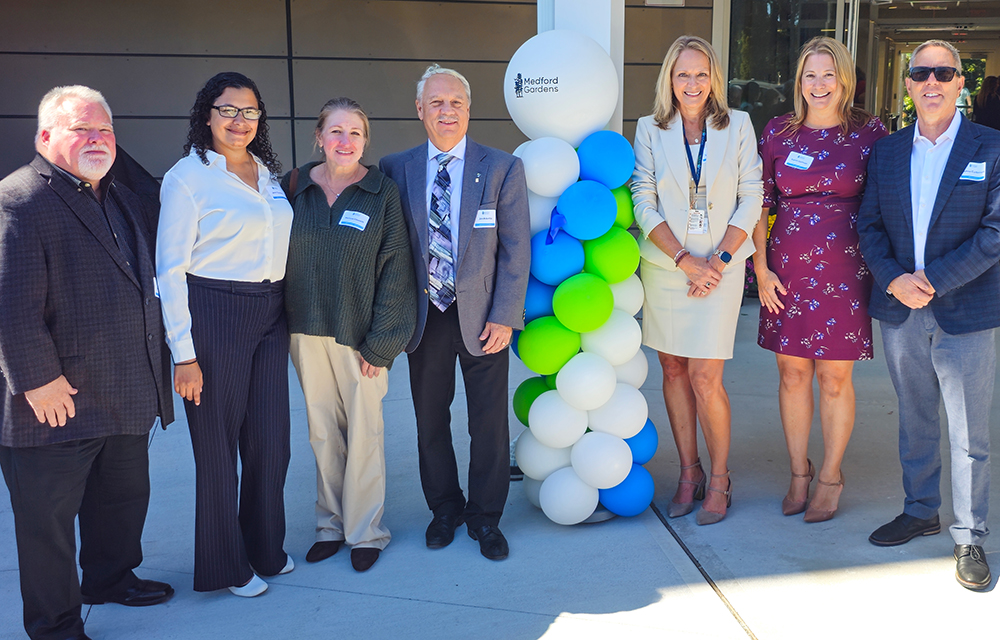
WellLife and H2M celebrate new senior housing Medford Gardens provides affordable housing for renters 55 and older
Medford, NY H2M architects + engineers (H2M) joined WellLife Network, along with state and local officials, housing advocates, and project partners, to celebrate the grand opening of Medford Gardens, a new affordable and supportive

Quick Hits

Columns and Thought Leadership

We support green construction. Just not this kind - by Tammy Smith
Most people think of St. Patrick’s Day as a fun footnote on the calendar. In construction logistics, however, it’s a full-scale operational variable — especially if your work touches major metro areas with major parades and, let’s call it what it is, enthusiastic celebrants.

Premium experiences, proven returns: The New revenue playbook for sports venues - by Terry McIntyre
Investing in the Fan Experience as a Revenue Strategy The sports and entertainment venues that bet on premium experiences years ago are now seeing those investments pay off in packed seats, increased revenue, and industry recognition.

The Façade is no longer just a finish. It’s a risk strategy. - by Bentley Zhao
Twelve-billion-dollar weather disasters have already hit the U.S. through the first half of 2026, causing at least $31.9 billion in damage, according to Climate Central, the nonprofit that now maintains the disaster database NOAA discontinued.
