



News:
Brokerage
Posted: January 8, 2019
Multifamily: How New York apartment communities handle package deliveries - by Rick Haughey
Year after year, the number of purchases and amount of money spent online continues to soar. In fact, Cyber Monday 2018 surpassed projections and was the biggest online shopping day in U.S. history, according to Adobe Analytics.
So what does this mean for apartment communities?
The National Multifamily Housing Council and Kingsley Associates 2018 Package Delivery Survey sheds some light on how property managers are responding to the demands associated with increased package deliveries.
While the majority (60%) of Metro New York respondents receive more than 100 packages in an average week, that number skyrockets in high volume periods such as the holidays. More than 40% receive more than 400 packages per week during these prime times.
This growing number of deliveries has a serious impact on property management and staff. More than half (51%) of area property managers surveyed reported that their staff spends more than four hours managing and sorting package deliveries during a typical week. During the holidays, that share jumps to 73%.
As the number of items residents purchase online grows, including those with high value, so has the importance of package safety. The vast majority of Metro New York respondents (92%) have a dedicated space for package storage, and 100% of those were reported as secure.
Camera systems are far and away the most popular method used by apartment communities in the market to ensure package safety, with 80% of local respondents indicating they have them on site.
Across the board, the biggest storage trend is the use of package lockers. Nationally, 30% of communities utilize package lockers as their primary package storage method. Among large metro areas, San Francisco, Portland and Boston have the highest proportion of communities primarily using package lockers.
Metro New York, however, seems to be slow to adopt them, as only 19% of communities surveyed use package lockers. And those that do use them have not been doing so for long: 56% of communities have utilized them for one year or less. Some of the factors prohibiting communities from installing package lockers could include the cost, lack of space, and no good location to put them.
The report showed a correlation between the use of package lockers and management satisfaction. More than 60% of communities with lockers across the country are satisfied with their package solution compared to just 23% of communities that hold packages in the management office.
The hundreds of packages being delivered to Metro New York apartment communities each week are an issue that property managers will continue to face. The key is to find solutions that not only meet residents’ needs, but also make financial sense and ease the burden on community management and staff.
Rick Haughey is VP, industry technology initiatives for the National Multifamily Housing Council, Washington, D.C.
Tags:
Brokerage
MORE FROM Brokerage
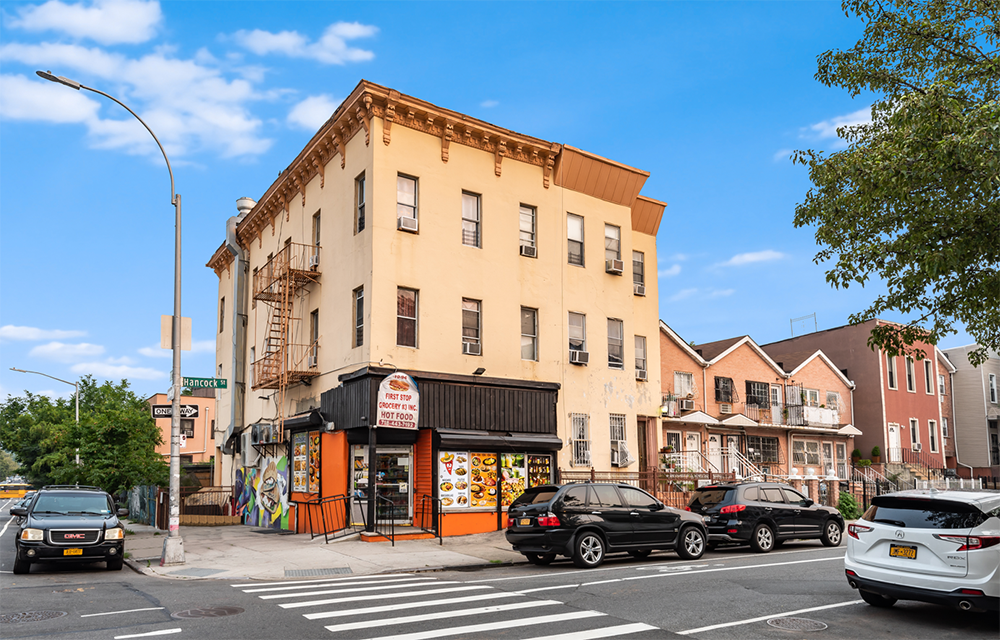
Investment Property Realty Group closes $1.75 million sale of 1094 Hancock Street in Brooklyn
Brooklyn, NY Investment Property Realty Group (IPRG), a New York-based commercial investment firm, has closed the sale of 1094 Hancock St., a mixed-use building in the Bushwick section, for $1.75 million.




Quick Hits

Columns and Thought Leadership

Hunt CRE question and answer: Choosing a real estate agent - by David Hunt
First, we will only work with one agent exclusively. The primary reason is that we want that agent to legally represent our client’s interests. In New York State, a real estate agent has a fiduciary

A guide to finding the right NYC property management company - by Sanjay Gandhi
Being a small to midsize landlord in NYC is an increasingly demanding endeavor. From navigating complex regulations, increased compliance demands to dealing with tenant issues and remediating violations. It is wise to enlist the assistance of a partner, a professional

Hunt commercial real estate question and answer: Fortune 500 wisdom - by David Hunt
Yes, there are lessons to be learned from the largest companies in America when comes to managing your real estate. But the decision to buy or lease real estate may not be one of

New York’s streets are full again, and the retail numbers prove it - by Noam Aziz
Walk down any New York block this year and you can feel it. The sidewalks are crowded, the storefronts are lit, and the energy that defines this city is back at full volume.
.gif)