



News:
Brokerage
Posted: November 14, 2023
Houlihan Lawrence releases Q3 commercial market report
Rye Brook, NY The Westchester County commercial market continues to show mixed results with multifamily and industrial/flex markets performing well while office sector continues to struggle and retail leasing weakens, according to the Houlihan Lawrence Q3 commercial market report.
“Commercial real estate assets have been at the eye of the interest rate storm for many months now. The increase in interest rates across maturities, a deeply inverted yield curve and, most recently, a rapid rise in the yield of long dated bonds, are not constructive for commercial real estate valuations,” said Garry Klein, managing director of Houlihan Lawrence Commercial division. “Volatility in interest rates makes it very difficult to anchor real estate valuations. Further, transactions have declined meaningfully across property types, obscuring price discovery. CoStar reports that 2023 is on track for the lowest transaction year since 2013. Westchester’s transaction volume is also trending at very low levels and determining asset valuation has become increasingly difficult for office and retail properties. Industrial and very small multifamily have a bid if priced at or below replacement value,” he said.
Here are highlights from the report:
MULTIFAMILY RESIDENTIAL – STABLE AND PERFORMING WELL
Multifamily residential assets in Westchester have enjoyed a multiyear period of strong fundamentals that continues. Over the last several years, vacancies have hovered around 4% and effective rents have increased -on a year over year basis – in most quarters over the last three years. Rock solid fundamentals have helped the market to absorb close to 1500 new units delivered in the last three quarters and new 6400 units delivered over the last three years. Prior to the Pandemic, households focused on walkability to work, play and transportation. Convenience and proximity to urbanity was a priority. The pandemic forced a refocusing of priorities among households. Convenience has been re-defined. Comfort and enough space to work from home, access to open air, nature, and opportunities to improve one’s well-being have been prioritized. Westchester multifamily buildings fall in the sweet spot of households’ objectives by offering tenants convenience -and many times walkability as well- plus better value per square foot. Easy access to great infrastructure, health care, wellness, and recreation, such as, affordable day trips to national parks and other nature friendly entertainment possibilities are highly sought after attributes that enhance the attractiveness of multifamily assets in Westchester.
OFFICE PROPERTIES - CHALLENGED ACROSS THE COUNTRY
Westchester office buildings continue to face unfavorable trends and vacancies are at the highest level over the last three years. Leasing volumes were half of the average activity over the same period (three years). During the third quarter, Costar reported a large sub-let deal that moved the average lease rates positively.
Office buildings, in Westchester and across the country, are facing evolving demands from tenants. A stream of departures plagues older buildings as companies favor newer buildings with amenities and convenient parking. In addition, to cope with labor scarcity, many companies have assembled remote workforces that utilize office space only for brief periods, thus reducing their office space needs. Amenities in office premises are now recognized as being an important recruiting and retention tool. Overall, corporations are shrinking their footprint but upgrading the fit and finish of the office space they keep. Lease expirations offer companies an opportunity to negotiate tenant improvement incentives from their current landlord or move to another building with a superior offering.
RETAIL PROPERTIES FACE WEAKENING LEASING TRENDS
Following a temporary improvement in retail space supply demand in Westchester, fundamentals have again weakened, and leasing trends have disappointed. Retail space demand in Westchester has been driven by food, beauty, and wellness concepts – including medical. This relatively narrow group of tenants is looking for visible, well-located properties that offer parking convenience. Many are new businesses that have yet to prove their concept’s success. National and regional brands continue to search in Westchester but are price sensitive as they have experience and understand the cost of opening a new location and the ramp-up period required to achieve store profitability. During Q3 2023, space was vacated, and availability increased in Westchester retail space. Leasing activity was very slow- only a third of average leasing volume over the last three years. Price weakened and it is now down 2% year to date and 3% from a year ago (12 months).
INDUSTRIAL ASSETS REMAINS RESILIENT
In sharp contrast to other property segments, Westchester industrial continues to enjoy strong demand. The consumer’s permanent adoption of shopping habits acquired during the Pandemic has underpinned an insatiable demand for industrial space in Westchester. In addition, many small industrial businesses that serve the needs of consumers and other businesses in Westchester need to find a domicile in proximity to their clients. This becomes increasingly harder as new zoning regulations have encouraged other uses to take over areas that had traditionally served industrial businesses in Westchester. Supply-demand for industrial space has been strong over the last two quarters, occupancy has increased, and rents are on the upswing – 7% in the most recent quarter. While price action in this most recent quarter was probably driven by a large lease transaction of a state-of-the-art facility, the message is that Westchester’s industrial sector continues to show remarkable strength.
INVESTMENT TRANSACTIONS DECLINE
Commercial real estate markets have been in recession, even if the overall economy is not. The Federal Reserve efforts to control inflation by aggressively increasing interest rates has had a detrimental effect in commercial investment activity. In an environment where asset valuations are unclear, debt financing is scarce and more costly as compared to recent history, sale transactions have collapsed. However, the median price per square foot remained stable during the quarter. The market is beginning to see new offerings for sale, for now concentrated on office properties. We expect investor opportunities to emerge in earnest toward mid-2024 or when inflation trends stabilize, and investors can more confidently assess costs of improvement and future cash flows for investment properties that become available.
Tags:
Brokerage
MORE FROM Brokerage
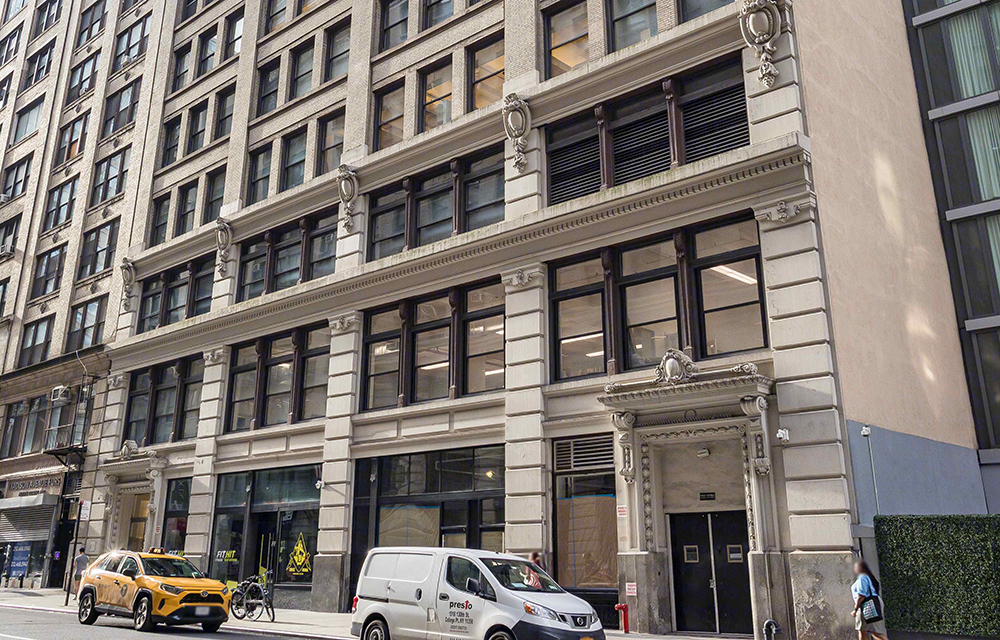
Koeppel Rosen inks 16-year 33,783 s/f lease for coworking firm Nomadworks at 122 West 27th St.
Manhattan, NY According to Koeppel Rosen LLC, leasing and management agent for the Rosen family portfolio, Nomadworks has signed a new 16-year, two-month lease totaling 33,783 s/f at 122 West



Quick Hits

Columns and Thought Leadership

New York’s streets are full again, and the retail numbers prove it - by Noam Aziz
Walk down any New York block this year and you can feel it. The sidewalks are crowded, the storefronts are lit, and the energy that defines this city is back at full volume.

The art of investing in real estate - by Thomas Donovan
Real estate investing is as much an art as it is a skill. No one can time the market, or the factors that drive it, perfectly. Location, zoning, size, transportation, and neighborhood density give you a baseline for

Hunt CRE question and answer: Choosing a real estate agent - by David Hunt
First, we will only work with one agent exclusively. The primary reason is that we want that agent to legally represent our client’s interests. In New York State, a real estate agent has a fiduciary

Hunt commercial real estate question and answer: Fortune 500 wisdom - by David Hunt
Yes, there are lessons to be learned from the largest companies in America when comes to managing your real estate. But the decision to buy or lease real estate may not be one of
.gif)