



News:
Brokerage
Posted: November 25, 2013
Grosvenor Americas sells 126,000 s/f retail building
Grosvenor Americas has sold a 126,000 s/f retail building at 830 North Michigan Ave. in the heart of the city's "Magnificent Mile" shopping district to Chicago-based General Growth Properties, Inc.
The building's tenants include Topshop, the London-based international fashion-forward apparel retailer, which occupies 50,000 s/f on four levels.
Other tenants in the building, strategically located at the corner of North Michigan Ave. and Pearson St., are Columbia Sportswear and Ghirardelli Chocolates.
"While the property was not listed for sale, we were approached by General Growth and reached acceptable terms to sell the asset," said Scott Brody, vice president, investments, Grosvenor Americas.
"830 North Michigan Avenue is a tremendous asset in one of the world's leading shopping destinations," said Michael Beattie, Chief Investment Officer, Grosvenor Americas. "Its prime location just north of the historic Water Tower is matched only by the prominence of its tenants, including international fashion leader Topshop and Columbia Sportswear.
Built in 1947 and renovated in 1994, 830 North Michigan Avenue was acquired by Grosvenor Americas in 1993. The company owns two other properties in the Chicago metropolitan area: Rice Lake Square in Wheaton and Church Street Plaza in Evanston.
Chicago's Magnificent Mile is one of the most vibrant and successful commercial, residential, cultural and tourist areas in the United States. Originated as part of Daniel Burnham's historic 1909 Plan of Chicago, this stretch of North Michigan Avenue between the Chicago River and Lake Shore Drive offers a unique mix of some 460 stores, 275 restaurants, 23,000 hotel rooms in 60 hotels, five unique museums and entertaining attractions, and prestigious educational and medical facilities. An international destination with over three million square feet of retail space, the Magnificent Mile attracts over 20 million visitors per year and generates nearly $2 billion annually in retail sales alone.
Tags:
Brokerage
MORE FROM Brokerage
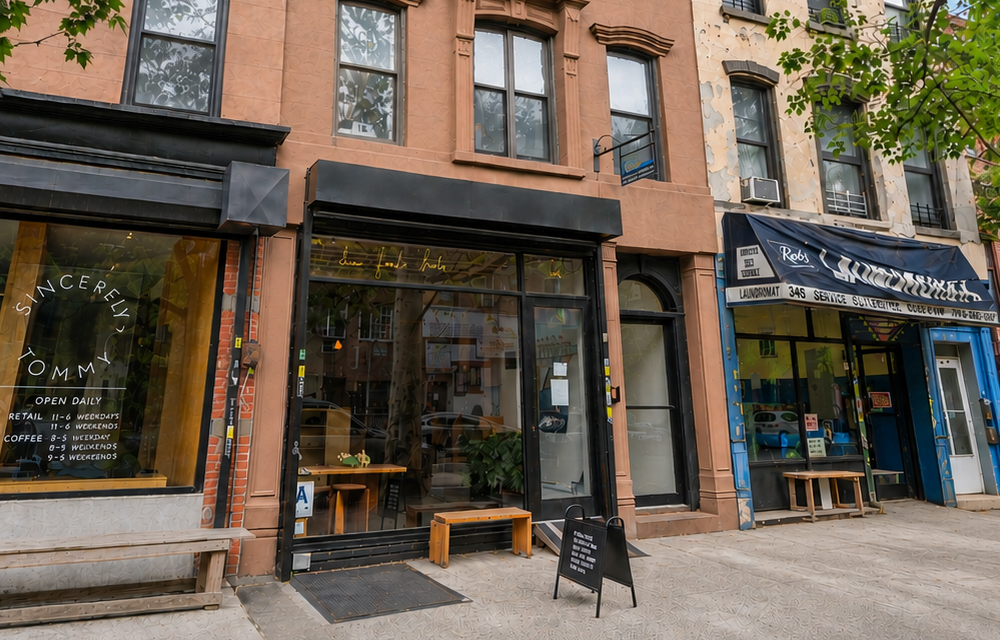
Bestreich, Reynolds, Davila, and Flaherty of Investment Property Realty Group close $1.97 million sale of 343A Tompkins Ave. in Bed-Stuy
Brooklyn, NY Investment Property Realty Group (IPRG) closed the sale of 343A Tompkins Ave., a mixed-use building located in the Bed-Stuy section of the borough, for $1.97 million.


Quick Hits
 (2).gif)

Columns and Thought Leadership

A guide to finding the right NYC property management company - by Sanjay Gandhi
Being a small to midsize landlord in NYC is an increasingly demanding endeavor. From navigating complex regulations, increased compliance demands to dealing with tenant issues and remediating violations. It is wise to enlist the assistance of a partner, a professional

New York’s streets are full again, and the retail numbers prove it - by Noam Aziz
Walk down any New York block this year and you can feel it. The sidewalks are crowded, the storefronts are lit, and the energy that defines this city is back at full volume.

Hunt commercial real estate question and answer: Fortune 500 wisdom - by David Hunt
Yes, there are lessons to be learned from the largest companies in America when comes to managing your real estate. But the decision to buy or lease real estate may not be one of

Hunt CRE question and answer: Choosing a real estate agent - by David Hunt
First, we will only work with one agent exclusively. The primary reason is that we want that agent to legally represent our client’s interests. In New York State, a real estate agent has a fiduciary
.gif)