



News:
Brokerage
Posted: August 11, 2014
Green of Evergreen discusses insurers cracking down on buildings with violations
Owners of thousands of pre-war rental buildings in N.Y.C. with many Housing Preservation and Development (HPD) violations are seeing a sharp spike in insurance premiums and in many cases being declined for renewals and new policies, according to Izzy Green, co-founder and president of Evergreen Insurance and Risk Management which specializes in commercial real estate. Green suspects that a few insurers decided to crack down and now much of the industry is following them.
"When faced with a premium increase or policy decline, landlords will often hire third party specialists to help them remove the violations and get off the insurer's blacklist," Green said. Evergreen recently helped the owner of seven apartment buildings. "We got the violations removed and brought in another insurer who lowered the premium by $20,000," Green said.
Evergreen recently had a commercial mortgage broker reach out to them with regard to a client that was in contract to buy a portfolio of twelve buildings in Brooklyn and Bronx. The buyer was not able to get insurance on the buildings because they had numerous HPD violations. "So far, the closing was put on hold until we find a way around this problem," according to the mortgage broker.
Joel Kivelevitz, an insurance broker at Evergreen, said, "A loyal customer called me the other day. He had a portfolio of nine large N.Y.C. apartment buildings insured through another broker, and the customer asked me if it was normal for a carrier to significantly raise the premium on renewal due to old HPD violations - that have already been addressed but never went through the process of having them removed from the N.Y.C. Department of Buildings database? We advised the customer that if we were the agent on this account we would not let this happen to him."
"With Evergreen's vast knowledge of HPD violations and the close relationship we have with our underwriters, we worked hard to assure the carrier that the majority of the violations have been addressed and merely need the remaining paperwork to have the records removed. In addition we showed how this building owner does an outstanding job in managing all the upkeep of his buildings," Kivelevitz said.
"We bound a new policy with a company that offered the same coverage terms as their prior policy with a well over a 20% savings! All this was done in a mere 10 days before the renewal. This was only possible due to the teamwork, organization and structure of Evergreen Insurance Agency," he added.
"Countless times insurance companies turn away buildings with excessive HPD violations. Since Evergreen Insurance is the expert in real-estate insurance, Evergreen knows of many sites and databases that are the most up to date to show the most accurate updates on violations that have already been addressed. We use these tools to convince the underwriters to reconsider such an account. However, "the main factor is that we've built an outstanding trust with our underwriters as well as with our loyal customers", said Green.
Tags:
Brokerage
MORE FROM Brokerage
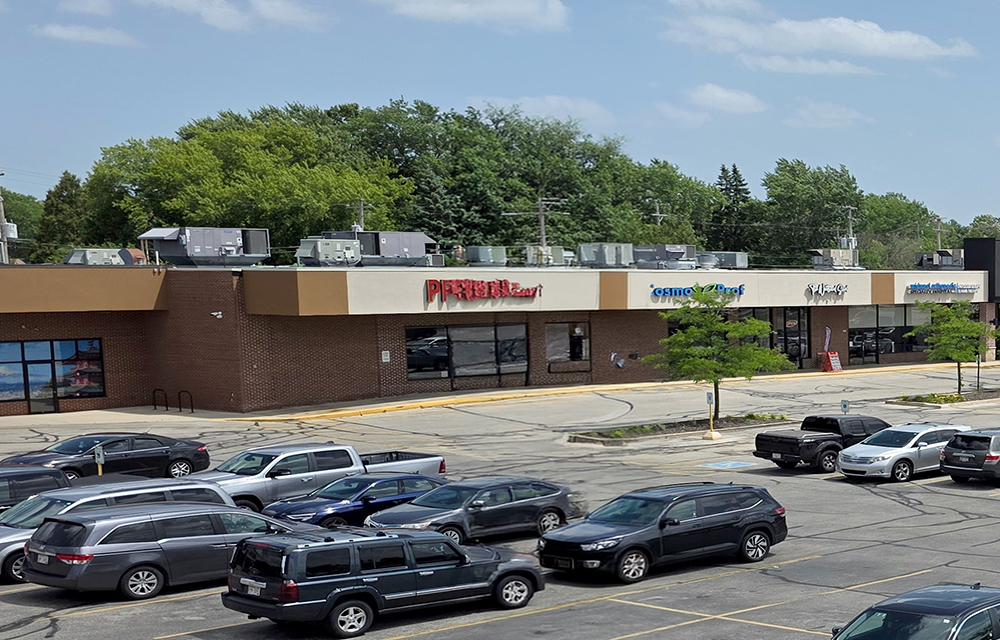
United Properties Corp. expands Wisconsin and Illinois retail presence adding 200,000 s/f
West Allis, WI United Properties Corp. completed two retail acquisitions totaling $27.4 million across Illinois and Wisconsin, adding 205,000 s/f of shopping center space to its portfolio


Quick Hits

Columns and Thought Leadership

A guide to finding the right NYC property management company - by Sanjay Gandhi
Being a small to midsize landlord in NYC is an increasingly demanding endeavor. From navigating complex regulations, increased compliance demands to dealing with tenant issues and remediating violations. It is wise to enlist the assistance of a partner, a professional

Hunt commercial real estate question and answer: Fortune 500 wisdom - by David Hunt
Yes, there are lessons to be learned from the largest companies in America when comes to managing your real estate. But the decision to buy or lease real estate may not be one of

Positive forecast for New York’s pro-housing push? - by Philip Butler
New York’s housing crisis remains a hot button topic despite growing consensus that varied and affordable housing is desperately needed statewide. Governor Hochul has recently introduced several initiatives to overcome N.Y.’s anti-housing

New York’s streets are full again, and the retail numbers prove it - by Noam Aziz
Walk down any New York block this year and you can feel it. The sidewalks are crowded, the storefronts are lit, and the energy that defines this city is back at full volume.
.gif)