



News:
Brokerage
Posted: September 18, 2009
Governor Paterson awards $27.2 million in Restore NY grants for WNY
Governor David Paterson awarded $27.2 million for WNY as part of the third round of Restore NY grant program. The governor was joined by state and local leaders in Niagara Falls, which will receive a total of $6.3 million for two projects. The awards are part of the $153.6 million in Restore NY Communities Initiative, which is administered by Empire State Development. A total of 79 projects across the state will help revitalize urban areas, stabilize neighborhoods, and invite renewed investment.
"The Restore NY program is critical to our economic development, smartly leveraging private investment with state dollars so that we provide our neighbors with the resources they need to grow," Paterson said. "With this third round of funding, our villages, towns and cities can move forward with renewal projects that create jobs and attract businesses and consumers."
The city will receive $5 million for the green rehabilitation of the vacant former South Junior High School into Niagara City Lofts, 52 market rate live/work and commercial spaces located in the city amid the Niagara Falls Memorial Medical Center, Niagara Arts & Cultural Center (NACC) and Seneca Niagara Casino. This project will restore the core of the city's sustainability, revitalize the Memorial Park neighborhood in accordance with its residents' plan and attract new people associated with the hospital, the NACC and the Casino to downtown.
The second award for $1.3 million will fund the redevelopment of two city buildings: the former 39th St. School, which will be converted to 35 to 40 patio-style apartments for an aging population; and the former Municipal Building, which will be will be mixed use and include the operation of an assisted living facility and commercial space.
Additional WNY projects include:
* $2.5 million to Dunkirk for the Alumax/Roblin/Edgewood Brownfield Redevelopment project, commonly referred to as "Progress Park."
* $7.6 million to Buffalo for neighborhood revitalization, including housing rehabilitation and strategic demolition of blighted properties.
* $1 million to Jamestown for the Jamestown Connector Stabilization Project.
* $6.6 million to Buffalo for commercial and mixed use projects that will focus on the renovation of historic properties and adaptive reuse opportunities within the city's legacy-built environment per plans and strategies that have identified redevelopment priorities.
* $663,000 to Tonawanda to complete the final phase of a demolition project funded that received Restore NY round II funds.
* $660,000 to Gowanda for the restoration of the Hollywood Theater, a key catalyst for economic redevelopment in Gowanda's main business district.
* $1 million to Grand Island to rehabilitate the currently vacant Dunlop Building, a commercial building complex immediately adjacent to the I-190 thruway.
* $800,000 to Lackawanna for a comprehensive revitalization project that will fulfill the goals of its citywide redevelopment plan.
Restore NY grants are awarded to municipally sponsored projects to demolish, deconstruct, rehabilitate and/or reconstruct vacant, abandoned or condemned buildings. The projects must be architecturally consistent with nearby and adjacent properties or built in a manner consistent with the area's local revitalization or urban development plan. Awards were made to qualified applicants based on statutory criteria outlined in the 2006-2007 state budget and, to the fullest extent possible, in a geographically proportionate manner throughout the state. Rounds I and II provided a total of $150 million for these kinds of projects. A full list of the recipients of the Restore NY Round III funding is available at: http://www.ny.gov/governor/press/pdf/press_0902091.pdf.
For more information regarding Restore NY, please visit www.empire.state.ny.us/restoreNY/default.asp.
Tags:
Brokerage
MORE FROM Brokerage
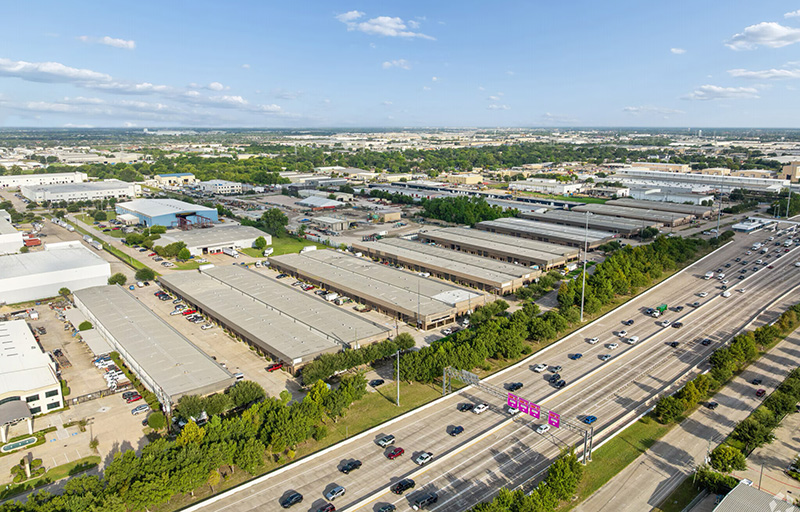
Simi Capital enters Texas with acquisition of 359,000 s/f small-bay industrial portfolio in Northwest Houston
Houston, TX Simi Capital acquired a three-property, 359,000 s/f small-bay industrial portfolio. The transaction, completed in a joint venture with Decker Capital, marks Simi


Quick Hits

Columns and Thought Leadership

A guide to finding the right NYC property management company - by Sanjay Gandhi
Being a small to midsize landlord in NYC is an increasingly demanding endeavor. From navigating complex regulations, increased compliance demands to dealing with tenant issues and remediating violations. It is wise to enlist the assistance of a partner, a professional

Hunt CRE question and answer: Choosing a real estate agent - by David Hunt
First, we will only work with one agent exclusively. The primary reason is that we want that agent to legally represent our client’s interests. In New York State, a real estate agent has a fiduciary

Hunt commercial real estate question and answer: Fortune 500 wisdom - by David Hunt
Yes, there are lessons to be learned from the largest companies in America when comes to managing your real estate. But the decision to buy or lease real estate may not be one of

New York’s streets are full again, and the retail numbers prove it - by Noam Aziz
Walk down any New York block this year and you can feel it. The sidewalks are crowded, the storefronts are lit, and the energy that defines this city is back at full volume.
.gif)