



News:
Brokerage
Posted: January 24, 2017
Governor Cuomo to amend industrial hemp agricultural legislation
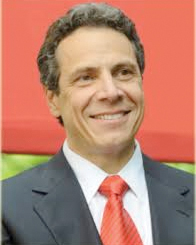 Governor Andrew Cuomo
Albany, NY According to Governor Andrew Cuomo, new actions to grow New York’s burgeoning industrial hemp industry will be implemented. Building on the success of the state’s Industrial Hemp Agricultural Pilot Program that launched in 2016, the governor has proposed to amend legislation to further grow the industry and authorize farmers to work with the state to conduct hemp research as an agricultural commodity.
In addition, the governor will host the first-ever Industrial Hemp Summit in the Southern Tier to bring manufacturers, farmers, researchers and other stakeholders together to identify challenges and opportunities to grow the industry and boost the agricultural economy throughout the state.
“New York is a beacon for innovation, smart growth and emerging industries – and with this proposal, we will continue to diversify and grow our agriculture industry, while supporting research and development and creating jobs throughout the state,” governor Cuomo said. “We will position New York at the forefront of a growing agricultural sector that is ripe with economic opportunity, and capitalize on our agricultural assets to provide farmers with top-notch resources enabling them to grow the hemp industry for decades to come.”
Hemp is a growing commodity for states across the nation, as both the stalk and seed from hemp can be used in the production of a variety of goods, including clothing, building materials, fuel, paper, and consumer products. Industrial hemp is defined by .3% THC or less, and has generated $573 million in sales in the U.S. in 2015 alone. Currently, the production of hemp is authorized at research projects at Cornell University College of Agriculture and Life Sciences and SUNY Morrisville College.
New York’s Emerging Hemp Industry
Many valleys throughout the region have the ideal climate and soil for this crop to flourish, which has led to the interest by Cornell and Morrisville’s research programs. Over the past year, Cornell has conducted research on seeding equipment and plans to start a number of trials during the next growing season. Additionally, Morrisville has led experiments with organic fertilizers and potential uses of hemp. To build upon these successes, the governor has proposed to:
Amend Legislation and Regulations
This will expand the Industrial Hemp Agriculture Pilot Program by authorizing private farms to work with the NYS Department of Agriculture and Markets to begin researching and growing the product. This collaboration will allow for the proper business planning, product monitoring and data collection that is consistent with research objectives of the pilot program. In addition, this will increase the number of permitted hemp sites. Current law allows up to 10 sites in the state, authorized by the Department of Agriculture and Market’s commissioner, to grow or cultivate industrial hemp.
Industrial Hemp Summit
The summit will serve as a dialogue for researchers, farmers, manufacturers, state and local officials, and other economic development leaders, to identify limitations, assess potential benefits, and determine what additional policy actions may be necessary to continue to spur this rapidly growing industry. Taking place in the Southern Tier, the summit will focus on discussing issues including the cost of production, potential markets, and profitability of growing hemp.
Secure the Industry
The Department of Agriculture and Markets will review security and transportation requirements in the current regulation and develop revisions that reflect the minimal risk hemp poses.
Tags:
Brokerage
MORE FROM Brokerage
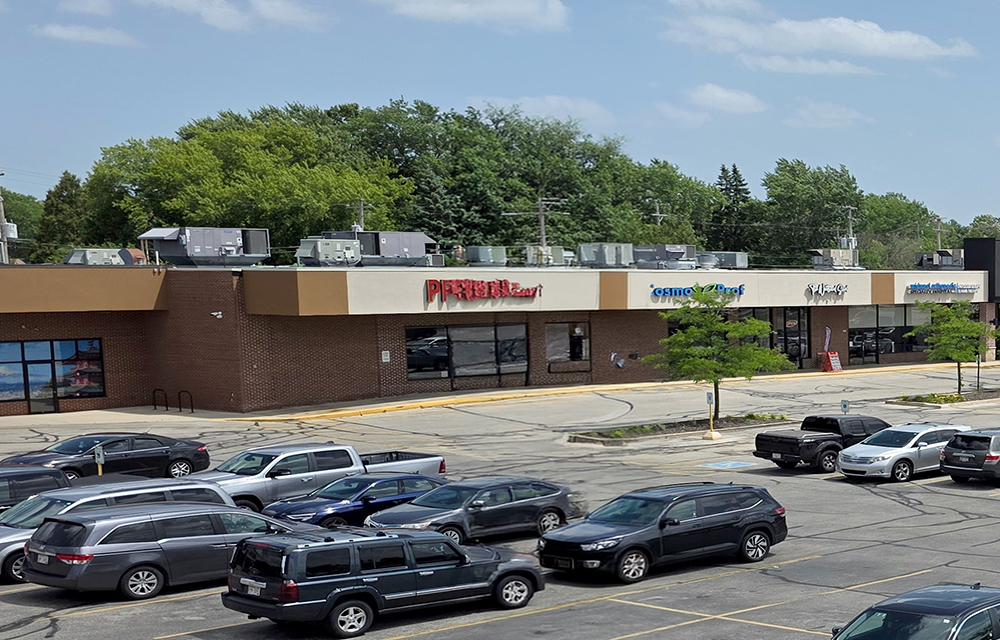
United Properties Corp. expands Wisconsin and Illinois retail presence adding 200,000 s/f
West Allis, WI United Properties Corp. completed two retail acquisitions totaling $27.4 million across Illinois and Wisconsin, adding 205,000 s/f of shopping center space to its portfolio


Quick Hits

Columns and Thought Leadership

A guide to finding the right NYC property management company - by Sanjay Gandhi
Being a small to midsize landlord in NYC is an increasingly demanding endeavor. From navigating complex regulations, increased compliance demands to dealing with tenant issues and remediating violations. It is wise to enlist the assistance of a partner, a professional

Hunt commercial real estate question and answer: Fortune 500 wisdom - by David Hunt
Yes, there are lessons to be learned from the largest companies in America when comes to managing your real estate. But the decision to buy or lease real estate may not be one of

New York’s streets are full again, and the retail numbers prove it - by Noam Aziz
Walk down any New York block this year and you can feel it. The sidewalks are crowded, the storefronts are lit, and the energy that defines this city is back at full volume.

Positive forecast for New York’s pro-housing push? - by Philip Butler
New York’s housing crisis remains a hot button topic despite growing consensus that varied and affordable housing is desperately needed statewide. Governor Hochul has recently introduced several initiatives to overcome N.Y.’s anti-housing
.gif)