


News:
Owners Developers & Managers
Posted: May 16, 2023
Geothermal heat pump technology approved as renewable energy - by Chris Plummer

For building owners, consulting engineers, and general contractors searching for new ways to enhance the efficiency and sustainability of cooling units while seeking to preserve the atmosphere and global ecosystem, the big news is geothermal heat pump technology.
The Inflation Reduction Act of 2022 introduced some exciting new opportunities for owners and developers in building sustainability.Under the new Act, geothermal heat pump technology is now classified as a “renewable energy,” offering considerable tax benefits and allowing you to keep BTUs in the building. The federal income tax breaks offer:
• 30% of geothermal heat pump system costs
• Direct rebates equal to the credit for non-taxable entities
• No limit to the maximum credit or rebate
• Exemption from AMT
• Recognition for up to three years prior
• Rights to sell and transfer
• Use for more than one year
The Act also introduces the ability for commercial properties to take advantage of accelerated depreciation within their taxes, such as:
• Five-year MACR depreciation for geothermal heat pump system costs
• Bonus depreciation eligibility
In order to qualify for these enhanced benefits, you simply need to meet the following criteria:
• The building is located within the United States
• Original use of the property begins with the taxpayer
• Your construction commenced before 12/31/2034
In many cases, these benefits can result in a return on investment (ROI) in less than one year.
During the first week of March, senior account executive at Gil-Bar, Nick Denson, organized a full week of presentations to customers in New York City with Dan Ellis, former president of ClimateMaster. These presentations went on to explain why the Inflation Reduction Act of 2022 is important to building owners, developers and consulting engineers. “The excitement around this new law creates a win-win for everyone. Geothermal helps the environment and pays for itself in just a year,” said Denson. “The reactions to this news have been incredibly positive.”
Chris Plummer is a project manager with Gil-Bar, Manhattan, N.Y.
MORE FROM Owners Developers & Managers
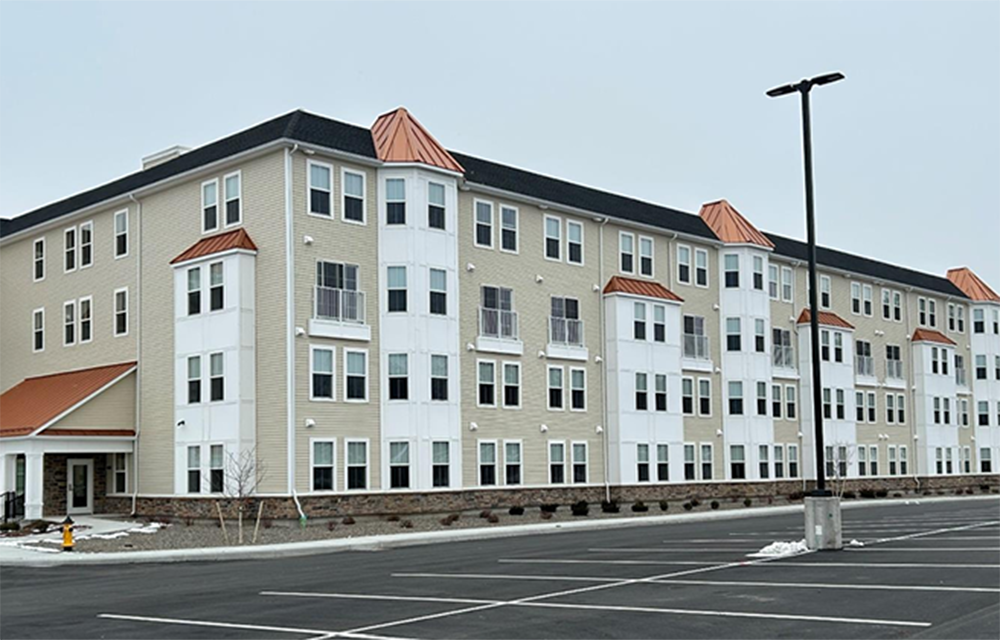
New York State Homes and Community Renewal finish $32 million affordable development
Union, NY New York State Homes and Community Renewal commissioner RuthAnne Visnauskas have completed the Homesteads on Grand, a $32 million, 72-unit mixed-use affordable and supportive development in Johnson City, Broome County.




Quick Hits


Columns and Thought Leadership

Hunt Commercial Real Estate Q&A: Location, location, location? - by David Hunt
In working with our clients, we break down our search objectives into two categories. The first category involves the specific needs of your business such as warehouse height, amount of office space and number of loading

Don’t leave severance damages behind - by Sebastian Jablonski
When the government takes a portion of a landowner’s property, most assume just compensation stops at the value of the land taken. However, in partial takings, that is only half of the equation.

NYC's Community Opportunity to Purchase Act is back - and multifamily owners should pay attention - by Ron Cohen
New York City’s Community Opportunity to Purchase Act (COPA) is back, and this latest version could have a much better chance of becoming law. The proposal would give qualified nonprofit organizations
New York City’s historic rent freeze now rests with the courts - by Ron Cohen
New York City’s first-ever two-year rent freeze is now in the hands of a state Supreme Court judge, and the decision could reset income for owners of roughly one million rent-stabilized apartments housing some 2.4 million residents.
September Promotion
