



News:
Brokerage
Posted: August 4, 2020
Gemini Rosemont Development buys East Village site for $14.5 million
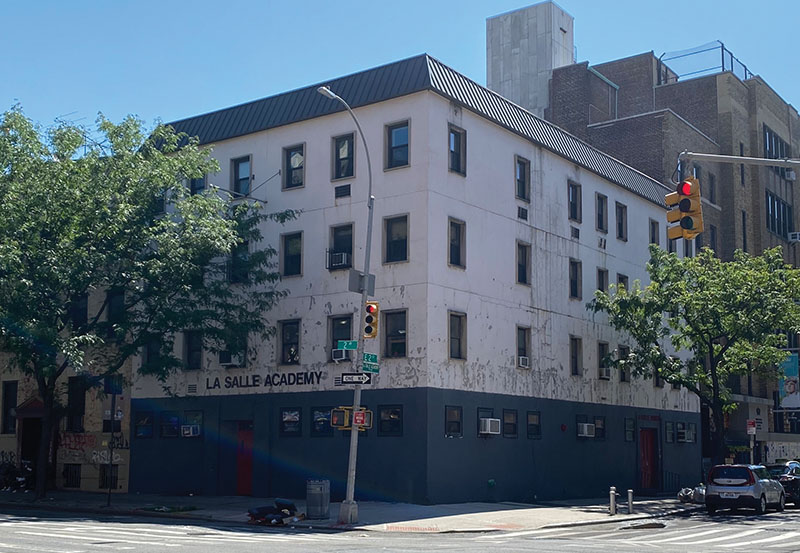
Manhattan, NY Gemini Rosemont Development, a division of Gemini Rosemont Commercial Real Estate, has acquired 38 Second Ave. in the East Village. The property was purchased from LaSalle New York City, Inc., for $14.5 million.
The four-story former administrative building occupies a 3,263 s/f lot and is the third of three contiguous parcels acquired by the firm this year for future development. Gemini Rosemont closed on 42-44 Second Ave. and 46-48 Second Ave. in March for $40 million. The site is located on the western edge of the East Village, with close proximity to the Bowery, NoHo, Astor Place, Little Italy and the Lower East Side.
“When developing a project, acquiring the corner site is often the key to efficient project design.” said Paul Gerwin, executive vice president of the development division. “The addition of the corner lot gives us more flexibility and creativity and increases the project value due to its exposure on two streets, Second Ave. and East Second St.”
The total lot area of the assembled site is 14,075 s/f according to city records. The combined development site can accommodate an as-of-right buildable area of 75,908 s/f and up to 101,210 s/f of residential area under the city’s Inclusionary Housing Program. Development plans are not yet available.
Scott Schubiner, Gemini Rosemont’s acquisitions and development officer, led the off-market acquisition which closed on July 15th, 2020. “The acquisition of 38 Second Ave. completes a strategic assemblage pieced together from multiple sellers over a two-year period,” said Schubiner. “Through persistence and patience, we now control nearly the entire blockfront representing 235 ft. of wraparound frontage between East Second and East Third Sts.”
The 38-48 Second Ave. location is the third development project underway in the city by Gemini Rosemont’s Development division.
“This acquisition confirms our commitment of investing in New York City for the long term,” said Ian Brownlow, Gemini Rosemont Commercial Real Estate’s CEO. “New York is incredibly resilient and will remain one of the most desirable places to live and work. We are actively seeking opportunities that meet our criteria to continue to grow our company’s ground up development capabilities.”
Tags:
Brokerage
MORE FROM Brokerage

Adirondack Capital Partners arranges $45 million sale of West Chelsea development site to Toll Brothers
Manhattan, NY Adirondack Capital Partners (ACP) closed the $45 million sale of 126/128 Tenth Ave. and 456 W. 18th St. to Toll Brothers City Living. The acquisition forms part of a broader





Quick Hits

Columns and Thought Leadership

A guide to finding the right NYC property management company - by Sanjay Gandhi
Being a small to midsize landlord in NYC is an increasingly demanding endeavor. From navigating complex regulations, increased compliance demands to dealing with tenant issues and remediating violations. It is wise to enlist the assistance of a partner, a professional

New York’s streets are full again, and the retail numbers prove it - by Noam Aziz
Walk down any New York block this year and you can feel it. The sidewalks are crowded, the storefronts are lit, and the energy that defines this city is back at full volume.

Positive forecast for New York’s pro-housing push? - by Philip Butler
New York’s housing crisis remains a hot button topic despite growing consensus that varied and affordable housing is desperately needed statewide. Governor Hochul has recently introduced several initiatives to overcome N.Y.’s anti-housing

Hunt commercial real estate question and answer: Fortune 500 wisdom - by David Hunt
Yes, there are lessons to be learned from the largest companies in America when comes to managing your real estate. But the decision to buy or lease real estate may not be one of
.gif)