



News:
Spotlight Content
Posted: December 22, 2020
Gary Meltzer, Meltzer, Lippe, Goldstein & Breitstone
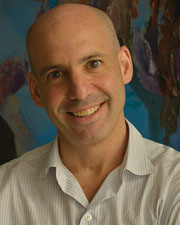 Name: Gary Meltzer
Title: Partner
Company Name: Meltzer, Lippe, Goldstein & Breitstone
What was your greatest professional accomplishment in 2020?
In the later part of 2019, I began work on negotiations for a 99-year ground lease for our client, a top NYC real estate developer, on what would be a billion dollar project constructing an office tower in lower Manhattan. Negotiations have continued into 2020 despite the negative effect COVID-19 has had on the office market. All of the involved parties agreed to keep the negotiations active even if no one could predict if the contract could be executed given the current state of the world. Despite the challenges, the documents are signed and shelved until it’s feasible to move forward.
What aspects of working from home did you enjoy most?
I have to admit there’s a lot to like about working in shorts and a t-shirt. Clients should require that kind of attire. On nice weather days, I enjoyed the opportunity to make what were often lengthy work calls from my sun-drenched outdoor office—the median separating the northbound and southbound lanes of Park Ave. at 87th St. During the first months of the pandemic, there was no traffic so it was very quiet and peaceful; the median was beautifully planted, and I had a fabulous view down the avenue.
What was your most notable project, deal, or transaction in 2020?
To negotiate and get signed agreements on a billion dollar deal during a global pandemic is especially satisfying. What’s more, all parties agreed that as the future unfolds, my client retained the ability to cancel the transaction and terminate the ground lease during the waiting period. With several hundred million of equity on the line, the construction debt market needs to resurface to make this project viable.
This matter represents one of the largest transactions in New York City in 2020. We were able to consummate this complex transaction because of the high level of engagement, cordiality, integrity and devotion of the parties, as well as a willingness to address every substantive issue on its own merit without posturing or only agreeing to the other party’s position by asking for something unrelated to the issue at hand in return. It’s also notable that this high level transaction was orchestrated by a Long Island law firm.
Tags:
Spotlight Content
MORE FROM Spotlight Content

Participate in Developing New York Featuring Westchester County - November 24, 2026
Choose how you’d like to participate in this edition of NYREJ’s Developing New York series featuring Westchester County.



.png)

Quick Hits
 (2).gif)

Columns and Thought Leadership

CRE Guide Featured Company: Merritt Environmental Consulting Corp.
Merritt Environmental Consulting Corp. (MECC) was established in June of 2009 after being part of a larger engineering firm for almost 20 years. The focus of the company is to assist lending institutions, attorneys, real estate investors, and property owners with environmental concerns. Today, MECC has offices in New York, Florida, and Vermont and has grown into a regional consulting firm serving clients along the East Coast.

From vacancy to vitality: How adaptive reuse is reshaping Long Island’s CRE landscape - by Andrea Tsoukalas Curto
Adaptive reuse has become one of the most important conversations in commercial real estate today. Long Island has a large inventory of aging retail, office and industrial

2026 Developing Queens: Long Island Board of Realtors advances commercial growth and advocacy in Queens
The Long Island Board of Realtors (LIBOR) Commercial Network continues to play a key role in advancing opportunities and strengthening the commercial real estate landscape across Queens. Through targeted programming and global outreach

2026 Developing Long Island: ERG Commercial Real Estate launches its new Retail Leasing division
North Hempstead, NY ERG Retail Leasing is the dedicated leasing division of ERG Commercial Real Estate, an established full-service commercial real estate brokerage for over 35 years.