



News:
Brokerage
Posted: June 9, 2014
Founders Message: Casino
Over 14,000 fans attended the Kentucky Derby at 79 year old Suffolk Downs last month proving that Boston and vicinity is still the number one sports area in the country. Horse racing is not labeled the SPORT OF KINGS for no reason. And if you have ever attended a race you know why fans call it the most exciting two minutes in all of sports. Invest in a stock and you own a small piece of a large company. Your return, big or small or a loss comes back over a long period of time. Investing in a horse at a race track is much the same, but in many way better. You wager $2 to win and you actually own a piece of the horse for a very few minutes and share in any winnings (if their are any). For every dollar you invest (if the horse wins and the odds are 2 to 1) your return is two for every one you invest. So for an investment of $2, within a few minutes (if the horse won and paid $10) you would receive $20.
In the 1980s I purchased a few inexpensive nags as a hobby. The first horse I ran at Suffolk Downs, I invested $6 across the board. (That means to win, place, and show.) If the horse finished in any of the top three positions, I got money back. That sounded like a good investment to me, and the payoff, if there was one, would be immediate, not having to wait weeks, months or years like if I had invested in a stock. Well, you guessed it. The horse won by a nose. I still have the picture framed on my wall and am looking at it right now. She was a 3-year old filly (Mostly Jesting) and paid - ready? $135 to win, $45 to place and $35 to show. Trainer Ed Hess, jockey Denise Boudrot. Needless to say, my $6 investment turned into - well, you do the math.
Meanwhile, is the state of Mass., the greatest home of all sports in the country, going to sit back and allow Suffolk Downs to close its doors while just a few slot machines 10 years ago would have saved racing in our area? Finally the state is allowing casinos which they should have done in the 1930s by studying Nevada's casino financial success. Where? One location stands out as the natural. It sits on a major highway. It sits beside the MBTA and it is a baseball home run from downtown Boston. And it already has a 79 year old horse race track. Come on you guys. Stop studying and voting and put the casino where it belongs. Okay?
Roland Hopkins is founder of the NYREJ, Norwell, Mass.
Tags:
Brokerage
MORE FROM Brokerage
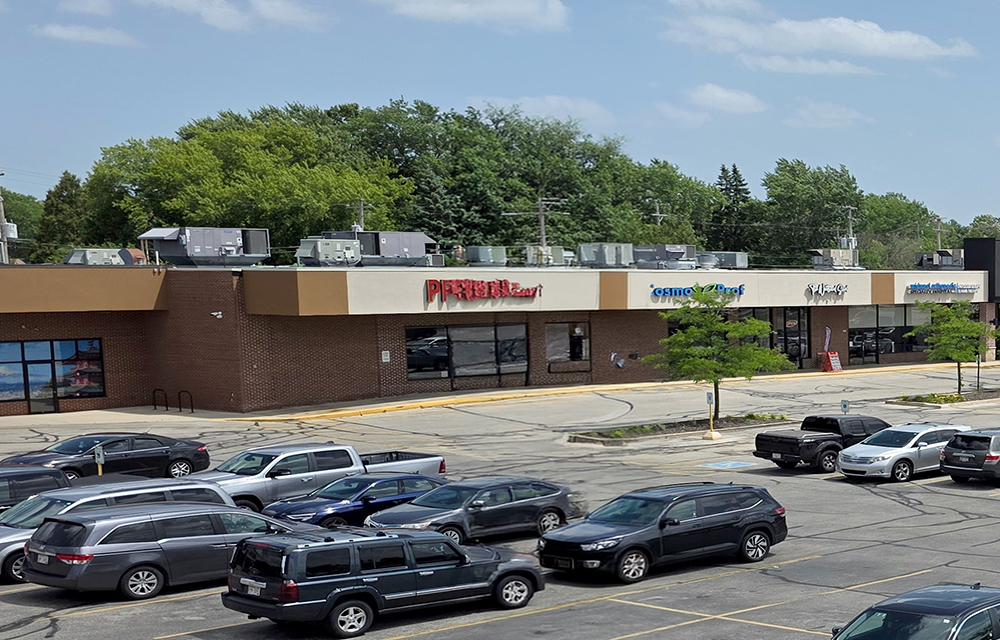
United Properties Corp. expands Wisconsin and Illinois retail presence adding 200,000 s/f
West Allis, WI United Properties Corp. completed two retail acquisitions totaling $27.4 million across Illinois and Wisconsin, adding 205,000 s/f of shopping center space to its portfolio


Quick Hits
 (2).gif)

Columns and Thought Leadership

New York’s streets are full again, and the retail numbers prove it - by Noam Aziz
Walk down any New York block this year and you can feel it. The sidewalks are crowded, the storefronts are lit, and the energy that defines this city is back at full volume.

Hunt commercial real estate question and answer: Fortune 500 wisdom - by David Hunt
Yes, there are lessons to be learned from the largest companies in America when comes to managing your real estate. But the decision to buy or lease real estate may not be one of

A guide to finding the right NYC property management company - by Sanjay Gandhi
Being a small to midsize landlord in NYC is an increasingly demanding endeavor. From navigating complex regulations, increased compliance demands to dealing with tenant issues and remediating violations. It is wise to enlist the assistance of a partner, a professional

Positive forecast for New York’s pro-housing push? - by Philip Butler
New York’s housing crisis remains a hot button topic despite growing consensus that varied and affordable housing is desperately needed statewide. Governor Hochul has recently introduced several initiatives to overcome N.Y.’s anti-housing
.gif)