



News:
Brokerage
Posted: June 8, 2016
Fosun Property Holdings leases 40,000 s/f at 28 Liberty
New York, NY Fosun Property Holdings has leased a combined 40,000 s/f of space in four transactions at 28 Liberty, the iconic, landmarked office tower in the center of Lower Manhattan. Commercial real estate services firm JLL has signed a new lease for 10,000 s/f of space on the 30th floor to accommodate its expanding Lower Manhattan office, and global insurance litigation firm Clausen Miller PC has signed a renewal lease for 21,000 s/f on the 39th floor of the property. At the same time, employment law firm Fitapelli & Schaffer, LLP leased 6,000 s/f and Treeview Real Estate Advisors LP leased 4,000 s/f; both are new leases in pre-built space on the 30th floor.
“We are pleased to welcome these firms at an exciting time of transformation for the building,” said Erik Horvat, managing director at Fosun Property Holdings. “JLL’s commitment to 28 Liberty demonstrates the appeal of this iconic tower.”
Building owner Fosun has made a long-term commitment to the 60-story, 2.2 million s/f class A office tower. Since acquiring 28 Liberty in December 2013, Fosun has initiated a comprehensive repositioning program, including upgrades to the lobby, elevators, and critical infrastructure. Fosun also has launched a retail project to provide 200,000 s/f of new retail space below the historic 28 Liberty plaza. The retail project provides multiple new retail access points and creates glass facades at street level to engage pedestrian traffic and open sightlines to create a more dynamic visual experience. The plan will restore the iconic property’s position in Lower Manhattan while further connecting it to residents and workers in the neighborhood.
Tom Costanzo, director of leasing for Fosun, represented the property owner in the transactions.
Originally One Chase Manhattan Plaza, 28 Liberty was designed by renowned architect Gordon Bunshaft, and was once the headquarters of Chase Manhattan Bank. In 1961, David Rockefeller, as head of the bank’s building committee, selected the site and oversaw its construction. Given its historical significance, architectural uniqueness and public impact, One Chase Manhattan Plaza was designated as a landmark by the New York City Landmarks Preservation Commission in 2009. This historically significant building is situated within the heart of the Wall Street Financial District, with modern amenities and direct connection to six subway lines, providing convenient access to public transportation.
Tags:
Brokerage
MORE FROM Brokerage
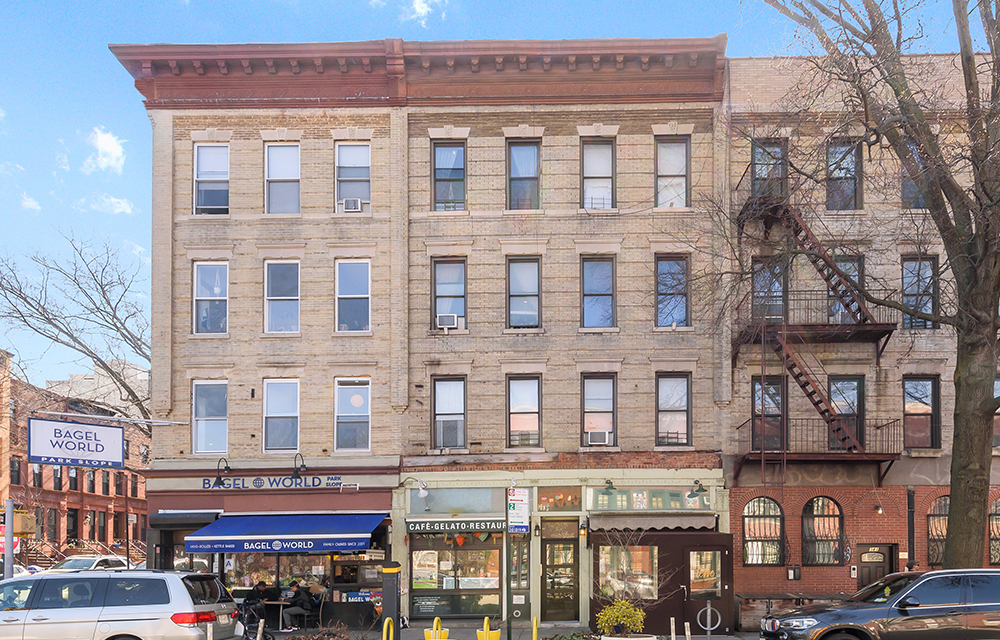
Investment Property Realty Group brokers $2.81 million sale of 341 5th Ave. in Park Slope
Brooklyn, NY Investment Property Realty Group (IPRG) closed the sale of 341 5th Ave., a mixed-use building located in Park Slope for $2.81 million. The transaction was negotiated by Derek Bestreich, Luke Sproviero,






Columns and Thought Leadership

New York’s streets are full again, and the retail numbers prove it - by Noam Aziz
Walk down any New York block this year and you can feel it. The sidewalks are crowded, the storefronts are lit, and the energy that defines this city is back at full volume.

Hunt commercial real estate question and answer: Fortune 500 wisdom - by David Hunt
Yes, there are lessons to be learned from the largest companies in America when comes to managing your real estate. But the decision to buy or lease real estate may not be one of

Positive forecast for New York’s pro-housing push? - by Philip Butler
New York’s housing crisis remains a hot button topic despite growing consensus that varied and affordable housing is desperately needed statewide. Governor Hochul has recently introduced several initiatives to overcome N.Y.’s anti-housing

A guide to finding the right NYC property management company - by Sanjay Gandhi
Being a small to midsize landlord in NYC is an increasingly demanding endeavor. From navigating complex regulations, increased compliance demands to dealing with tenant issues and remediating violations. It is wise to enlist the assistance of a partner, a professional
.gif)