



News:
Brokerage
Posted: June 10, 2016
The Feil Organization completes three new leases at the Union Square building
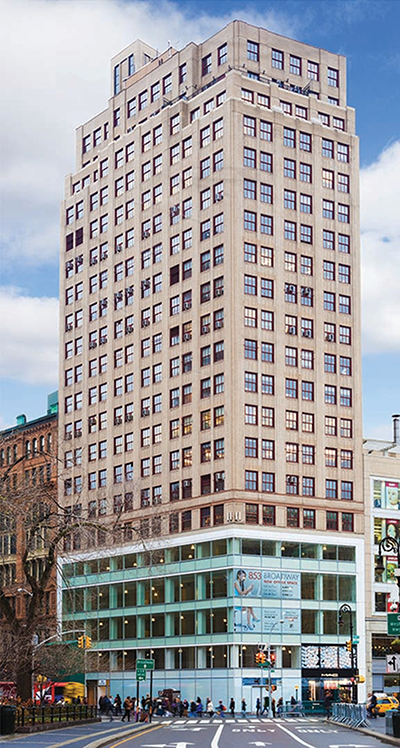 853 Broadway, Union Square - New York, NY
Brack Capital Group, a global real estate company that is involved with extensive real estate activities, energy and venture capital investments, has taken the entire second floor of the building, totaling 8,815 s/f. Shaw Industries, one of the world's largest carpet manufacturers and a division of Berkshire Hathaway, will occupy the entire third floor with 7,963 s/f. Media iQ Digital LTD, a leading global analytics software and services company, will take the entire fourth floor with 8,013 s/f.
The three new office firms join other building tenants that include Capital One Bank and MAC Cosmetics. The 21-floor 853 Broadway Landmark building has recently undergone a major renovation. The façade of the first five floors of the 157,000 s/f building have been remodeled with glass curtains on four levels, and a full lobby renovation also has been completed.
Owned by The Feil Organization, 853 Broadway is in the heart of one of the most vibrant, rapidly growing corridors in the city's commercial district in Union Square. The area features a host of destination retailers, world famous restaurants, prestigious educational institutions and corporations including W Hotels, Nordstrom Rack, The New School, DSW, Regal Entertainment Group, Best Buy, Whole Foods, and Beth Israel Medical Center.
The building is located at the southwest corner of Broadway and 14th St. Pedestrian traffic totals 350,000 people daily and nearly 250,000 consumers visit the nearby Union Square Greenmarket weekly. Union Square Station is New York City's fourth busiest subway station boasting 34.9 million subway riders per year serving the 4, 5, 6, L, N, Q and R trains, making Midtown South one of the most easily accessed areas in Manhattan.
The Feil Organization is a privately owned commercial real estate firm headquartered in New York City. The company owns and operates a nationwide portfolio of over 26 million s/f of retail and commercial space, and over 5,000 residential rental units.
Tags:
Brokerage
MORE FROM Brokerage
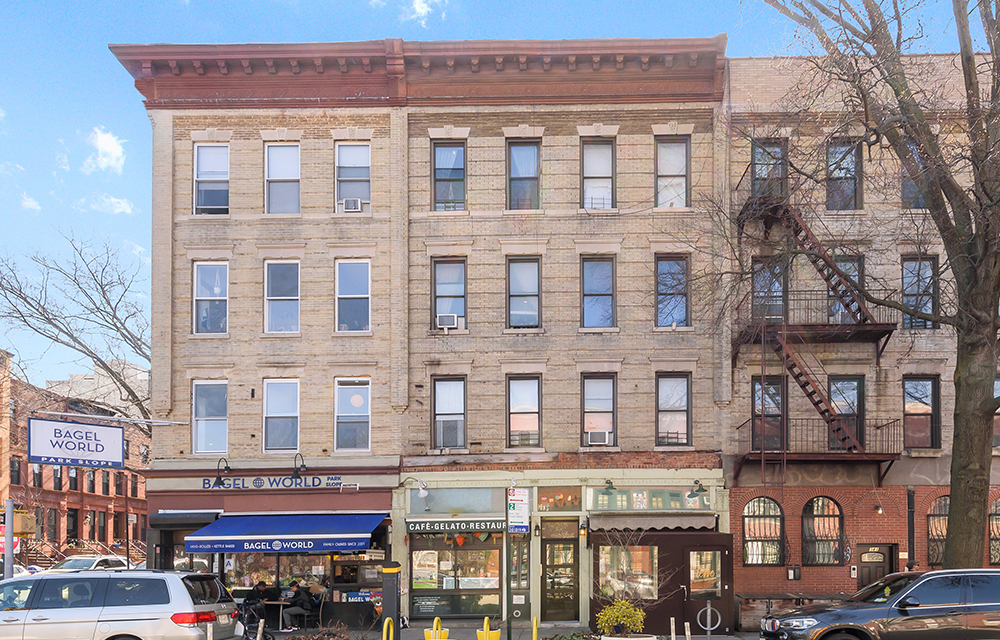
Investment Property Realty Group brokers $2.81 million sale of 341 5th Ave. in Park Slope
Brooklyn, NY Investment Property Realty Group (IPRG) closed the sale of 341 5th Ave., a mixed-use building located in Park Slope for $2.81 million. The transaction was negotiated by Derek Bestreich, Luke Sproviero,




Quick Hits
 (2).gif)

Columns and Thought Leadership

Hunt commercial real estate question and answer: Fortune 500 wisdom - by David Hunt
Yes, there are lessons to be learned from the largest companies in America when comes to managing your real estate. But the decision to buy or lease real estate may not be one of

Positive forecast for New York’s pro-housing push? - by Philip Butler
New York’s housing crisis remains a hot button topic despite growing consensus that varied and affordable housing is desperately needed statewide. Governor Hochul has recently introduced several initiatives to overcome N.Y.’s anti-housing

A guide to finding the right NYC property management company - by Sanjay Gandhi
Being a small to midsize landlord in NYC is an increasingly demanding endeavor. From navigating complex regulations, increased compliance demands to dealing with tenant issues and remediating violations. It is wise to enlist the assistance of a partner, a professional

New York’s streets are full again, and the retail numbers prove it - by Noam Aziz
Walk down any New York block this year and you can feel it. The sidewalks are crowded, the storefronts are lit, and the energy that defines this city is back at full volume.
.gif)