



News:
Brokerage
Posted: April 5, 2016
Fordham University to offer two real estate certificate programs
West Harrison, NY Fordham University’s School of Professional and Continuing Studies, in conjunction with the New York Real Estate Institute, is offering a pair of certificate programs on its Westchester campus.
The Standard Real Estate Principles (SREP) certificate is designed for people employed in the real estate industry or for those seeking entry-level employment in areas such as office administration, basic bookkeeping, budgeting, computer software utilization, leasing, tenant-public relations and debt service. The total cost for the certificate program is $350.
The following courses, totaling 26.25 credit hours, make up the SREP certificate: April 9: Property Management and Managing Risk; April 16: New York Landlord Tenant Relationships, Parts 1 and 2; April 23: Zoning Compliance and Urban Development; and May 14: Fair Housing.
The Fundamentals of Construction Administration (FOCA) certificate is designed for people employed in the construction industry or those seeking entry-level employment in areas such as general contracting, construction administration, support quality control assistance and project scheduling. The total cost for this certificate program is $575.
The following courses, totaling 33.75 credit hours, make up the FOCA certificate: June 11: Zoning Compliance and Urban Development; June 12, 19 and 26: Construction Project Management; and June 18: Fair Housing.
All courses have been approved by the NY Department of State for real estate continuing education credits. Individual courses may be taken without completing the certificate.
For more information or to register for the certificate programs, visit www.pcs.fordham.edu/realestate.
The Westchester campus is conveniently located off I-287, I-684, and the Hutchinson River Parkway. The three-story building sits on 32 landscaped acres in West Harrison, NY. Fordham Westchester is home to the Fordham School of Professional and Continuing Studies, Gabelli School of Business, Graduate School of Education, and Graduate School of Social Service. It is also home to four institutes: the Beck Institute on Poverty and Religion, Children FIRST, National Center for Social Work Trauma Education, and the Ravazzin Center on Aging.
Tags:
Brokerage
MORE FROM Brokerage
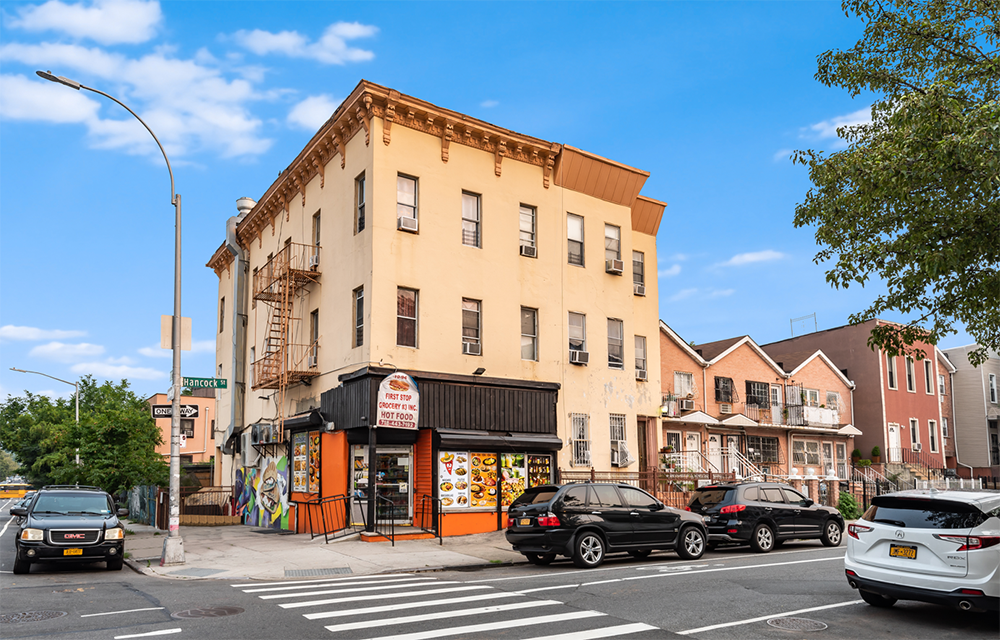
Investment Property Realty Group closes $1.75 million sale of 1094 Hancock Street in Brooklyn
Brooklyn, NY Investment Property Realty Group (IPRG), a New York-based commercial investment firm, has closed the sale of 1094 Hancock St., a mixed-use building in the Bushwick section, for $1.75 million.


Quick Hits
 (2).gif)

Columns and Thought Leadership

Hunt commercial real estate question and answer: Fortune 500 wisdom - by David Hunt
Yes, there are lessons to be learned from the largest companies in America when comes to managing your real estate. But the decision to buy or lease real estate may not be one of

Hunt CRE question and answer: Choosing a real estate agent - by David Hunt
First, we will only work with one agent exclusively. The primary reason is that we want that agent to legally represent our client’s interests. In New York State, a real estate agent has a fiduciary

A guide to finding the right NYC property management company - by Sanjay Gandhi
Being a small to midsize landlord in NYC is an increasingly demanding endeavor. From navigating complex regulations, increased compliance demands to dealing with tenant issues and remediating violations. It is wise to enlist the assistance of a partner, a professional

New York’s streets are full again, and the retail numbers prove it - by Noam Aziz
Walk down any New York block this year and you can feel it. The sidewalks are crowded, the storefronts are lit, and the energy that defines this city is back at full volume.
.gif)