



News:
Brokerage
Posted: April 16, 2019
Fordham Real Estate Institute adds Graduate Certificate in real estate finance
New York, NY Fordham Real Estate Institute (REI) is its growing Graduate Certificate component with the addition of a Graduate Certificate in real estate finance.
Ideal candidates for the program include real estate attorneys, developers, brokers, and management professionals; commercial real estate lenders; design and construction industry professionals; planners and public agency personnel involved in real estate projects; as well as current or former Master of Science in Real Estate and Graduate Certificate in Real Estate Development students who wish to add a specialized designation in Real Estate Finance.
Courses will take place in the evening during the fall, spring and summer terms. Students can complete the program at their own pace, whether part-time or full-time.
“Real estate investments play a major role for both private and institutional investors,” said Robert Morgenstern, REI program director, “Fordham REI’s commitment to staying at the forefront of a dynamic real estate industry is upheld by the launch of the Graduate Certificate in Real Estate Finance, which follows on the heels of our recently-announced Graduate Certificate in Construction Management. Through the Real Estate Finance certificate, professionals will gain practical, real-world knowledge and skills needed to succeed, including cash flow analysis, financial modeling, valuation and debt and equity capital structuring.”
The 15-credit curriculum includes courses on real estate finance, structures and capital markets, valuation and investment analysis, and credit analysis and underwriting. A required 3-credit elective can be selected from real estate financial analysis, private equity, commercial mortgage-backed securities (CMBS), real estate investment trusts (REITs), data analytics and technology, and special topics.
Tags:
Brokerage
MORE FROM Brokerage
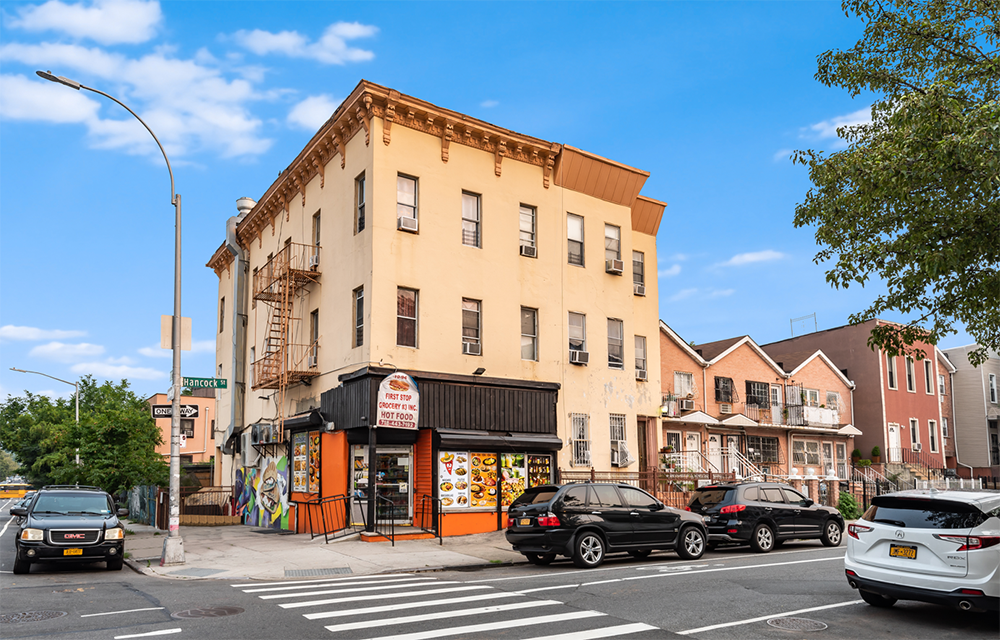
Investment Property Realty Group closes $1.75 million sale of 1094 Hancock Street in Brooklyn
Brooklyn, NY Investment Property Realty Group (IPRG), a New York-based commercial investment firm, has closed the sale of 1094 Hancock St., a mixed-use building in the Bushwick section, for $1.75 million.



Quick Hits

Columns and Thought Leadership

Hunt CRE question and answer: Choosing a real estate agent - by David Hunt
First, we will only work with one agent exclusively. The primary reason is that we want that agent to legally represent our client’s interests. In New York State, a real estate agent has a fiduciary

A guide to finding the right NYC property management company - by Sanjay Gandhi
Being a small to midsize landlord in NYC is an increasingly demanding endeavor. From navigating complex regulations, increased compliance demands to dealing with tenant issues and remediating violations. It is wise to enlist the assistance of a partner, a professional

New York’s streets are full again, and the retail numbers prove it - by Noam Aziz
Walk down any New York block this year and you can feel it. The sidewalks are crowded, the storefronts are lit, and the energy that defines this city is back at full volume.

Hunt commercial real estate question and answer: Fortune 500 wisdom - by David Hunt
Yes, there are lessons to be learned from the largest companies in America when comes to managing your real estate. But the decision to buy or lease real estate may not be one of
.gif)