



News:
Brokerage
Posted: November 20, 2018
Fordham Real Estate Institute, Columbia University, the Counselors of Real Estate and Professional Women in Construction co-host “Urbs or Burbs?” breakfast panel
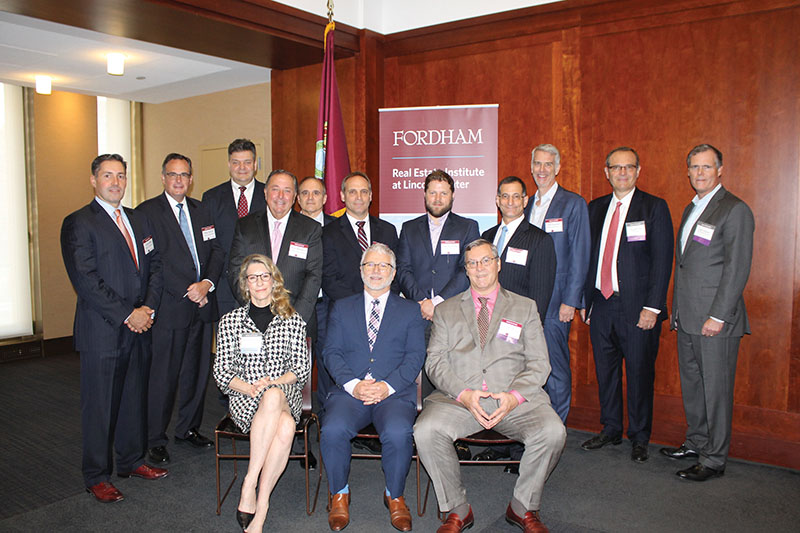
Manhattan, NY Fordham Real Estate Institute (REI), Columbia University, the Counselors of Real Estate and Professional Women in Construction co-hosted the forum Urbs or Burbs: Where are the Best Investment and Development Opportunities? The breakfast panel took place on Wednesday, October 3 at the University’s Lincoln Center campus.
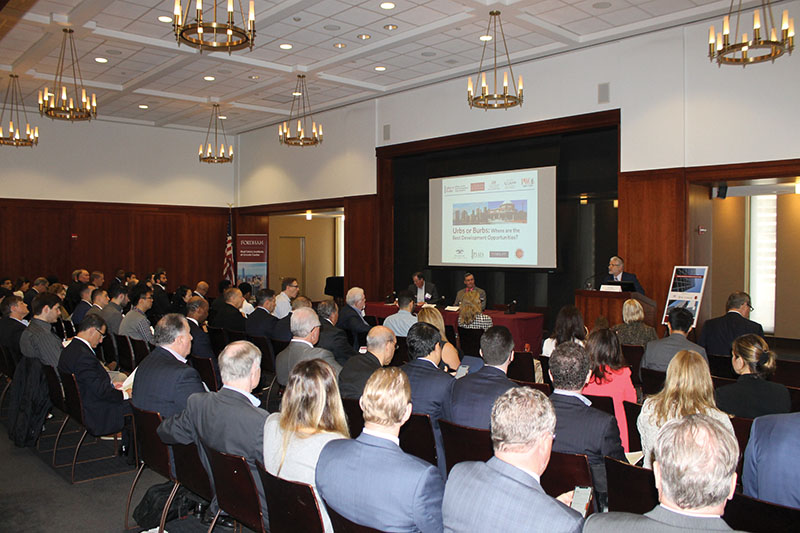
The first component of the Urbs or Burbs program involved a fireside chat with Hugh Kelly (director of graduate programs, Fordham REI, and president, Hugh Kelly Real Estate Economics) and special guest John Kessler (president and COO, Empire State Realty Trust). The two discussed the factors influencing major investors as they assess where to allocate funds, especially at this point in the industry cycle.
“In New York, we have transformed our portfolio to attract better tenants,” said Kessler. “The growth has been strong and the tendency has changed over time as technology businesses come to the city. As new buildings transform to lure high-quality tenants, older buildings can compete by delivering great location, convenient access and quality accommodations for a low rate. When looking to the suburbs, location is a major asset. For example, our property in Stamford is very specifically located across from the train station into the city. For the suburbs, it’s about location and convenience. For Manhattan, it’s about expansion.”
“The state of national real estate is in a transitional period,” said Kelly. “Gateway cities have a lot to offer and they have attributes that people desire – places that produce urban vibrancy: the ‘live, work and play.’ Cities no longer have to have a New York City-scale population density.”
The second half of the event touched on topics such as relative economic strengths and weaknesses, demographic trends, infrastructure, government policy, construction issues, building technology, capital flows, and other key variables that play into overall prospects for development. Patrice Derrington, director, Real Estate Development Program, GSAAP, Columbia University, moderated the discussion. Featured panelists included:
- George Kok, managing director at Morgan Stanley;
- Bill O’Connor, CEO at O’Connor Capital Partners; and
- Chris Mills, CEO at Plaza Construction.
Of note, during the conversation, the experts honed in on growth markets and smaller urban locations like Austin, Tx., North Carolina and Florida. As the state of adaptive reuse brings a rise of new development formats, millennials are seeking all things urban–even outside of the true urban city. Mixed-use buildings/shopping centers have changed the makeup of the city “core.” The trend of retail, food and entertainment in one convenient and accessible location provides incentive and attracts people. Even with multi-family housing, developers have found a trend in smaller rooms and larger common areas, as residents seek collaboration and are more open to sharing resources.
“New York City may be the real estate capital of the world, but it is important to look at the industry as a whole; the trends in suburban areas and smaller markets can have big impact across the board,” said Anthony Davidson, Ph.D., MBA, dean of Fordham’s School of Professional and Continuing Studies. “As we start looking ahead to 2019, the expert insights shared today gave attendees a strong look at what we can expect in our cities and suburban areas moving forward. We thank our esteemed speakers and co-presenters for a truly insightful morning.”
Urbs or Burbs: Where are the Best Investment and Development Opportunities? was sponsored by First American Title, Plaza Construction, the Mortgage Bankers Association of New York Inc. and Co-Communications Inc.
Tags:
Brokerage
MORE FROM Brokerage
Manhattan office leasing tops 10 million s/f for ninth consecutive quarter, Lee & Associates NYC reports
Manhattan, NY Manhattan’s office market continued its recovery in the third quarter of 2026, recording more than 10 million s/f of leasing activity for the ninth




 (2).gif)

Columns and Thought Leadership

A guide to finding the right NYC property management company - by Sanjay Gandhi
Being a small to midsize landlord in NYC is an increasingly demanding endeavor. From navigating complex regulations, increased compliance demands to dealing with tenant issues and remediating violations. It is wise to enlist the assistance of a partner, a professional

Hunt commercial real estate question and answer: Fortune 500 wisdom - by David Hunt
Yes, there are lessons to be learned from the largest companies in America when comes to managing your real estate. But the decision to buy or lease real estate may not be one of

Hunt CRE question and answer: Choosing a real estate agent - by David Hunt
First, we will only work with one agent exclusively. The primary reason is that we want that agent to legally represent our client’s interests. In New York State, a real estate agent has a fiduciary

New York’s streets are full again, and the retail numbers prove it - by Noam Aziz
Walk down any New York block this year and you can feel it. The sidewalks are crowded, the storefronts are lit, and the energy that defines this city is back at full volume.
.gif)