


 (2).gif)
News:
Spotlight Content
Posted: November 19, 2019
Flatiron/23rd St. Partnership issues “Trending in Flatiron” report
Manhattan, NY The Flatiron/23rd St. Partnership issued “Trending in Flatiron,” a report showcasing the significant development and growth of the commercial and residential sectors in the Flatiron and NoMad neighborhoods.
Subtitled “At the (Healthy) Heart of New York City,” the report describes the district’s 2019 vital statistics, and highlights the strength of its wellness sector, which has contributed to the neighborhood’s overall economic growth. The report is among a suite of publications from the Flatiron/23rd St. Partnership that focuses on the real estate market in the neighborhood, and is available at http://www.flatirondistrict.nyc/about-the-bid/reports-and-data.
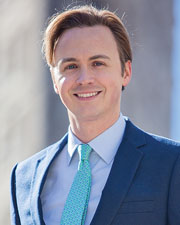
Flatiron/23rd St. Partnership
“The growth of the wellness sector in Flatiron and NoMad has been remarkable, as this report demonstrates,” said James Mettham, the Flatiron/23rd St. Partnership’s executive director. “It’s easy to see why businesses focused on wellness want to be here. With the district’s central location, easy access to public transportation, and the sheer volume of New Yorkers who live in the neighborhood or come here to work or visit, Flatiron and NoMad offer access to a healthy customer base. Beyond the booming wellness sector, this report also shows that this is a dynamic district with an irresistible mix of commercial and residential sectors.”
The Flatiron/23rd St. Partnership is one of 76 Business Improvement Districts (BIDs) operating in the city. From 21st to 28th Sts., and Sixth Ave. east to Third Ave., the BID boundaries (Flatiron District) cover about 21.6 million s/f of commercial space with 212 commercial office buildings and 553 ground-floor businesses. Since the establishment of the Partnership in 2006, the Flatiron District has undergone a dramatic transformation into a safe, clean, and desirable neighborhood sought out by all types of people, businesses, industries, and interests.
A boom in the wellness industry has driven interest in a variety of practices that have become a selling point for all types of products and services. Wellness components have increasingly appeared in an array of businesses in the Flatiron District. Since 2018 the area has seen a 7.3% increase in wellness-focused businesses. Today, the neighborhood is home to 116 wellness-focused retail and services storefronts, accounting for one out of every five ground-floor businesses in the district.
Flatiron is commonly referred to as the “Fit District,” with over 60 fitness studios and gyms in the neighborhood, representing a 72% increase from 2014. This includes first-of-its-kind inventive fitness concepts, such as Brrn, the world’s first cool temperature fitness concept, and Precision Run, Equinox’s first running-only studio. Soon, Rumble, a boxing-inspired group fitness concept will launch Rumble Treading, a treadmill and strength-based class, in the Flatiron District.
Globally, the Personal Care, Beauty and Anti-Aging industry is a $1 billion sector within the wellness market. Flatiron and NoMad are home to 50 beauty-related businesses, including hair and nail salons, tanning and day spas, and beauty and cosmetics retailers. They include Alchemy 43, a Los Angeles-based aesthetics bar that debuted its East Coast location in Flatiron, L’Occitane En Provence, the NYC flagship for the international personal care brand, and Silver Mirror Facial Bar.
Also highlighted in the report are a wide variety of businesses that are removing misconceptions around wellness practices and products, to make them more approachable, including: acupuncture studio and herbal shop WTHN, wellness destination Standard Dose, community mediation space Inscape, and coworking community Assemblage NoMad.
The Flatiron District is also one of the city’s most popular food destinations, with 140 fast-casual dining spots. As New Yorkers have become more conscious of what they eat, the neighborhood has become a haven for healthier options, including Fields Good Chicken, Honeybrains, and Veggie Grill.
Among the findings in the new report:
- Retail: There are approximately 553 ground floor businesses in the district—32.6% are national, and 67.4% are locally-owned independent businesses. The retail availability rate is 9.4%. Flatiron is home to more than 230 restaurants, bars, and quick and casual food establishments. This includes 29 newly-opened restaurants, with another 9 coming soon.
- Office: Flatiron has an estimated 84,927 daytime employees. Average price per s/f of class A and B office space is $69. Average asking rent for class A and B office space is 7.5% higher than the Manhattan-wide average. The class A and B vacancy rate is 11.4%. Tenants from the technology, advertising, marketing and media sectors accounting for 62.5% of office space lease signings. Flatiron is home to nearly 50 coworking locations
- Residential: Flatiron’s estimated residential population is 29,866. Within BID boundaries, there are approximately 19,986 housing units, with an additional 411 units planned or under construction. Flatiron has seen a 62.6% increase in children enrolled in local schools and 55.4% increase in families with children.
The Flatiron/23rd St. Partnership, formed in 2006, is a nonprofit organization and Business Improvement District whose mission is to enhance the reputation of Flatiron and NoMad as two of New York’s most vital and exciting neighborhoods. This is accomplished by maintaining a clean and safe environment for the district’s businesses, residents and visitors; by spearheading area improvement projects; and by marketing the diverse business and retail options in this vibrant and historic neighborhood.
Tags:
Spotlight Content
MORE FROM Spotlight Content

NYREJ's 2026 Developing Long Island Spotlight is here!
This spotlight showcases projects completed and currently under construction across Long Island as well as highlights improvements made to the region through Industrial and Economic Development Agencies and BIDs.

.png)

Quick Hits


Columns and Thought Leadership

From vacancy to vitality: How adaptive reuse is reshaping Long Island’s CRE landscape - by Andrea Tsoukalas Curto
Adaptive reuse has become one of the most important conversations in commercial real estate today. Long Island has a large inventory of aging retail, office and industrial

2026 Developing Queens: Long Island Board of Realtors advances commercial growth and advocacy in Queens
The Long Island Board of Realtors (LIBOR) Commercial Network continues to play a key role in advancing opportunities and strengthening the commercial real estate landscape across Queens. Through targeted programming and global outreach

CRE Guide Featured Company: Merritt Environmental Consulting Corp.
Merritt Environmental Consulting Corp. (MECC) was established in June of 2009 after being part of a larger engineering firm for almost 20 years. The focus of the company is to assist lending institutions, attorneys, real estate investors, and property owners with environmental concerns. Today, MECC has offices in New York, Florida, and Vermont and has grown into a regional consulting firm serving clients along the East Coast.

Properly serving a lien law Section 59 Demand - by Bret McCabe
Many attorneys operating within the construction space are familiar with the provisions of New York Lien Law, which allow for the discharge of a Mechanic’s Lien in the event the lienor does not commence an action to enforce following the service of a “Section 59 Demand”.