



News:
Brokerage
Posted: August 13, 2012
EYP Architecture & Engineering welcomes Marshall
According to EYP Architecture & Engineering, George Marshall, P.E., re-joined the firm's area office as a senior mechanical engineer and local discipline leader. His new role involves overseeing the HVAC department and playing a key role in project design, construction documentation and administration, and business development.
Marshall previously worked as an HVAC engineer in EYP's Albany office from 1986 through 1997, and returns to the firm with a new wealth of knowledge and expertise in M/E/P engineering. During the 15 year hiatus, he joined Plumb Excel Group Engineering, where, as a principal, he led the HVAC group and served as a project manager for various building types.
Throughout his career, Marshall worked on such projects as the Sea Wolf Attack Submarine training facility, the Albany Medical Center Heliport, a 3000 ton chiller plant at Colonie Center, an ICU addition to Ellis Hospital, and numerous laboratories and hospitals.
Marshall received a bachelor of science degree in Mechanical Engineering from the Stevens Institute of Technology.
A licensed professional engineer, he is also an active member of the American Society of Heating, Refrigerating, and Air Conditioning Engineers (ASHRAE).
EYP Architecture & Engineering is the expertise-based, integrated architecture and engineering design firm that specializes in sustainable design for higher education, government, and corporate clients. EYP Energy is a division of EYP that delivers integrated, comprehensive energy and sustainability services. Located in Albany, Boston, Greenville, New York City, Orlando and Washington, D.C., the firm is ranked among the largest A/E firms in the nation by Building Design & Construction magazine and recently ranked in The Architect 50, Architect Magazine's annual ranking of top architecture firms.
###
Tags:
Brokerage
MORE FROM Brokerage
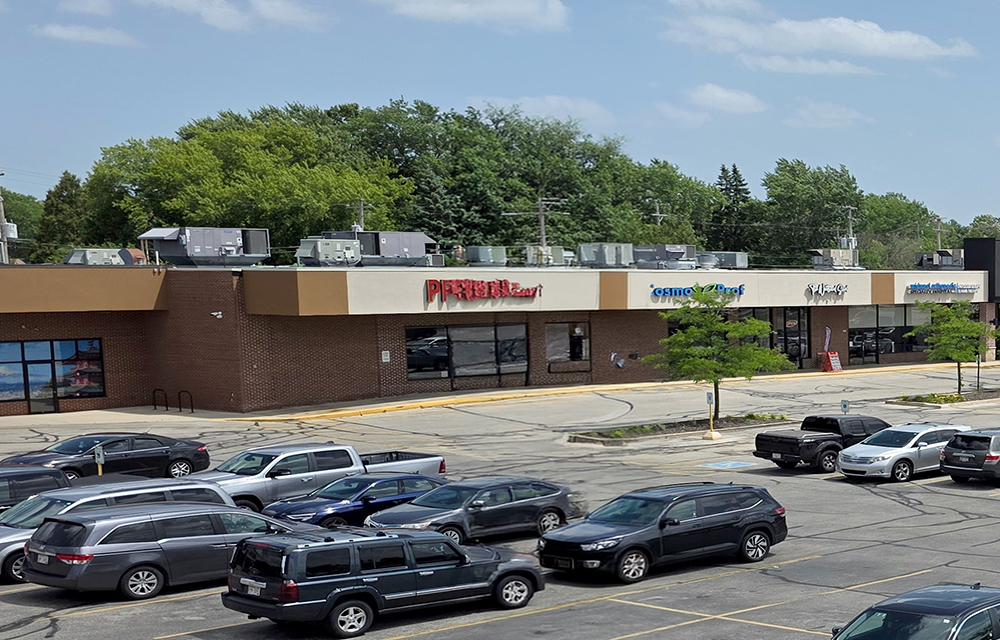
United Properties Corp. expands Wisconsin and Illinois retail presence adding 200,000 s/f
West Allis, WI United Properties Corp. completed two retail acquisitions totaling $27.4 million across Illinois and Wisconsin, adding 205,000 s/f of shopping center space to its portfolio




Quick Hits

Columns and Thought Leadership

Positive forecast for New York’s pro-housing push? - by Philip Butler
New York’s housing crisis remains a hot button topic despite growing consensus that varied and affordable housing is desperately needed statewide. Governor Hochul has recently introduced several initiatives to overcome N.Y.’s anti-housing

Hunt commercial real estate question and answer: Fortune 500 wisdom - by David Hunt
Yes, there are lessons to be learned from the largest companies in America when comes to managing your real estate. But the decision to buy or lease real estate may not be one of

New York’s streets are full again, and the retail numbers prove it - by Noam Aziz
Walk down any New York block this year and you can feel it. The sidewalks are crowded, the storefronts are lit, and the energy that defines this city is back at full volume.

A guide to finding the right NYC property management company - by Sanjay Gandhi
Being a small to midsize landlord in NYC is an increasingly demanding endeavor. From navigating complex regulations, increased compliance demands to dealing with tenant issues and remediating violations. It is wise to enlist the assistance of a partner, a professional
.gif)