



News:
Brokerage
Posted: November 5, 2010
Executive of the Month: Olshonsky, COO of NAI Friedland: The reasoning behind his move and his plans for the firm
NAI Friedland, a full service commercial real estate firm serving metropolitan New York, appointed Jay Olshonsky as COO. Olshonsky was formerly managing director and senior VP of CB Richard Ellis in Washington, D.C.
In an exclusive one-on-one interview, Olshonsky shares the reasoning behind his move, as well as his current and future plans for NAI Friedland.
Q: Why did you decide to move from one of the largest commercial real estate firms in the nation to NAI Friedland, a much smaller firm?
A: My old firm and many large firms are often selected by clients simply because of the name. On many occasions, I would walk out of a meeting with a client believing that a local broker would have been more attuned to their needs. In the commercial real estate world, the top five firms control only 30% of the overall market, leaving the remaining 70% to be handled by smaller firms. It's a big opportunity.
Q: Do you believe that your movement from a larger to a smaller firm could become a trend in the marketplace?
A: I believe that when brokers gravitate toward a firm like NAI Friedland, it isn't because we have 325 offices worldwide, or because we're the largest investment sales firm in the United States. It's because NAI Friedland is focused on creating professional, lasting relationships with other brokers and with our clientele. NAI Friedland brokers can control their own destiny and have fewer internal competitors, unlike brokers at larger firms.
Q: How has your background prepared you for your current role as COO at NAI Friedland?
A: I started in this business in 1987 at a firm similar in size to NAI Friedland. I was the youngest person in the office aside from two salesmen, and I was their manager in charge of leasing and sales. At CB Richard Ellis in Washington, D.C., I spent fifteen years in different forms of management, most recently as managing director and senior vice president. I held full profit and loss responsibility for over 75 commissioned brokers and 225 employees, producing $109 million of gross revenue.
Q: How has your experience in the Washington, D.C. metro area been helpful here in New York?
A: Our core business at NAI Friedland is the suburban market, and areas like the Bronx and Westchester County are small compared to the market that I was running while in the Washington, D.C. Metro Area. New York is the largest market in the world, but Washington is the fourth largest. Being immersed in commercial real estate there really prepared me for this transition.
Q: For the next several years, our economy will continue to change. How do you think your experience will help with the new paradigm that we have now?
A: In my opinion, the New York Tri-State economy is more active than the Washington, DC market and has more opportunities in commercial real estate. I have significant experience in tight budgeting and maintaining profit margins, so I believe NAI Friedland is well prepared for continued economic change.
Q: How do you see NAI Friedland evolving over the next few years?
A: I see us growing our industrial and retail leasing and sales, and certainly increasing our presence in office leasing and sales. We're also looking at property management from a commercial point of view, as well as multifamily investment sales, a direction that we're currently moving toward. We'd like to hire 100% more brokers over the next three to five years, and we'd also like to acquire and/or merge with appropriate firms as a way to grow. My five year goal is to quadruple NAI Friedland's revenue while maintaining the same operating profit.
Q: How would you like NAI Friedland to be perceived by current and potential clients, as well as by brokers and other brokerage firms?
A: We want our clients to regard us as a trusted advisor, and to understand that there are many more lines of business that we're moving into. We're not just a Bronx-based industrial firm. NAI Friedland has been around for forty years and we are a full service commercial real estate firm serving Westchester, Putnam, and Rockland Counties, the Bronx, Southern Connecticut, New York City, and New Jersey. We're a player in those markets and we can go head to head with any of the other brokerage firms if the assignment is right.
Q: In speaking with various NAI Friedland brokers, the obvious common denominator is that they all tend to be economic experts, providing clients with expertise that goes beyond the buildings. Do you believe that knowing the economics of the marketplace, whether regionally or nationally, is fairly important knowledge for brokers to have?
A: Absolutely. For brokers, a transaction begins with understanding the client and their business. Our services must go beyond canvassing a property, putting up a sign, and talking to other brokers. We need to have relationships with top users and owners, and work differently than we have in the past.
Q: In circumstances where a client has the option of moving forward with a larger firm versus a smaller firm with better local expertise, who will that client choose?
A: In transitioning from a larger to a smaller firm, it's easy for me to see that all things are basically equal. Yet most people will still move forward with a larger firm because they perceive that to be the safer choice. At NAI Friedland, we know our game, we know the business, and we have a professional management team keeping our brokers informed of all the changes in the marketplace. We operate just like a larger firm, and we have the best of both worlds because we're a local firm yet we're part of a huge international network. Many potential clients simply don't understand the strength, the depth, the reach, and the many locations that NAI Friedland has to offer. Our goal is to change that.
Tags:
Brokerage
MORE FROM Brokerage
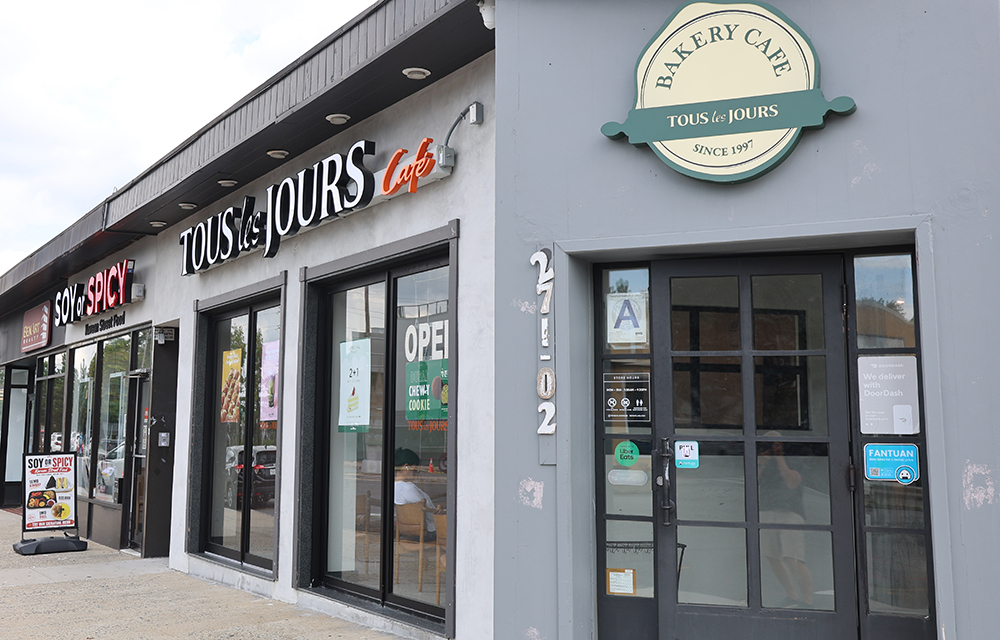
Sobel of RIPCO Real Estate signs Redefine Meals as newest tenant at New Hyde Park Place
New Hyde Park, NY New Hyde Park Place, the rebranded commercial property at 271-02 Union Tpke.on the Nassau/Queens border, has signed new tenant Redefine Meals, the Long Island-based prepared-meal company, for a new 1,000 s/f location, starting on September




Quick Hits

Columns and Thought Leadership

A guide to finding the right NYC property management company - by Sanjay Gandhi
Being a small to midsize landlord in NYC is an increasingly demanding endeavor. From navigating complex regulations, increased compliance demands to dealing with tenant issues and remediating violations. It is wise to enlist the assistance of a partner, a professional

Hunt commercial real estate question and answer: Fortune 500 wisdom - by David Hunt
Yes, there are lessons to be learned from the largest companies in America when comes to managing your real estate. But the decision to buy or lease real estate may not be one of

Positive forecast for New York’s pro-housing push? - by Philip Butler
New York’s housing crisis remains a hot button topic despite growing consensus that varied and affordable housing is desperately needed statewide. Governor Hochul has recently introduced several initiatives to overcome N.Y.’s anti-housing

New York’s streets are full again, and the retail numbers prove it - by Noam Aziz
Walk down any New York block this year and you can feel it. The sidewalks are crowded, the storefronts are lit, and the energy that defines this city is back at full volume.
.gif)
September Promotion
