



News:
Brokerage
Posted: August 11, 2014
Exchanging for a desirable but unavailable property
Now that we understand that a "Deferred Exchange" means nothing more then disposing of a relinquished property and using the proceeds to acquire the replacement property through the use of a "Professional Qualified Intermediary, let's talk about the biggest problem most people have contemplating structuring a deferred exchange. The problem being, what to go back into in the way of a replacement property. Most owners, who have reached a diminishing rate of return and realize that they need to dispose of their investment-held property and reinvest to maximize their rate of return, will agree that the right thing to do when reviewing their transaction alternatives is to treat their disposition as an exchange rather than a sale or installment sale.
A deferred exchange will allow the seller (taxpayer) an opportunity to reinvest a 100% of their equity without paying state or federal income tax associated with their gain today. This tax-deferment is indefinite. Most people will agree that they would choose exchanging over any other method of disposition if they knew what they were going to go back into in the way of like-kind property. That problem was addressed in 1984' when our tax code was amended to allow sellers (taxpayers) to perform what was called a delayed exchange. This means that as long as your transaction is set up as an exchange prior to closing on the relinquished property through a professional qualified intermediary, the taxpayer has 45 days to identify (known as the identification period) the replacement property and 180 days (known as the exchange period) to take legal title. The 45 days is part of the 180 day period. So, now that we can perform an exchange without having to have the relinquished property and replacement property close on the same day, let's talk about being able to acquire a better property than we currently own. Any person who owns investment property must realize that they are not maximizing their rate of return by holding their investment property forever. But they have a pulse on their current property. They know what all the physical problems are, and understand their tenant profile and feel that they would just inherit new problems in probably an older building because of a lack of new construction in most markets. This problem has also been addressed in the exchange regulations. What we call a "Build-To-Suit Exchange." Today, if you feel you would like to take advantage of a deferred exchange, but haven't been able to locate a suitable replacement property to go back into, why not build one? That's right, a desirable but unavailable replacement property. As discussed earlier you have 180 days to acquire legal title to the replacement property after the closing of the relinquished property. Example: Let's assume that you are disposing of a duplex that's investment-held and you set your transaction up to be treated as a deferred exchange by bring in the professional qualified intermediary prior to closing. An Exchange Accommodation Titleholder (EAT) (who can also be the qualified intermediary) will take title to the land using some of the proceeds from the disposition of the relinquished property. The EAT must take title to the land and in order for the taxpayer to get credit for the improvements that must be added within the 180 day (exchange period). Not only will the land qualify, the improvement can be used to qualify as well. That improvement can be anything such as another duplex, single-family, multifamily, or commercial or industrial, as long as it's investment-held. This is what we call a "Build-To-Suit Exchange." So, if you are tired of that old building that you now own, why not build a new building that you desire that doesn't exist today (Build-To-Suit Exchange). Like all other forms of exchanges, its important that you consult a professional qualified intermediary before structuring this type of a transaction.
Russell Gullo, CCIM, CEA, is a certified exchange advisor, president of R. J. Gullo & Co., Inc., West Seneca, N.Y.
Tags:
Brokerage
MORE FROM Brokerage
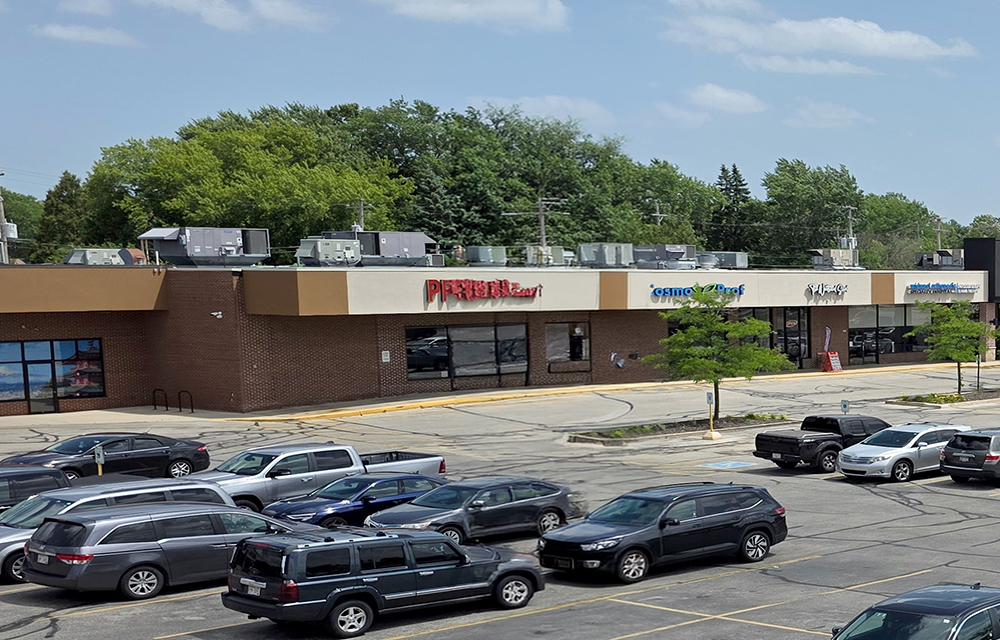
United Properties Corp. expands Wisconsin and Illinois retail presence adding 200,000 s/f
West Allis, WI United Properties Corp. completed two retail acquisitions totaling $27.4 million across Illinois and Wisconsin, adding 205,000 s/f of shopping center space to its portfolio


Quick Hits

Columns and Thought Leadership

New York’s streets are full again, and the retail numbers prove it - by Noam Aziz
Walk down any New York block this year and you can feel it. The sidewalks are crowded, the storefronts are lit, and the energy that defines this city is back at full volume.

Hunt commercial real estate question and answer: Fortune 500 wisdom - by David Hunt
Yes, there are lessons to be learned from the largest companies in America when comes to managing your real estate. But the decision to buy or lease real estate may not be one of

Positive forecast for New York’s pro-housing push? - by Philip Butler
New York’s housing crisis remains a hot button topic despite growing consensus that varied and affordable housing is desperately needed statewide. Governor Hochul has recently introduced several initiatives to overcome N.Y.’s anti-housing

A guide to finding the right NYC property management company - by Sanjay Gandhi
Being a small to midsize landlord in NYC is an increasingly demanding endeavor. From navigating complex regulations, increased compliance demands to dealing with tenant issues and remediating violations. It is wise to enlist the assistance of a partner, a professional
.gif)