



News:
Brokerage
Posted: November 6, 2009
Ever expanding historic districts in New York
Done right, historic preservation makes great sense.
Done wrong, it can create big problems.
Few American cities carry as rich a historical legacy as New York. Property owners of all kinds have long appreciated how thoughtful historic preservation speaks to our heritage, culture and artistic accomplishments.
But we'd better be sure we're preserving that which is truly historic.
Even well-intentioned landmarking creates significant economic impacts and regulatory burdens for businesses, tenants and owners. It can impede our city's economic vitality, inhibit job creation, and stifle the creation of new architecture.
In recent years, we have seen a questionable increase in the number of historic districts, many including hundreds of buildings, and the expansion of existing districts. Now the stage is set for more dubious designations.
The Landmarks Preservation Commission recently voted to calendar for public hearing four new historic districts containing hundreds of buildings, with another half-dozen districts to follow shortly. By calendaring an area for a public hearing, an area becomes subject to restrictions just about as severe as those involving a formally designated one.
Calendaring a historic district has long been a concern for many businesses, storekeepers, homeowners, and building owners. Simple acts like putting up a fence, installing mechanical equipment, renovating storefronts or replacing windows trigger a landmark review process that can be time-consuming and expensive.
Many of our retail brokers have described the lengthy and costly delays in receiving a certificate of appropriateness for a new storefront, an especially costly and burdensome process for the small boutique retailers that community groups say they prefer. For this reason, these brokers have noted the reluctance of these small tenants to lease space on corridors in historic districts, especially when an equally suitable alternative location is available.
Calendaring of all these proposed districts is harmful to many New Yorkers. Here's what is wrong with the current process.
Typical staff presentations of proposed districts are cursory and highlight only a handful of properties. Commissioners learn little about properties that are "non-style" buildings, which add nothing to a district's character, or vacant lots. And there is no attempt to quantify the proportion of style buildings to non-style buildings, or indicate if non-style buildings are clustered within a particular block or area and should be excluded altogether. Lacking this basic information, how can commissioners vote intelligently about uniformly subjecting all of a district's buildings to burdensome regulation? Without this district-wide building information prepared by professional LPC staff and made available prior to the hearing, how can the public meaningfully comment on the proposal?
The Landmarks Preservation Commission recently held a public hearing on an extension of the SoHo Cast Iron Historic District. Numerous owners in the proposed district extension testified against this expansion. Many reported that their buildings were recently built; others pointed out that their buildings have been severely altered; while others noted that their buildings were undistinguished and lacked any historical or architectural significance.
Our survey of SoHo confirmed the testimony of these owners. Further, our surveys of other expansions found that buildings outside the original district boundaries that have been proposed for district extensions are largely of lesser quality than those originally designated. They possess less of the district's distinguishing features; they are more altered from their original state, and they contain non-contributing buildings and vacant lots.
In the SoHo extension, we found, and a representative of the owner testified at the hearing, that the boundary was drawn to include a block on the edge of the proposed district that contains a gas station, two one-story buildings that had been six-story buildings during the Cast Iron period and a seven story building that has been altered following a fire in the 1920s. Even the report by the preservation advocates for the expansion of the SoHo Cast Iron district did not include this block and many others in its proposal.
These lesser-quality properties diminish the meaning, quality and significance of a designation, which is supposed to represent very distinct areas of special historic character and interest. With the proliferation of these extensions, mostly in Manhattan, it would seem that the advocates for these extensions are more interested in curtailing development than preserving history.
Let's take a breath here.
At the very least, votes to calendar historic districts should be accompanied by a preliminary designation report identifying each property in a proposed district, including vacant lots. This report should indicate whether it is a style building or not, and if it is a style building, whether it has been altered significantly. This basic information should be provided to commissioners and property owners before a vote to calendar. Further there should be a statistical presentation of this information that indicates the percentage of buildings in the district that are contributing and what percentage are not. Also, this presentation should include a statistical analysis of each block in the proposed district. What we have found for example in SoHo is that three of the four buildings on a block are no style or significantly altered. In such a case, this block should be omitted from the proposed district.
The designation of an historic district freezes the scale of new development in the area, even if the zoning would permit taller and denser buildings. It is these more restrictive controls that make Landmark designation a preferred way of community groups to curtail development.
The benefit of landmarking is in the quality of the buildings and districts we preserve, not in the quantity we designate. Calendaring and designating questionable historic districts is a disservice to businesses, tenants, homeowners, property owners and all New Yorkers.
Steven Spinola is the president of the Real Estate Board of New York, N.Y.
Tags:
Brokerage
MORE FROM Brokerage
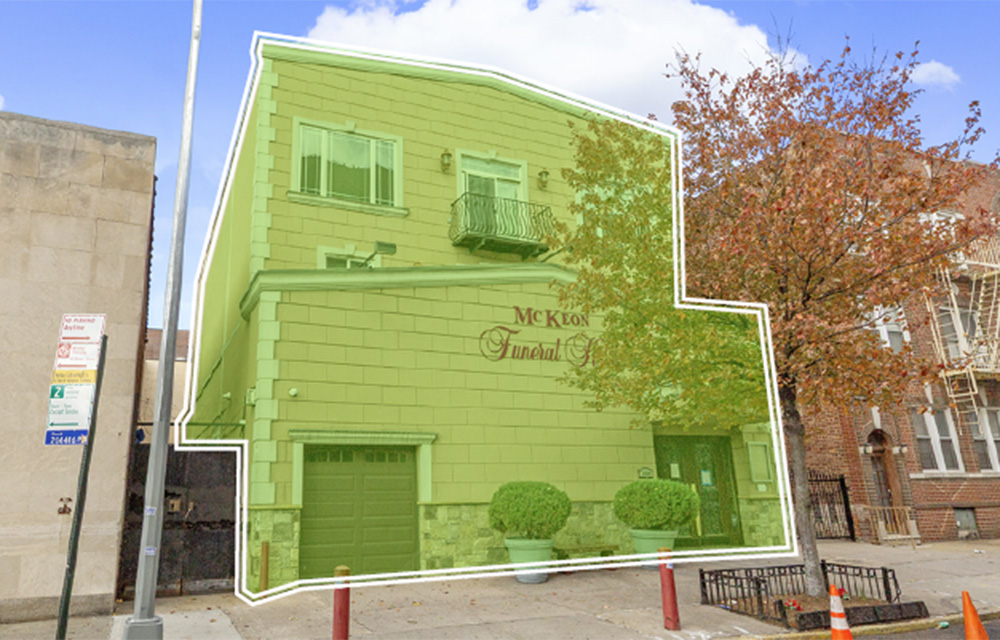
Marcus & Millichap brokers $2.8 million sale of free-market mixed-use property in Brooklyn
Brooklyn, NY Marcus & Millichap brokered the sale of 733 Dekalb Ave., a fully free-market multifamily and retail property in the Bed-Stuy neighborhood. The asset sold for $2.8 million.





Quick Hits

Columns and Thought Leadership

A guide to finding the right NYC property management company - by Sanjay Gandhi
Being a small to midsize landlord in NYC is an increasingly demanding endeavor. From navigating complex regulations, increased compliance demands to dealing with tenant issues and remediating violations. It is wise to enlist the assistance of a partner, a professional

Hunt commercial real estate question and answer: Fortune 500 wisdom - by David Hunt
Yes, there are lessons to be learned from the largest companies in America when comes to managing your real estate. But the decision to buy or lease real estate may not be one of

Positive forecast for New York’s pro-housing push? - by Philip Butler
New York’s housing crisis remains a hot button topic despite growing consensus that varied and affordable housing is desperately needed statewide. Governor Hochul has recently introduced several initiatives to overcome N.Y.’s anti-housing

New York’s streets are full again, and the retail numbers prove it - by Noam Aziz
Walk down any New York block this year and you can feel it. The sidewalks are crowded, the storefronts are lit, and the energy that defines this city is back at full volume.
.gif)
September Promotion
