



News:
Brokerage
Posted: May 20, 2016
Erik and Jeff Nissani of Eastern Consolidated represent tenant in 7,882 s/f lease
New York, NY Eastern Consolidated has arranged a 7,882 s/f, 10-year office lease at 535 Eighth Ave. in the Garment District for Inspiron Construction Management, whose projects range from an 80,000 s/f interior build out for Eileen Fisher at 111 Fifth Ave. to a new ground up building for high-end retail at 76 East Houston St. Inspiron is relocating from its current location at 511 Canal St.
Exclusive agents Erik and Jeff Nissani, both senior directors at Eastern Consolidated, exclusively represented the tenant in the transaction. In-house agent Daniel Breiman of Olmstead Properties represented the building owner, 535 Eighth Avenue LLC.
“The client wanted a space in close proximity to Penn Station in a building offering rents in the mid-$40s,” Erik Nissani said. “Since we have an adept knowledge of the inventory of office space in the area, we were able to reduce the search time and quickly identify an incredible space offering four exposures at a fair price per s/f.”
Jeff Nissani said, “We’re very effective in understanding the needs of tenants and guiding our clientele toward selecting office space that is priced fairly while simultaneously offering great aesthetics and a preparation for future growth/expansion. In this case, we showed 15-20 of the top spaces in the area, negotiated the terms, and executed the lease within a brief time constraint.”
Together the Nissanis have over 30 years of experience in the leasing and sales of office buildings, office condos, and retail condos.
Inspiron Construction Management is one of New York’s leading construction firms offering construction management, general contracting, and advisory services. Select projects include: construction of the 12-story, 100,000 s/f Moise Safra Community Center at 130 East 82nd St.; an 80,000 s/f office re-stacking program for Eileen Fisher; several 100,000 s/f Art Storage and conventional storage facilities; renovations of retail spaces including restaurants Sarabeth’s, Sushi Samba, the Bowery Kitchen, Tommy Lasagna, and Lobel’s; and construction of Luna Park and Scream Zone amusement parks in Coney Island.
Tags:
Brokerage
MORE FROM Brokerage
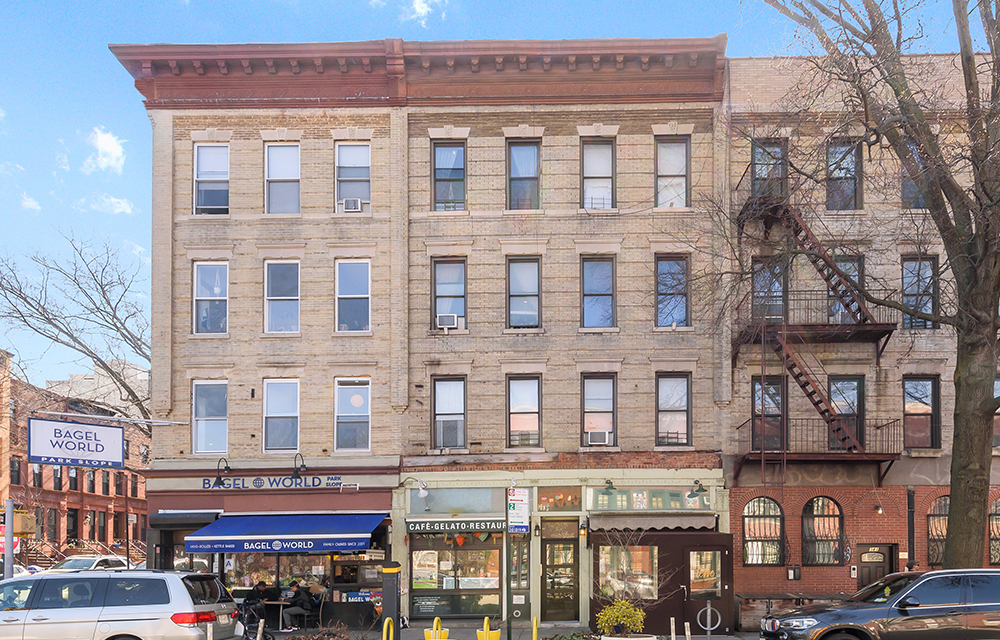
Investment Property Realty Group brokers $2.81 million sale of 341 5th Ave. in Park Slope
Brooklyn, NY Investment Property Realty Group (IPRG) closed the sale of 341 5th Ave., a mixed-use building located in Park Slope for $2.81 million. The transaction was negotiated by Derek Bestreich, Luke Sproviero,




Quick Hits
 (2).gif)

Columns and Thought Leadership

Positive forecast for New York’s pro-housing push? - by Philip Butler
New York’s housing crisis remains a hot button topic despite growing consensus that varied and affordable housing is desperately needed statewide. Governor Hochul has recently introduced several initiatives to overcome N.Y.’s anti-housing

A guide to finding the right NYC property management company - by Sanjay Gandhi
Being a small to midsize landlord in NYC is an increasingly demanding endeavor. From navigating complex regulations, increased compliance demands to dealing with tenant issues and remediating violations. It is wise to enlist the assistance of a partner, a professional

New York’s streets are full again, and the retail numbers prove it - by Noam Aziz
Walk down any New York block this year and you can feel it. The sidewalks are crowded, the storefronts are lit, and the energy that defines this city is back at full volume.

Hunt commercial real estate question and answer: Fortune 500 wisdom - by David Hunt
Yes, there are lessons to be learned from the largest companies in America when comes to managing your real estate. But the decision to buy or lease real estate may not be one of
.gif)