



News:
Brokerage
Posted: January 8, 2019
Executive of the Month: As CEO of B+E, Renshaw and her team aim to help anyone confidently trade net lease
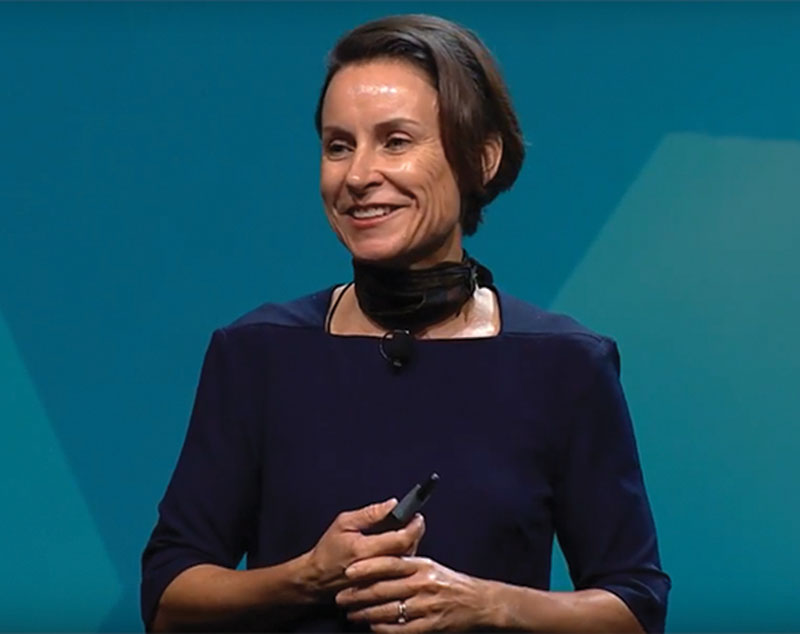
New York, NY The New York Real Estate Journal recently sat down with Camille Renshaw, CEO at B+E for a question and answer session.
Q: What makes B+E unique?
A: The B+E online trading platforms set the standard for net lease real estate brokerage services and performance. The mission of B+E is to help virtually anyone confidently trade net lease.
We recently launched the first 1031 online trading platform at the ICSC New York Deal Making Show, empowering exchangers to review the market for all net lease properties, both on-market and off-market. Our proprietary system then utilizes user defined criteria to match properties and name and purchase replacement properties.
This 1031 online trading platform joins our existing B+E triple net lease trading platform, which offers the first end-to-end solution for buyers and sellers to conduct entire triple net lease transactions online. The B+E trading platform consists of user-friendly dashboards, real-time predictive pricing and an AI-driven exchange—all leveraging the largest data set in the industry. Buyers and sellers can conduct entire transactions online, reviewing real-time credit, news and tenant data while they trade, much like online stock trading platforms.
Q: What led you to your current profession?
A: I started coding when I was in seventh grade, so I would say it’s been a long and winding path and unpredictable. After selling a tech company, I invested the proceeds in single tenant real estate and realized what an extraordinary asset net lease property is, in terms of helping you build and protect wealth while being fairly hands off of the real estate.
Q: What’s your background?
A: Prior to B+E, I was head of sales for Ten-X (a Google Capital company), a leading online marketplace for commercial real estate with products such as Auction.com. Prior to Ten-X, I founded the Stan Johnson Company’s New York office where I led their sales team as its top producer for five years. Before this, I was director of the U.S. Capital Markets division of Colliers International and a Top 40 Worldwide Producer. I originally entered commercial real estate as an owner, after founding Dyzco Technologies and successfully selling it to American Financial Services Corp, Inc.
Currently I am an executive in residence at the NYU Stern School of Business, an advisor to DreamIt’s UrbanTech Accelerator and a board member on the Rutgers Big Data Advisory Board (part of the Rutgers University Center for Innovation Education).
Q: What is your creative process? What is your favorite part about it?
A: The strategy process. I will often hold full day workshops on a topic. It could be our database and data dictionary, or current marketing issues. You get your team into a room, turn off all the outside volume in your workday and brainstorm together.
Q: What is inspiring you now?
A: I am reading a great book called “Hackers and Painters, Big Ideas from the Computer Age.” It’s about coding/programming and art, and their similarities.
Q: What do you regard as the greatest success in your career to date?
A: The creation of B+E. I’m really proud of this company.
Q: What do you like most about your job?
A: The people. I get to work with people that I trust and respect, working together to help our clients. Some of our team has been together through three different companies, so we have really built up a strong, positive culture.
Q: How would you describe your clients?
A: They range from private families that are working on generational transitions of wealth, to institutions.
Q: What’s the most complex deal you’ve been involved with?
A: Sale leasebacks are very complicated and one that comes to mind is work we carried out for Tower Radiology, a very large radiology company in the U.S. They’re based in Florida and a sale leaseback for them involved 30 different principals with different goals and two generations of doctors trying to transition. It got very complicated. We worked on it with Broadstone and it took almost a year to get done.
Q: What do you see as the biggest challenges for B+E?
A: Our goal is to increase the number of investors that we help. This means that in addition to branding, marketing and outreach, we need to scale our team. Great people are hard to find and this takes time, but is something that you can’t compromise on.
Q: Do you ever truly unplug from work?
A: No.
Q: What can our political leaders do to increase equality in the workplace?
A: Make their own operation teams more diverse. And by diversity, I mean all areas, including race, sex, age, etc. In addition to being the right thing to do, studies have shown that companies with diverse leadership perform better on many levels of measurement. Politicians should lead by example.
Q: What learning experience or professional development most helped you prepare for leadership?
A: The Girl Scouts. It was a great experience and I am still proud of the records I set in selling Girl Scout cookies!
Q: How do you set priorities?
A: Every day I work from a large scale plan, and then identify daily action items and the associated key performance indicators.
Q: What about trends you’re seeing in the marketplace?
A: It’s an exciting time, as we are seeing new technologies to help source deals, price properties, evaluate risk and connect people. We believe that B+E is part of this innovation.
Tags:
Brokerage
MORE FROM Brokerage

Adirondack Capital Partners arranges $45 million sale of West Chelsea development site to Toll Brothers
Manhattan, NY Adirondack Capital Partners (ACP) closed the $45 million sale of 126/128 Tenth Ave. and 456 W. 18th St. to Toll Brothers City Living. The acquisition forms part of a broader






Columns and Thought Leadership

A guide to finding the right NYC property management company - by Sanjay Gandhi
Being a small to midsize landlord in NYC is an increasingly demanding endeavor. From navigating complex regulations, increased compliance demands to dealing with tenant issues and remediating violations. It is wise to enlist the assistance of a partner, a professional

New York’s streets are full again, and the retail numbers prove it - by Noam Aziz
Walk down any New York block this year and you can feel it. The sidewalks are crowded, the storefronts are lit, and the energy that defines this city is back at full volume.

Hunt commercial real estate question and answer: Fortune 500 wisdom - by David Hunt
Yes, there are lessons to be learned from the largest companies in America when comes to managing your real estate. But the decision to buy or lease real estate may not be one of

Positive forecast for New York’s pro-housing push? - by Philip Butler
New York’s housing crisis remains a hot button topic despite growing consensus that varied and affordable housing is desperately needed statewide. Governor Hochul has recently introduced several initiatives to overcome N.Y.’s anti-housing
.gif)