



News:
Brokerage
Posted: October 2, 2018
Empire Commercial Construction to build Fresenius Medical Care facility in Batavia
Batavia, NY Empire Commercial Construction, a retail-specific division of regional general contractor Taylor–The Builders, has been awarded the contract for construction of the new Fresenius Medical Care Outpatient Dialysis Facility at 4185 Veterans Memorial Dr. The new 8,000 s/f building, is being privately developed, with architectural design provided by Andrew Hintenach III, AIA and Sky High Architecture. Construction is underway, with a project completion slated for winter, 2019.
“Empire is pleased to once again exceed the construction goals for Fresenius Medical Care,” said Empire president, Jayne Penepent. “They continue their impressive expansion across the nation in alliance with their passionate commitment to helping people with chronic kidney disease and end stage renal disease, thrive.”
Empire and its parent company, Taylor–The Builders, continue to increase its specific experience of building and expanding for Fresenius across the nation. In addition to this current project, their team has completed similar buildings in Greece, NY; Chili, NY; Scranton, PA; and Temple, FL.
Fresenius Medical Care North America is the premier healthcare company focused on providing the highest quality care to people with renal and other chronic conditions. Through its industry-leading network of dialysis facilities, outpatient cardiac and vascular labs, and urgent care centers, Fresenius Medical Care North America provides coordinated health care services at pivotal care points for hundreds of thousands of chronically ill customers throughout the continent. As the world’s largest fully integrated renal company, it offers specialty pharmacy and laboratory services, and manufactures and distributes the most comprehensive line of dialysis equipment, disposable products and renal pharmaceuticals.
Empire Commercial Construction, a division of Taylor-The Builders, specializes in quick turn-around new construction, renovations and maintenance for commercial, medical, and retail space across New York State. Their project professionals have completed scores of renovations, build-outs and pad locations for premier national restaurants and retailers. They will make sure it’s built right, on time, the first time. Simply put…Retail Built Right.
Tags:
Brokerage
MORE FROM Brokerage
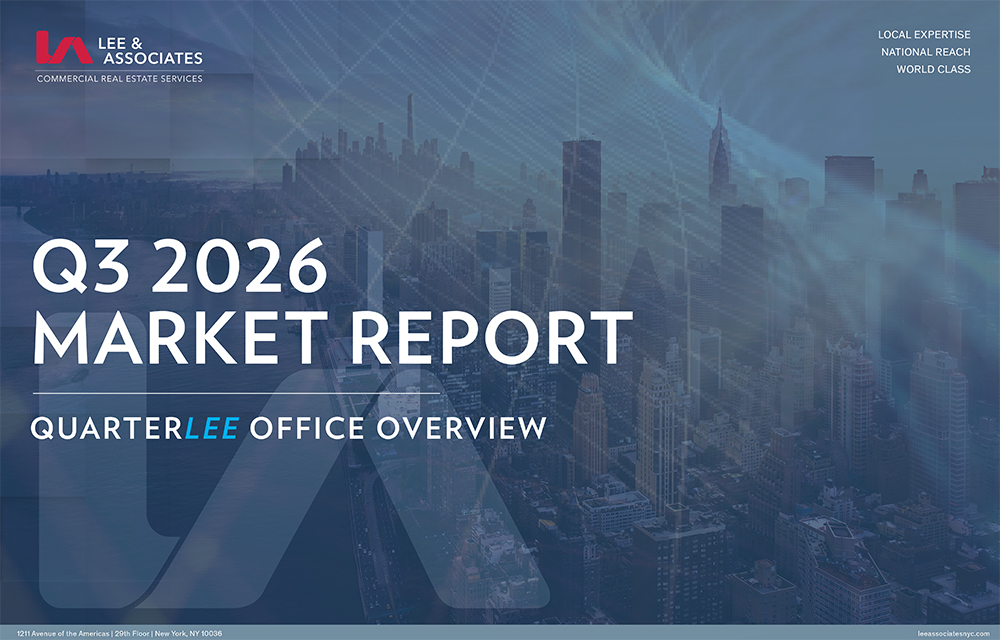
Manhattan office leasing tops 10 million s/f for ninth consecutive quarter, Lee & Associates NYC reports
Manhattan, NY Manhattan’s office market continued its recovery in the third quarter of 2026, recording more than 10 million s/f of leasing activity for the ninth



Quick Hits
 (2).gif)

Columns and Thought Leadership

Hunt CRE question and answer: Choosing a real estate agent - by David Hunt
First, we will only work with one agent exclusively. The primary reason is that we want that agent to legally represent our client’s interests. In New York State, a real estate agent has a fiduciary

Hunt commercial real estate question and answer: Fortune 500 wisdom - by David Hunt
Yes, there are lessons to be learned from the largest companies in America when comes to managing your real estate. But the decision to buy or lease real estate may not be one of

New York’s streets are full again, and the retail numbers prove it - by Noam Aziz
Walk down any New York block this year and you can feel it. The sidewalks are crowded, the storefronts are lit, and the energy that defines this city is back at full volume.

A guide to finding the right NYC property management company - by Sanjay Gandhi
Being a small to midsize landlord in NYC is an increasingly demanding endeavor. From navigating complex regulations, increased compliance demands to dealing with tenant issues and remediating violations. It is wise to enlist the assistance of a partner, a professional
.gif)