



News:
Brokerage
Posted: July 15, 2013
Eastern Consolidated's Second Quarter Manhattan commercial property sales report indicates commercial property sales increased 26% in 2Q13
Manhattan's second quarter 2013 investment sales volume increased by 26% over the first quarter, coming in at a total of $8.8 billion, up from $7 billion in the first quarter. Though not as strong as the $14 billion achieved in the fourth quarter of 2012, $8.8 billion exceeded the quarterly average volume for the last two years, according to Eastern Consolidated's just released second quarter Manhattan Commercial Property Sales Report.
The most noteworthy finding is that following six quarters of lackluster activity, office property sales volume doubled from $2.6 billion to $5.2 billion in the second quarter. Moreover, pricing showed a dramatic increase in 2Q13, especially for office properties, development sites and hotels.
"What is most striking in the current market are the prices that properties are fetching; investors are competing for prime properties and prices are reflecting the high demand," said Daun Paris, president of Eastern Consolidated.
Among the more salient facts from the 2Q13 report are:
The number of transactions was little change in the quarter, totaling 220;
The largest development site sale involved the MTA's sale of the 26-acre Hudson Yards site to The Related Companies for $1 billion;
Related also sold a condominium (leasehold) interest at its Tenth Avenue Hudson Yards site to Coach, Inc. for $750 million. Coach is moving its headquarters to this site and will become its anchor tenant;
Multifamily sales volume declined from $2.9 billion in 1Q13 to $1.6 billion in 2Q13; however, the first quarter statistics were heavily weighted by two large portfolio sales;
The largest multifamily transaction was the $401 million sale of The Aldyn and The Ashley on the Upper West Side;
Office property sales doubled in the quarter, the largest transaction involved the partial interest transfer of the GM Building at 767 Fifth Avenue for $1.36 billion;
Retail volume was low at $140 million, similar to the first quarter; the largest sale was the $19.4 million sale of the retail condo at 20 Pine Street ($592 per s/f);
Only three hotel transactions closed, so sales volume was down, but pricing was up; two of the three sold for more than $100 million; the largest was the $113 million sale of the Holiday Inn at 125 West 26th Street in Chelsea.
According to chief economist, Barbara Byrne Denham, "Although investors remain bullish on Manhattan real estate, momentum shifted somewhat at the end of the quarter following Federal Reserve Chairman Ben Bernanke's announcement that the government could curtail its monetary easing policy earlier than expected. Investors fear that interest rates could rise in the near term, raising the cost of capital which could slow the sales market."
Denham points out, however, that the commercial real estate market has enjoyed an unprecedented long stretch of very low interest rates, and "a slight shift in yield should not have a significant impact, given the presumption that higher interest rates suggest a stronger U.S. economic recovery characterized by increased job growth."
Tags:
Brokerage
MORE FROM Brokerage
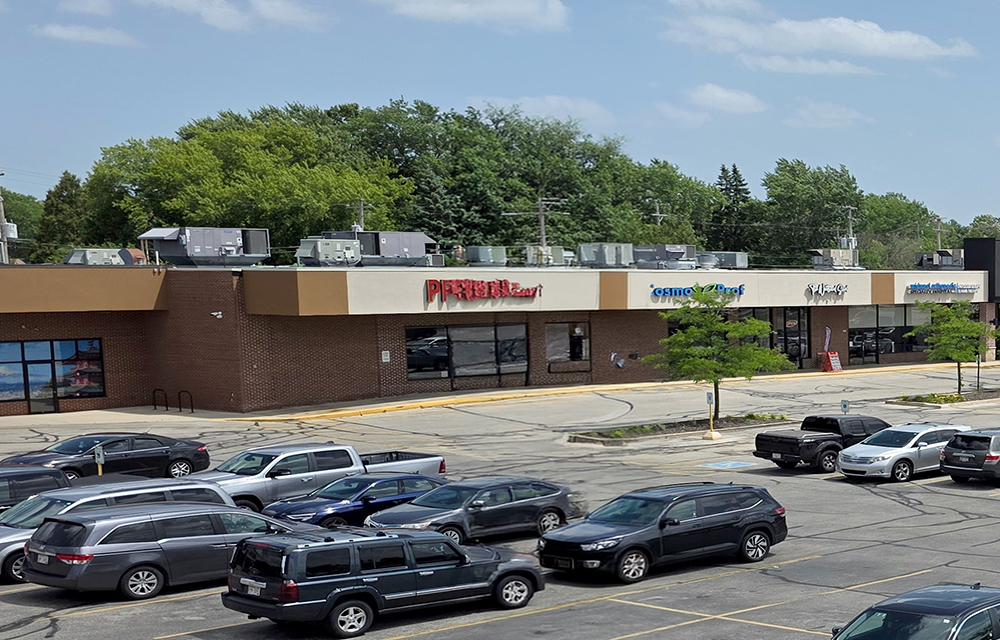
United Properties Corp. expands Wisconsin and Illinois retail presence adding 200,000 s/f
West Allis, WI United Properties Corp. completed two retail acquisitions totaling $27.4 million across Illinois and Wisconsin, adding 205,000 s/f of shopping center space to its portfolio



Quick Hits
 (2).gif)

Columns and Thought Leadership

Hunt commercial real estate question and answer: Fortune 500 wisdom - by David Hunt
Yes, there are lessons to be learned from the largest companies in America when comes to managing your real estate. But the decision to buy or lease real estate may not be one of

New York’s streets are full again, and the retail numbers prove it - by Noam Aziz
Walk down any New York block this year and you can feel it. The sidewalks are crowded, the storefronts are lit, and the energy that defines this city is back at full volume.

Positive forecast for New York’s pro-housing push? - by Philip Butler
New York’s housing crisis remains a hot button topic despite growing consensus that varied and affordable housing is desperately needed statewide. Governor Hochul has recently introduced several initiatives to overcome N.Y.’s anti-housing

A guide to finding the right NYC property management company - by Sanjay Gandhi
Being a small to midsize landlord in NYC is an increasingly demanding endeavor. From navigating complex regulations, increased compliance demands to dealing with tenant issues and remediating violations. It is wise to enlist the assistance of a partner, a professional
.gif)