



News:
Brokerage
Posted: September 24, 2024
Developer’s thoughts to the recent changes to the NYS Rent Laws - by Francis Greenburger

The recent changes to the NYS Rent Laws regarding rent stabilized apartments, included in the 2024 budget legislation and signed into law by governor Hochul, are a step in the right direction. Unfortunately, the step is so small that the effect will be the same as standing still. Much of the initial commentary on 2024 Housing Law updates was about the so-called “Good Cause Eviction” provisions, which have little to do with eviction but are instead a rebranding of rent control.
In 2019, the legislature made significant changes to the rules governing rent-stabilized apartments. Most legislators who voted for this bill undoubtedly hoped to help New York state meet its affordable housing needs, but the opposite has happened. Thousands of low-rent, rent-stabilized apartments have since become vacant and remain so. Many of these apartments were occupied by tenants or families for 40 years or more. Apartments require capital investments periodically, and expectations for housing change dramatically over a long period. Renovating these units to meet modern standards requires significant investment, often mandated by housing code.
Until the changes, building owners were willing to make these investments because they were permitted to increase annual rents by approximately 20% of the investment cost. While a 20% rent increase may seem generous, the return on investment for building owners was much lower due to various operating costs, including regulatory compliance, repairs, maintenance, management fees, legal expenses, and bad debt. Additionally, New York City’s goal is to target real estate taxes at 35% of net revenue. Thus, a 20% increase in rental revenue often results in only an 8%-11% increase in profits. This is a reasonable return, akin to the type of return public utilities are often permitted, but not an extraordinarily high return.
Since the 2019 rent law changes, annual stabilized rents can only be increased by 6.67% of the investment cost in most cases. The actual return on investment is likely between 3% and 4% after accounting for expenses and taxes, which is unattractive compared to other investment options. Additionally, the 2019 law capped the amount of investment on which a return is permitted for unit renovations at only $15,000. NYCHA has reported spending an average of $375,000 per apartment to renovate vacant units, and requested about $485,000 per apartment for upcoming renovations. This demonstrates how punitive and misguided the 2019 Rent Law changes were.
The 2024 update to these provisions has increased the amount that can be invested in such apartments to $30,000 in most cases and $50,000 in some situations. It has also raised the allowable rent increase to 7.69% of the investment amount per year. While this is an improvement, it remains insufficient to make investing in low-rent, rent stabilized apartments attractive. Allowing housing providers to spend about 1/10th as much as New York City itself spends is theoretically better than 1/25th, but it is still not nearly enough to fix up an apartment. Allowing revenues to increase by 7.69% is better than 6.67%, but it still means that the building owner can only expect a return on investment of little more than 4%. No rational investor would commit to a rent-regulated apartment at a 4% return when risk-free U.S. Treasuries offer comparable yields. Many units remain vacant under these conditions.
The unintended consequences from the 2019 Rent Law updates have aggravated the housing crisis in New York, and the recent improvements to the law will not reverse this situation. Minor changes to the laws could align the interests of building owners with the need to increase affordable housing supply. New York state used to understand that providers of rent regulated housing were delivering a service similar to a public utility and allowed a fair return on investment. The Public Service Commission in New York has historically permitted returns of about 10% on invested equity for regulated utilities. Allowing similar returns to those permitted for utilities could lead to rapid improvements and reintroduction of thousands of apartments to the market, making New York City more attractive and increasing real estate tax revenues to address the city’s challenges and fund its social goals.
Francis Greenburger is the founder, chairman, and CEO of Time Equities Inc., Manhattan, NY.
Tags:
Brokerage
MORE FROM Brokerage
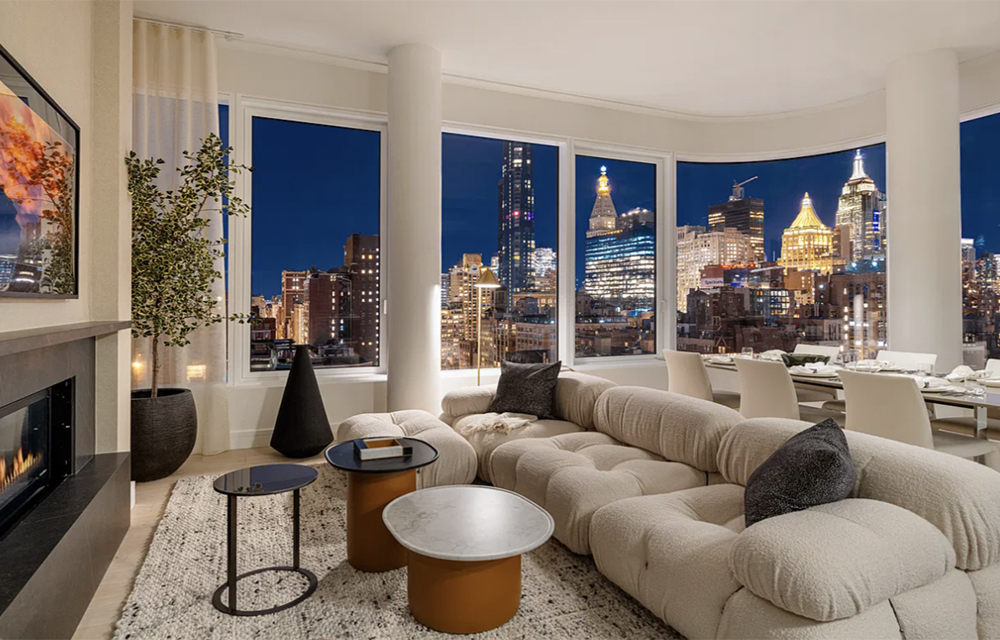
200E20TH sells out in Gramercy, penthouse A closes out sales at the CetraRuddy-designed condominium residences
Manhattan, NY 200E20TH, the CetraRuddy-designed architectural masterwork that brought a curved, contemporary sensibility to Gramercy’s Beaux-Arts streetscape, has



Quick Hits
 (2).gif)

Columns and Thought Leadership

The art of investing in real estate - by Thomas Donovan
Real estate investing is as much an art as it is a skill. No one can time the market, or the factors that drive it, perfectly. Location, zoning, size, transportation, and neighborhood density give you a baseline for

Hunt CRE question and answer: Choosing a real estate agent - by David Hunt
First, we will only work with one agent exclusively. The primary reason is that we want that agent to legally represent our client’s interests. In New York State, a real estate agent has a fiduciary

Hunt commercial real estate question and answer: Fortune 500 wisdom - by David Hunt
Yes, there are lessons to be learned from the largest companies in America when comes to managing your real estate. But the decision to buy or lease real estate may not be one of

New York’s streets are full again, and the retail numbers prove it - by Noam Aziz
Walk down any New York block this year and you can feel it. The sidewalks are crowded, the storefronts are lit, and the energy that defines this city is back at full volume.
.gif)