



News:
Brokerage
Posted: February 28, 2019
Dabiri joins POLSINELLI's direct lending and alternative finance practices

POLSINELLI
New York, NY According to POLSINELLI, an Am Law 100 firm, Gabriel Dabiri has joined the firm in New York as a shareholder, practice co-leader for the firm’s direct lending and alternative finance practice and practice co-leader for the firm’s cross-border finance practice.
Dabiri is a dual-qualified attorney, admitted to practice law in New York and in England and Wales. He advises clients on a variety of sophisticated finance transactions, debt restructurings and bankruptcies.
“We are very happy to have Gabriel on board in New York to enhance our direct lending, alternative finance and cross-border finance capabilities," said Dan Flanigan, the managing partner of POLSINELLI’s New York office and Founder of the firm’s Financial Services Department. “We are particularly excited about the cross-border experience Gabriel brings to the firm and our clients, having previously practiced law in the United Kingdom and in Asia.”
Dabiri earned a bachelor's degree from the University of Pennsylvania, an LLB from Cardiff University in Wales and a graduate degree from The University of Law of England and Wales.
POLSINELLI is an Am Law 100 firm with more than 825 attorneys in 21 cities coast to coast. Ranked #30 for Client Service Excellence1 and #10 for best client relationships2 among 650 U.S. law firms, POLSINELLI is also named among the top 30 best-known firms in the nation3 for the second consecutive year. The firm’s attorneys provide value through practical legal counsel infused with business insight, and focus on health care, financial services, real estate, intellectual property, mid-market corporate, labor and employment, and business litigation. www.polsinelli.com | In California, POLSINELLI LLP
Tags:
Brokerage
MORE FROM Brokerage
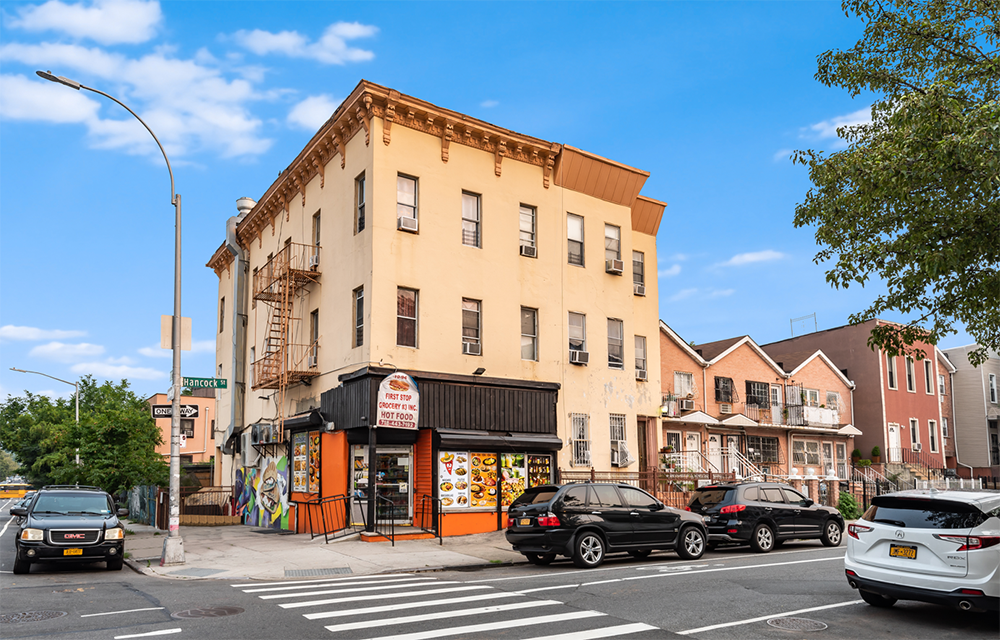
Investment Property Realty Group closes $1.75 million sale of 1094 Hancock Street in Brooklyn
Brooklyn, NY Investment Property Realty Group (IPRG), a New York-based commercial investment firm, has closed the sale of 1094 Hancock St., a mixed-use building in the Bushwick section, for $1.75 million.




Quick Hits

Columns and Thought Leadership

Hunt CRE question and answer: Choosing a real estate agent - by David Hunt
First, we will only work with one agent exclusively. The primary reason is that we want that agent to legally represent our client’s interests. In New York State, a real estate agent has a fiduciary

A guide to finding the right NYC property management company - by Sanjay Gandhi
Being a small to midsize landlord in NYC is an increasingly demanding endeavor. From navigating complex regulations, increased compliance demands to dealing with tenant issues and remediating violations. It is wise to enlist the assistance of a partner, a professional

New York’s streets are full again, and the retail numbers prove it - by Noam Aziz
Walk down any New York block this year and you can feel it. The sidewalks are crowded, the storefronts are lit, and the energy that defines this city is back at full volume.

Hunt commercial real estate question and answer: Fortune 500 wisdom - by David Hunt
Yes, there are lessons to be learned from the largest companies in America when comes to managing your real estate. But the decision to buy or lease real estate may not be one of
.gif)