



News:
Brokerage
Posted: March 8, 2022
Cross-laminated timber in New York: sustainable and progressive - by David Margolius
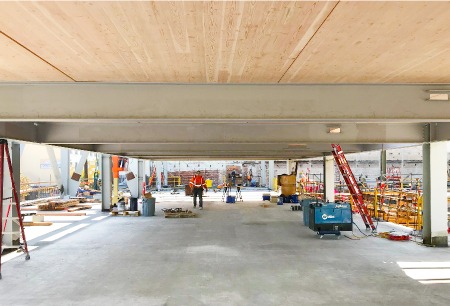
New York City’s revitalization is touching every part of its culture as the city makes its comeback from the pandemic — down to the materials being used for the built environment. With the New York City Council’s approval of cross-laminated timber (CLT) for the construction of buildings up to 85 feet tall — a strong start for a city that’s language is tall buildings — New York is taking a step forward not only in sustainability, but in design innovation, opening up opportunity for architects, developers, and builders.

While this is a new development for the city — and relatively new for the country as a whole, with the material only becoming available in the U.S. in 2015 — Shawmut Design and Construction has constructed CLT buildings across the nation, including the first large-scale CLT office building in Los Angeles currently underway, experiencing first-hand the material’s sustainability and constructability benefits.
An innovative material and building approach, CLT is carbon-negative and promotes the use of renewable and environmentally-sensitive resources, carefully managed forestry, and building technology that is meant to last. CLT’s many benefits begin with its production — it’s made from sustainably harvested sapling lumber, relatively small-diameter trees, and trees affected by insects and diseases which otherwise would not be used. It emits less carbon dioxide than the production of steel or concrete, while also reducing the amount of man-made materials utilized in conventional construction.
CLT panels are pre-cut and pre-fabricated off site, allowing for an ultra-fast installation process since project teams can offload the product from the truck directly into place. This construction technology is especially beneficial in a tight urban environment like New York City, where builders are executing big work in small spaces. The ease and speed of installation, coupled with the panels being pre-cut, reduces on-site labor and clustered activity, therefore reducing a project’s carbon footprint while creating safer working conditions.
An engineered wood, CLT consists of dimensional lumber boards glued together in a press with structural adhesives, available in multiple thicknesses, widths, and spans. The material is strong, lightweight, dimensionally stable, and inherently fire-resistant — allowing it to be used for walls, floors, ceilings, or an entire building; it can be used in combination with timber or other forms of structural support, including steel. This multi-use capability allows for new and creative design concepts and construction technology — a particularly exciting opportunity in a city as bold and forward-thinking as New York. Not to mention the design benefits — the warmth of exposed wood, along with reduced off-gassing, enhances a building’s sense of wellness. Evidence also suggests that the use of natural materials can contribute to an individual’s sense of well-being, productivity, and health.
While a more expensive material, CLT can be sourced domestically and its lightweight nature allows for lower transportation costs compared to similar structural elements. Its proximity also provides some safeguards from supply chain issues.
Shawmut is seeing a rapidly increasing demand for the use of CLT as partners continue to turn to the innovative method for new projects. Within the higher-education sector, the material helps institutions on various fronts — including a design and construction approach that is rooted in sustainability while aligning with external-facing carbon footprint and energy-saving goals.
Rhode Island School of Design’s North Hall, the first-ever CLT-steel hybrid residence hall in New England, provided an innovative model for reducing energy use and limiting environmental impact. The erection of the entire superstructure took just two-and-a-half weeks in the middle of winter, and by using CLT to replace concrete, the project reduced CO2 emissions by up to 20%. At Brown University’s Sternlicht Commons and Health & Wellness Center, CLT was used throughout as part of the LEED v4 Silver standard design, using FitWel and Well certification systems as guidelines for the overall approach centered around holistic student wellness.
It’s exciting to see this material gain acceptance and approval for use in bigger projects both in New York and across the country. As the leaders of New York City look to the future with a particular focus on longevity, a built world rooted in sustainable practices will benefit the city and its people.
David Margolius is an executive vice president, New York Metro region, at Shawmut Design and Construction.
Tags:
Brokerage
MORE FROM Brokerage
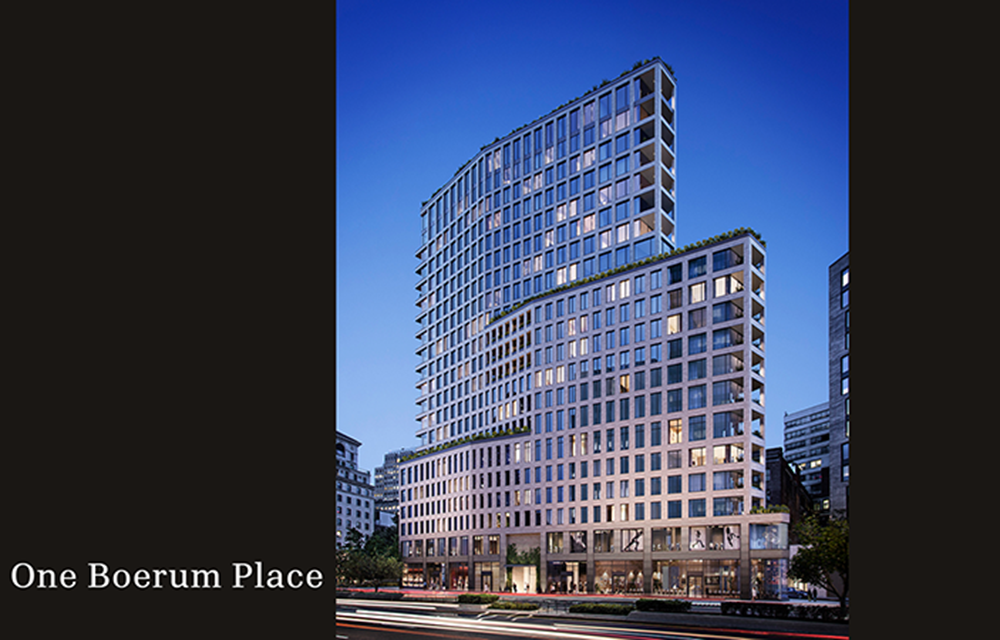
Residential real estate consultancy and brokerage firm Nancy Packes, Inc. rebrands as NPI
Manhattan, NY The NYC-based premier residential real estate consultancy and brokerage firm, Nancy Packes Inc., has rebranded as NPI. Helmed by Seth Rosner, most recently the firm’s managing partner and now president, the company has been intricately involved in hundreds of Tri-State new developments and conversions, spearheading the full project life cycle, from assessment/pre-dev.




Quick Hits

Columns and Thought Leadership

Hunt commercial real estate question and answer: Fortune 500 wisdom - by David Hunt
Yes, there are lessons to be learned from the largest companies in America when comes to managing your real estate. But the decision to buy or lease real estate may not be one of

New York’s streets are full again, and the retail numbers prove it - by Noam Aziz
Walk down any New York block this year and you can feel it. The sidewalks are crowded, the storefronts are lit, and the energy that defines this city is back at full volume.

Hunt CRE question and answer: Choosing a real estate agent - by David Hunt
First, we will only work with one agent exclusively. The primary reason is that we want that agent to legally represent our client’s interests. In New York State, a real estate agent has a fiduciary

The art of investing in real estate - by Thomas Donovan
Real estate investing is as much an art as it is a skill. No one can time the market, or the factors that drive it, perfectly. Location, zoning, size, transportation, and neighborhood density give you a baseline for
.gif)