



News:
Brokerage
Posted: May 18, 2021
COVID and the workforce – The new normal? - by William Gati

Due to COVID, many people were forced to work from home. As a result, they had to shift their work style. Now they are being asked to come back to the workplace full time. While this may be good news for some (those who have a full house, kids running about, no work office space, etc.), many find they prefer to work from home.
Companies are now facing a new dilemma: Should employees be forced back to work full time, or do they allow them to decide to have an office at home, go to work in the office location or do a hybrid (in office two or three days a week)?
There are plenty of benefits to working from home. Including an improved quality of life change (no need to commute for hours, casual dress, flexible schedules). In many cases, people are more productive working from home. 60% of Americans say they prefer to work remotely or from home at least part of the time.
Companies like Ford are allowing people to work from home part-time, establish more flexible working hours, and also the ability to social distance in the work environment. Ford is planning to follow a hybrid model for an estimated 30,000 workers this coming fall. The ratio of time at work versus home will vary depending on their project and responsibility. Many workers do not have to be in an office setting to be productive.
What will the “new workplace” lifestyle look like? Many say to expect a more relaxed environment and dress code with more space between their fellow employees. The cubicles of the past will be modified to meet this demand.
There is a balance between being on Zoom and paying attention to meetings versus direct contact with other employees. It seems that eye-to-eye contact improves intention and accountability. Also, people do not like to commute to work but staying home creates isolation and loneliness. Humans are social creatures, and we function much better around others.
How do you find that happy medium?
It is projected that employees will have a new level of social anxiety going back to work due to isolation for so many months and fear of contracting COVID. So their new spaces need to be friendly and inviting.
For many companies, a hybrid model will become the new norm. And how do we adapt our spaces and real estate to achieve this?
In addition, people are moving to the suburbs to have larger homes with a home office. Lately, it appears that home prices in Queens, in particular, are going far above the asking price. This is great for home value but bad for the office rental market.
Ultimately the office vacancy rates will inevitably go up, and vacancy rates will increase as well. The real estate community must adjust to this and take advantage of the stimulus bills to improve infrastructure. One would start to think we need to reevaluate our real estate portfolios and goals.
Lately, I have seen an uptick in real estate development, medical, and home additions. I have also seen a reduction in office space and commercial development. One hopes that companies like Amazon will incorporate more offices in the New York City area. But for the time being, there will be changes on the horizon.
I am curious to know how you are adapting to all these changes. Please write to me at wgatiarchitecturestudio.com. Thank you.
William Gati, AIA, is the president of Architecture Studio, Kew Gardens, N.Y.
Tags:
Brokerage
MORE FROM Brokerage
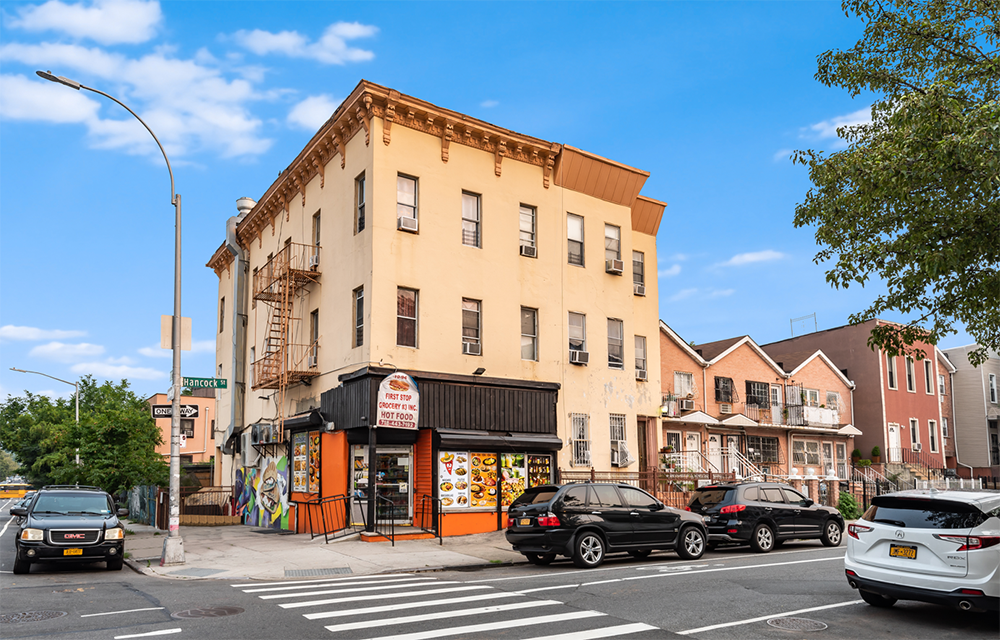
Investment Property Realty Group closes $1.75 million sale of 1094 Hancock Street in Brooklyn
Brooklyn, NY Investment Property Realty Group (IPRG), a New York-based commercial investment firm, has closed the sale of 1094 Hancock St., a mixed-use building in the Bushwick section, for $1.75 million.



 (2).gif)

Columns and Thought Leadership

Hunt commercial real estate question and answer: Fortune 500 wisdom - by David Hunt
Yes, there are lessons to be learned from the largest companies in America when comes to managing your real estate. But the decision to buy or lease real estate may not be one of

A guide to finding the right NYC property management company - by Sanjay Gandhi
Being a small to midsize landlord in NYC is an increasingly demanding endeavor. From navigating complex regulations, increased compliance demands to dealing with tenant issues and remediating violations. It is wise to enlist the assistance of a partner, a professional

New York’s streets are full again, and the retail numbers prove it - by Noam Aziz
Walk down any New York block this year and you can feel it. The sidewalks are crowded, the storefronts are lit, and the energy that defines this city is back at full volume.

Hunt CRE question and answer: Choosing a real estate agent - by David Hunt
First, we will only work with one agent exclusively. The primary reason is that we want that agent to legally represent our client’s interests. In New York State, a real estate agent has a fiduciary
.gif)