



News:
Brokerage
Posted: April 19, 2016
“Coolest city on the planet” – Is Brooklyn struggling to keep up with its own success? - by Lawrence Sarn
 Lawrence Sarn, CPEX
“Coolest city on the planet,” according to GQ. Home of the Nets since 2012, and now joined at the Barclays Center by the Islanders in 2015. Fourth largest city in America, if it were once again its own municipality, with soaring real estate values in both the sales and rental markets. Brooklyn has been on the rise for many years now, and it is showing no signs of slowing down.
But we are not so far removed from the Great Recession that we don’t wonder: Is Brooklyn struggling to keep up with its own success?
It’s a question being whispered behind closed doors at real estate firms throughout NYC as numbers approach – and in some cases even surpass – the apex of 2006-2007 before the recession set in. Dollar volume for the five boroughs peaked at a total of more than $52 billion in 2007 – transactional volume reached a high of 9,629 in NYC precisely 10 years ago – before swiftly (free) falling along with the economy to a mere $8 billion in sales (and 2,830 transactions) in 2009.
Real estate sales have been climbing steadily since then, creeping up to $15, $20, $22, and $33 billion in aggregate sales before surpassing $40 billion in both 2014 and 2015.
Where are we in the cycle? Are we at or approaching the top of the market in NYC and Brooklyn? Is the bubble going to burst?
When it comes to the Brooklyn market, only pockets of the borough have reached or are reaching peak real estate value. Rather, it is a tale of two Brooklyns – one story for those submarkets within a 30 minute commuting radius of Manhattan, and another storyline for those more insular, residential communities in the southern and eastern parts of the borough.
To be clear, this isn’t a Dickensian “best of times, worst of times” dichotomy; if you know what they say about tides and boats, then you know all real estate is on the rise, simply at varying degrees of participation. To keep with the importance of transportation in real estate, certain areas of Brooklyn are on the express track, while others are running local.
When it comes to commercial real estate, both the so-called “commuter” neighborhoods and “bedroom” communities end up at the same destination; it’s really a matter of how swiftly they get there. Nonetheless, some of the more residential areas of Brooklyn are actually gaining ground on the Brooklyn neighborhoods with easier access to Manhattan – even on the so-called “local track.” Many of these bedroom communities, already rock-solid investment opportunities, are appreciating even further in value thanks to homegrown job opportunities that are attracting more residents, retailers, developers, and investors.
Take Sunset Park, for example. Previously too far south and residential, Sunset Park has risen alongside Industry City. Under the guidance of Jamestown Properties, which purchased the site in 2013, Industry City has seen MakerBot and the Brooklyn Nets take space at the six million s/f complex. Other major technology, advertising, media, information technology, and even some light manufacturing tenants have joined them. At latest count, it was 70% occupied and offered employment for 4,000, a number expected to increase to 20,000 jobs.
Nearby at Liberty View Industrial Plaza, CPEX’s own retail leasing team signed a lease with Bed Bath & Beyond and three of its subsidiaries, alters the retail landscape in the area, and signals a shift in commercial property values throughout the area. Sometimes even the local train skips a stop!
This brings me back to my original question: Is Brooklyn struggling to keep up with its own success? In the commercial real estate sector at least, it certainly doesn’t seem like the borough is having trouble outpacing its own success, simply keeping up with it.
Lawrence Sarn is an associate director - real estate services at CPEX, Brooklyn, N.Y.
Tags:
Brokerage
MORE FROM Brokerage
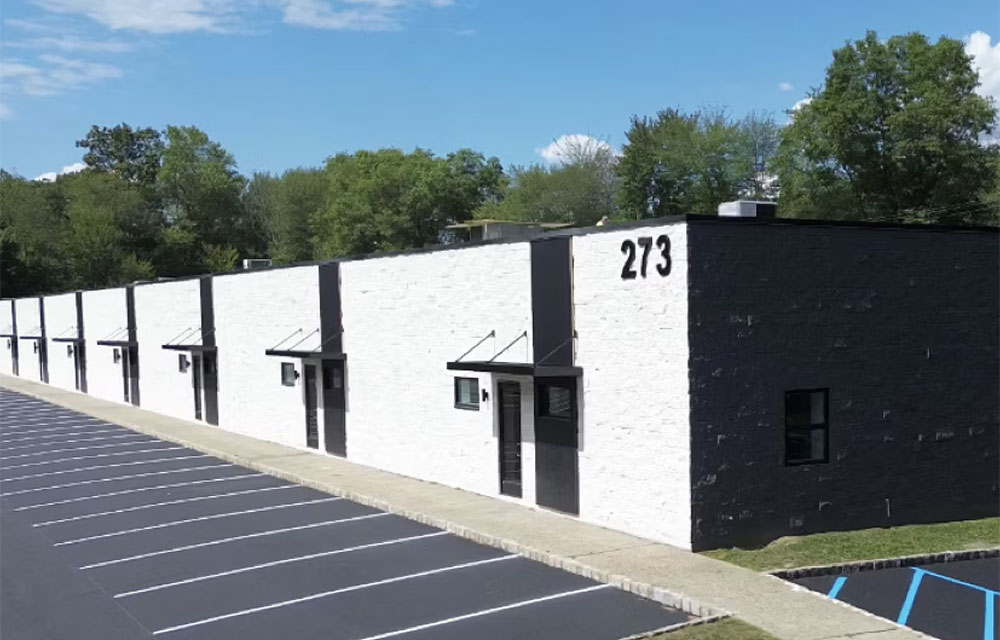
Resource Realty of Northern NJ delivers complete lease-up of 235 Franklin Rd. for Commerce Park Investors
Randolph, NJ Resource Realty of Northern New Jersey (RRNNJ) has completed the lease-up of a 10-unit small-bay industrial property at 273 Franklin Rd., marking the culmination of an investment strategy that began



Quick Hits
 (2).gif)

Columns and Thought Leadership

Hunt commercial real estate question and answer: Fortune 500 wisdom - by David Hunt
Yes, there are lessons to be learned from the largest companies in America when comes to managing your real estate. But the decision to buy or lease real estate may not be one of

New York’s streets are full again, and the retail numbers prove it - by Noam Aziz
Walk down any New York block this year and you can feel it. The sidewalks are crowded, the storefronts are lit, and the energy that defines this city is back at full volume.

Positive forecast for New York’s pro-housing push? - by Philip Butler
New York’s housing crisis remains a hot button topic despite growing consensus that varied and affordable housing is desperately needed statewide. Governor Hochul has recently introduced several initiatives to overcome N.Y.’s anti-housing

A guide to finding the right NYC property management company - by Sanjay Gandhi
Being a small to midsize landlord in NYC is an increasingly demanding endeavor. From navigating complex regulations, increased compliance demands to dealing with tenant issues and remediating violations. It is wise to enlist the assistance of a partner, a professional
.gif)