



News:
Brokerage
Posted: July 2, 2019
Construction Law: An attorney discusses capital improvements - by C. Jaye Berger
This is the time of year for capital improvement projects, such as facade, cornice and roof repairs. They can occur at any time, but it is also a time period in the cycle of Local Law 11 work when lots of renovation work is being done on façades and roof tops to comply with legal requirements. A lot of people on both sides of the equation consult with me about the contracts for this type of work and what to watch out for.
Many people do not consider or take into account that in order to perform this type of work, they may need “access” to a neighboring building in order to transport materials to the roof via that building. If this is not thought through in advance, the work may be delayed while access and an access agreement are negotiated. The party performing the work may need to put up some scaffolding and protection on your building’s roof before any work can be performed.
The length of time it will take to perform work must also be considered. You do not want to have a project that lingers forever, even if you are in a building receiving payments for the right of access. Even if it is a routine renovation project, you will want financial incentives for the work to be completed in an timely fashion. Merely saying it will be completed within a stated number of days is not enough.
It is very likely with such work that hidden conditions will show up and additional work will be needed. A common mistake people make is to include the cost of the additional work in a change order, but not mention the additional time that will be needed to extend the contract time for completion.
These are just a few of the many things I discuss with clients on either side of these projects.
C. Jaye Berger, Esq., is an attorney and the principal at Law Offices C. Jaye Berger, New York, N.Y.
Tags:
Brokerage
MORE FROM Brokerage
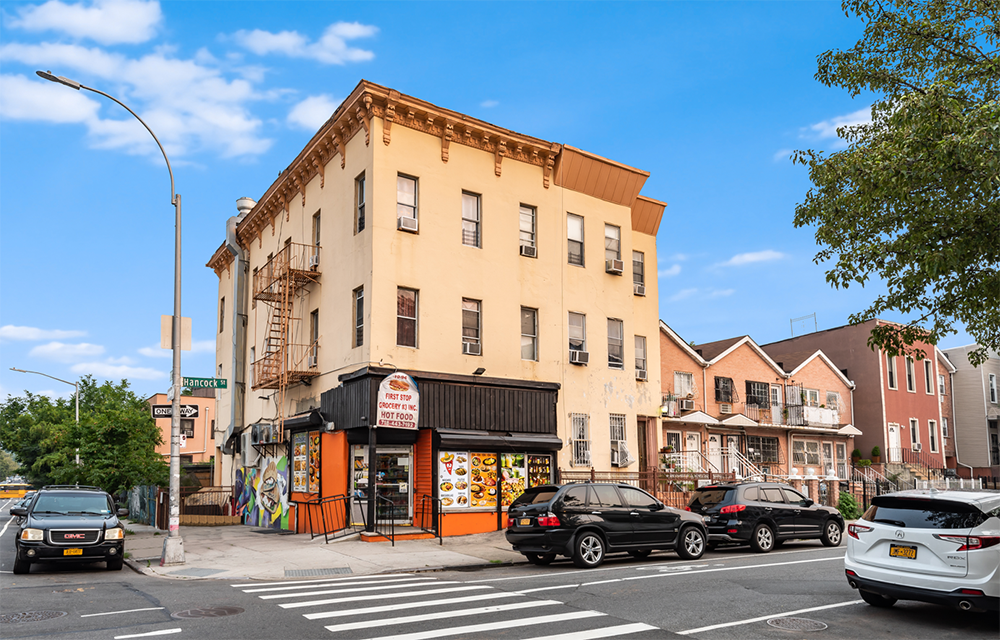
Investment Property Realty Group closes $1.75 million sale of 1094 Hancock Street in Brooklyn
Brooklyn, NY Investment Property Realty Group (IPRG), a New York-based commercial investment firm, has closed the sale of 1094 Hancock St., a mixed-use building in the Bushwick section, for $1.75 million.


Quick Hits
 (2).gif)

Columns and Thought Leadership

Hunt commercial real estate question and answer: Fortune 500 wisdom - by David Hunt
Yes, there are lessons to be learned from the largest companies in America when comes to managing your real estate. But the decision to buy or lease real estate may not be one of

A guide to finding the right NYC property management company - by Sanjay Gandhi
Being a small to midsize landlord in NYC is an increasingly demanding endeavor. From navigating complex regulations, increased compliance demands to dealing with tenant issues and remediating violations. It is wise to enlist the assistance of a partner, a professional

Hunt CRE question and answer: Choosing a real estate agent - by David Hunt
First, we will only work with one agent exclusively. The primary reason is that we want that agent to legally represent our client’s interests. In New York State, a real estate agent has a fiduciary

New York’s streets are full again, and the retail numbers prove it - by Noam Aziz
Walk down any New York block this year and you can feel it. The sidewalks are crowded, the storefronts are lit, and the energy that defines this city is back at full volume.
.gif)